
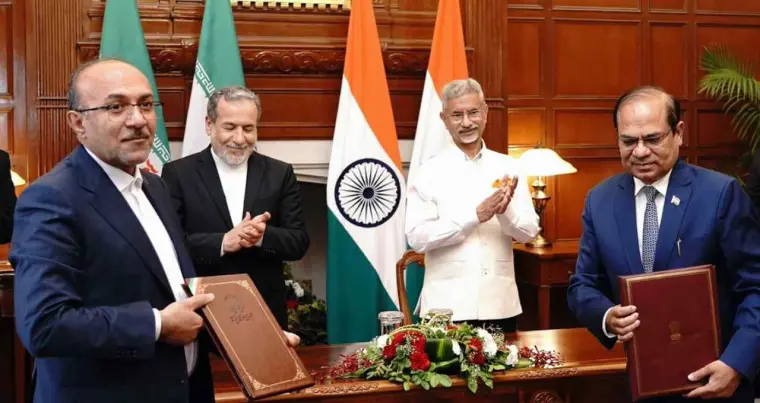

Amidst the Middle East tension, India and Iran are maintaining a policy of ‘Strategic Patience’ in their relations. In the recent talks of the Foreign Ministers, emphasis was laid on the regional situation, Chabahar Port and furthering bilateral cooperation.
India-Iran Relations: Amid the complex geopolitics of the Middle East, relations between India and Iran have long been considered an example of balance and ‘strategic patience’. On one hand, India has growing strategic relations with America and Israel, while on the other hand, Iran also sticks to the policy of maintaining and strengthening relations with New Delhi.
The recent conversation between the foreign ministers of the two countries has once again highlighted the importance of this relationship. In the phone discussion between India’s External Affairs Minister S Jaishankar and Iran’s Foreign Minister Seyed Abbas Araghchi, both the countries talked in detail on the regional situation and bilateral relations.
Indication received from the conversation of foreign ministers
S Jaishankar described the conversation as a ‘detailed discussion’ on recent developments and said that both the countries have agreed to remain in touch. This conversation is considered very important amid increasing tension in West Asia.
This was the third conversation between the two leaders since the West Asia crisis began. The special thing is that this conversation took place at a time when there was a major change related to leadership in Iran. After the death of Ayatollah Ali Khamenei, Mojtaba Khamenei has been appointed as the new Supreme Leader.
Tehran’s balanced statement
After the talks, a detailed statement was issued by Iran in which the actions of America and Israel were strongly criticized. However, no harsh language was used against India in this statement.
The statement also said that the Indian Foreign Minister stressed the importance of continuing and strengthening bilateral relations between the two countries. It was also agreed upon the need for continuous dialogue to restore stability in the region.
India’s balanced foreign policy
India has long been pursuing a balanced foreign policy in West Asia. On one hand, New Delhi is increasing defense cooperation with Israel and on the other hand it is also maintaining economic and strategic relations with Iran.
The main basis of India’s policy is to maintain dialogue rather than openly supporting any one side. This is the reason why despite regional tensions, India is able to maintain balanced relations with many countries. Iran also understands this policy and sees India as a country that takes a balanced and dialogue-based stance in international forums.
Strategic importance of Chabahar Port
Chabahar Port Project is an important link in the relations between India and Iran. This port is considered not only a business project but also important from a strategic point of view. Chabahar Port helps in giving India direct access to Afghanistan and Central Asia. This opens the way for promoting regional trade bypassing Pakistan.
However, the pace of this project has slowed down several times due to the sanctions imposed by the US. Despite this, Iran has refrained from publicly criticizing India. The Iranian Foreign Minister in an interview described India’s low investment as disappointing for both sides, but also expressed hope that this cooperation will continue in the future.
energy security relationship
India is one of the world’s largest energy markets and Iran is among the major producers of oil and gas. This is why energy trade has been a strong link in the relationship between the two countries for a long time.
Before US sanctions in 2019, India bought about 10 percent of its total crude oil imports from Iran. This trade almost came to a halt after the restrictions, but there is a possibility of it resuming in the future.
Indian diaspora is also an important factor
The large number of Indians living in West Asia also influences India’s foreign policy. About one crore Indians work in Gulf countries and India receives a large amount of remittances from there. If there is a major conflict in this region, it can directly impact Indian citizens and the Indian economy. Therefore, India emphasizes on maintaining stability and peace in this region.
Historical and cultural relations
Relations between India and Iran are not limited to modern diplomacy only. There are thousands of years old cultural and civilizational relations between the two countries.
There have been many similarities in language, culture and traditions between the Persian and Indian civilizations. In history, the Persian language has had a deep influence on the administrative and cultural system of India. Even in modern times, both the countries have taken these historical relations forward in the form of diplomatic cooperation.
Important milestones of modern diplomacy
After India’s independence in 1950, both countries formalized their relations through Friendship Treaty. After this, the Tehran Declaration of 2001 and the New Delhi Declaration of 2003 proved to be important milestones in the relations between the two countries.
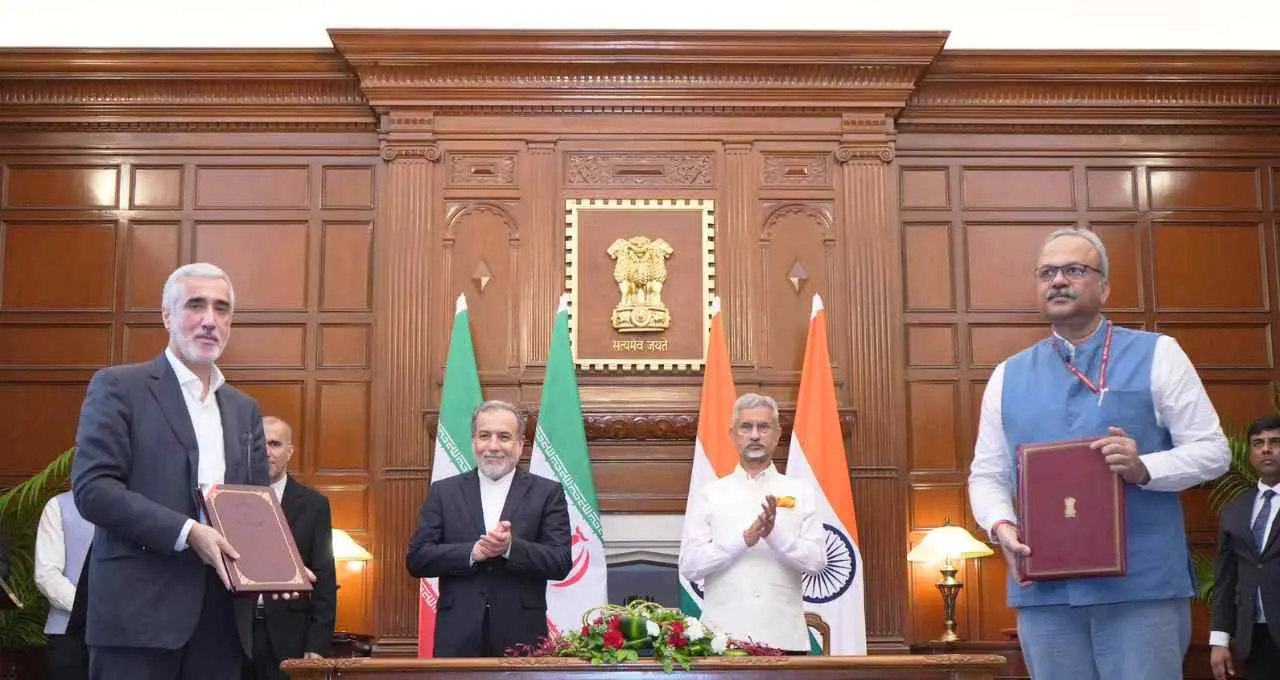
Many important agreements were also signed during Prime Minister Narendra Modi’s visit to Iran in 2016 and Iranian President Hassan Rouhani’s visit to India in 2018. The focus of these agreements was on connectivity, trade and regional cooperation. Iranian Foreign Minister Araghchi’s visit to New Delhi in May 2025 was also considered an important step in this direction, where he co-chaired the India-Iran Joint Commission meeting.

Comments are closed.