


Highlights
- Brain-Computer Interfaces allow paralyzed and neurologically impaired patients to communicate and interact with digital devices using just their thoughts.
- Progress in AI, neural signal processing, and implantable hardware is speeding up both clinical and experimental Brain-Computer Interfaces applications.
- Concerns about neuroprivacy, consent, autonomy, and data ownership are becoming central to discussions about Brain-Computer Interfaces governance.
- Safety, cybersecurity, and regulatory challenges show the need for better protection as BCIs expand beyond medical use.
Brain-Computer Interfaces (BCIs) have rapidly evolved from early laboratory curiosities into a frontier technological domain with transformative potential across medicine, communication, rehabilitation, and human-machine interaction. In 2025, the field is experiencing a convergence of neuroscience, artificial intelligence, hardware miniaturization, and data science that has expanded both what BCIs can do and the questions they raise about ethics, privacy, autonomy, and safety.
At their core, Brain-Computer Interfaces establish a direct communication pathway between the human brain and external machines. By translating neural activity into digital commands, they enable users to control computers, prosthetic limbs, or communication devices through thought alone.
Recent real-world demonstrations have shown patients with severe paralysis or motor deficits using implantable sensors to operate tablets or mechanical limbs, achieving meaningful autonomy previously considered science fiction. In one notable case, a patient with amyotrophic lateral sclerosis (ALS) became the first person to control an iPad entirely with thought via an implantable brain sensor, illustrating the profound therapeutic promise of BCIs for restoring lost functions.
The commercial and clinical development of BCI technology is supported by rapidly growing market activity. The global BCI market, valued at just over $2 billion in recent years, is projected to reach more than $10 billion by 2033 as healthcare, consumer, and industrial applications expand. Non-invasive BCIs—those that record brain signals without surgical implants—already dominate revenue share, largely because they combine accessibility with safety and are applicable in use cases such as rehabilitation and assistive communication. This economic momentum reflects both investor interest and scientific advancements that are arising at an accelerating pace.
Breakthroughs in Technology and Applications
Technological progress in BCIs encompasses improvements in signal acquisition, processing algorithms, and hardware design. Research presented in 2025 highlights advances in implantable systems capable of high-resolution neural data collection, as well as the continued evolution of non-invasive systems that leverage enhanced machine learning to interpret complex brain activity with increasing accuracy. These advances are complemented by efforts to integrate BCIs with artificial intelligence systems, potentially extending their ability to predict intent or correct neural signals on the fly.
The most immediate and impactful use cases remain in healthcare and rehabilitation. BCIs offer new avenues for people with severe neurological impairments — such as spinal cord injuries, ALS, or strokes — enabling them to communicate, interact with their environment, and regain a degree of independence. For example, neuroprosthetics driven by brain signals can translate user intent into movement of robotic limbs with ever-greater precision, and experimental two-way interfaces allow users not only to send commands but also to receive sensory feedback. Although long-term medical deployment is still in early stages, clinical trials continue to show promise for extending quality of life for patients with paralysis.
Beyond medical rehabilitation, BCIs are increasingly explored in domains such as education, entertainment, workplace efficiency, and even defense applications. Companies and research institutions are investigating how BCIs might support cognitive enhancement, adaptive learning systems, or immersive gaming experiences — though many of these remain speculative or in pilot phases.
Ethical and Privacy Challenges
Alongside enthusiasm for technological breakthroughs, 2025 has seen intensifying debates about the ethical implications of BCI deployment. Unlike traditional technologies, BCIs interface directly with the brain — the seat of thoughts, intentions, and identity — raising concerns that extend far beyond typical data privacy or device safety issues.
One central concern is neuroprivacy: the protection of sensitive neural data. Brain signals can contain information not only about a user’s intended actions, but also potentially about emotional states, preferences, and even unrevealed thoughts. Traditional data protection frameworks struggle to keep pace with the complexity of neural information, and scholars argue that current regulations fail to recognize the uniquely intimate nature of brain data.
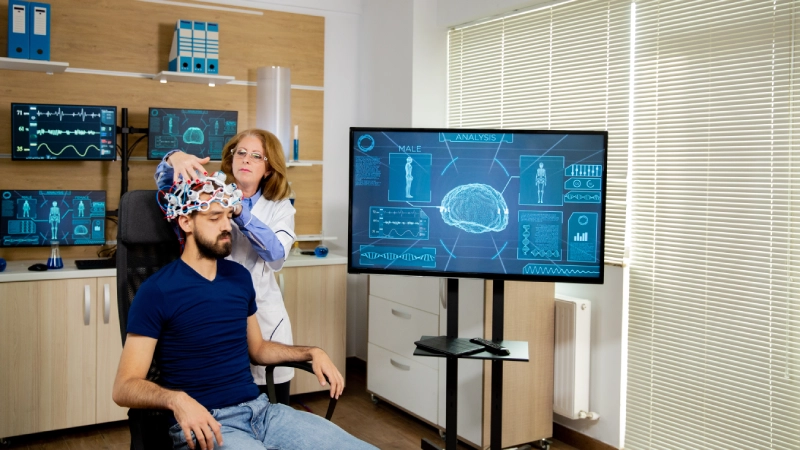
In psychological and legal domains, questions arise about ownership and consent related to brain data. For example, existing laws in some regions may treat neural data in the same category as third-party metadata, leaving gaps in protections that could expose individuals to unwarranted surveillance or misuse of their mental information. Proposals for “neurorights” — legal protections specifically for neural data — are gaining traction but are not yet widely enacted.
Ethical discussions also highlight the potential for behavioral manipulation or loss of autonomy. Highly precise BCIs that interact bidirectionally with the brain could, in poorly regulated contexts, influence emotional states or decision-making processes without full user awareness or consent. Although such scenarios remain largely theoretical, their possibility underscores the importance of robust ethical frameworks and oversight, particularly as BCIs move beyond therapeutic applications and closer to consumer and enhancement realms.
Safety, Security, and Regulatory Issues
Safety concerns extend beyond ethical debates into the realms of medical risk and cybersecurity. For invasive BCIs — which require surgical implantation of electrodes or sensors — the risks include surgical complications, long-term biocompatibility issues, and the unknown effects of chronic neural interfacing. In addition, researchers warn that current BCI systems are vulnerable to cyberattacks that could intercept or manipulate neural signals. A recent study from Yale’s Digital Ethics Center recommends systemic safeguards, including strong authentication, encryption for neural data, and secure, non-surgical software updates to reduce the risk of cyber exploitation. The researchers emphasize that without adequate security measures, large-scale breaches could undermine both individual autonomy and public trust in BCI technology.
Regulatory frameworks are also struggling to keep pace. Traditional medical device regulations are not fully equipped to address the dual nature of BCIs — as both medical tools and complex software systems that interact with artificial intelligence. Experts argue for interdisciplinary, anticipatory governance models that incorporate ethical principles alongside technical safety standards. This includes transparent clinical trial practices, ongoing monitoring of implanted device performance, and clear policies regarding data access and control.
Moral and Societal Dimensions
BCIs also provoke deeper philosophical questions about agency, identity, and what it means to be human. By blurring the boundary between biological cognition and machine interaction, neurotechnology forces society to reconsider long-held assumptions about the self, privacy, and mental sovereignty. Some ethicists frame BCIs as not merely tools for restoring lost capacities but as technologies that challenge the very conditions under which individuals express autonomy and engage with their community.
Public debate further grapples with the socioeconomic divide that could arise with widespread BCI access. If advanced neurotechnologies become available only to wealthy or privileged groups, concerns about a new “neuro-elite” class could exacerbate existing inequalities. Such a dynamic would not only have ethical implications but could also prompt legal interventions to ensure equitable access and prevent discrimination.
Looking Ahead
As of 2025, BCIs stand at the intersection of immense potential and profound responsibility. On one hand, they offer life-changing capabilities for individuals with severe neurological impairments and compelling prospects for human-machine collaboration. On the other hand, they bring unparalleled privacy challenges, safety risks, and ethical dilemmas that require thoughtful governance. Policymakers, engineers, ethicists, and society at large must collaborate to guide the development of BCIs in a manner that maximizes benefit while safeguarding human dignity and rights. The trajectory of these technologies suggests that brain interfaces will shape not only the future of medicine but also the evolving relationship between human cognition and digital systems — a frontier rich with promise and peril alike.

Comments are closed.