
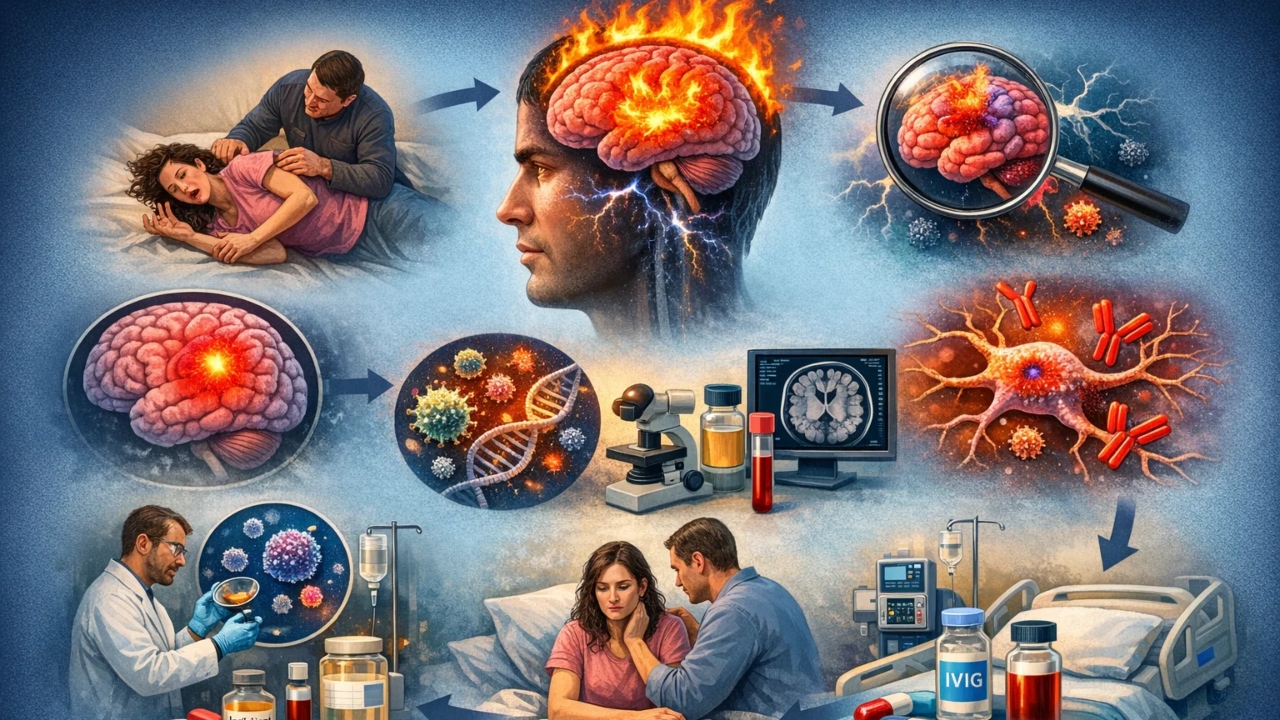

Scientists at Oregon Health & Science University in Portland have discovered a rare and dangerous “brain on fire“A major weakness has been detected in the disorder. This disease, which is called Anti-NMDA Receptor Encephalitis in medical language, occurs when the body’s immune system starts attacking the NMDA receptors of the brain. These receptors are very important for memory and thinking ability. Due to this attack, the patient can have mental changes, seizures and in severe cases can even be life threatening.
According to the report of ScienceDaily, researchers have identified a precise “hotspot” on the brain receptor. That is, that special place where the immune system attacks. With this discovery, it is hoped that more accurate and effective treatments can be developed for this disease in the future. Not only this, this discovery can also make early diagnosis of the disease easier at the initial level. Now understand this big scientific success in 10 easy points.
1. What is “Brain on Fire” disease?
‘Brain on Fire’ is the common colloquial name, in medical language it is called Anti-NMDA Receptor Encephalitis. This is a rare but serious inflammatory brain disease in which the immune system attacks the brain.
2. What is the real reason behind this disease?
It is an autoimmune condition in which the body’s immune system mistakenly damages NMDA receptors—which play a key role in the brain’s memory and thinking ability.
3. What major discovery has been made in the new research?
Scientists at Oregon Health & Science University have discovered a special “hotspot” on the NMDA receptor, where the immune system attacks. This may open the way for targeted medicines.
4. Why is this discovery considered important for treatment?
With this new discovery, such medicines can be developed in the future which directly affect the root cause of the disease, thereby making the treatment more accurate and effective.
5. Will this make early diagnosis possible?
Yes, scientists believe that with the help of this target, blood tests can be developed, through which the disease can be detected in the early stages.
6. What are the symptoms of this disease?
Initially there is headache, fever and confusion, but later the patient may also show behavioral changes, memory loss, seizures and severe mental symptoms.
7. Is it mistaken for mental illness?
Yes, sometimes due to behavioral and mental changes of the patient, it is considered a psychiatric problem, due to which proper treatment can be delayed.
8. How dangerous is this disease?
This is rare, but in severe cases it can also be fatal. If timely treatment is received, the chances of recovery are 70-80%.
9. Which people are more at risk?
This disease is especially seen in youth of 20-30 years, especially women, although it can affect anyone.
10. How did the name ‘Brain on Fire’ come about?
Due to swelling and rapid immune reaction in the brain, it feels as if the brain is burning. This name became popular due to the book Brain on Fire and the film based on it.

Comments are closed.