
Bristol museum heist: Priceless ivory elephant, footage from colonial India, Buddha statue among stolen artefacts

The over 600 artefacts stolen from Bristol Museum in the UK included household belongings, souvenirs, photographs, and papers of British people who lived and worked in the colonies, including India. However, the most valuable of the stolen items included artifacts taken from India, such as an elephant carved in ivory and an ivory statue of the Buddha.
According to Bristol City Council, the items stolen include medals, badges and pins, necklaces, bangles and rings, decorative items such as carved ivory, silver items, and bronze figurines. Natural history pieces, including geological specimens, are also believed to have been taken in the burglary.
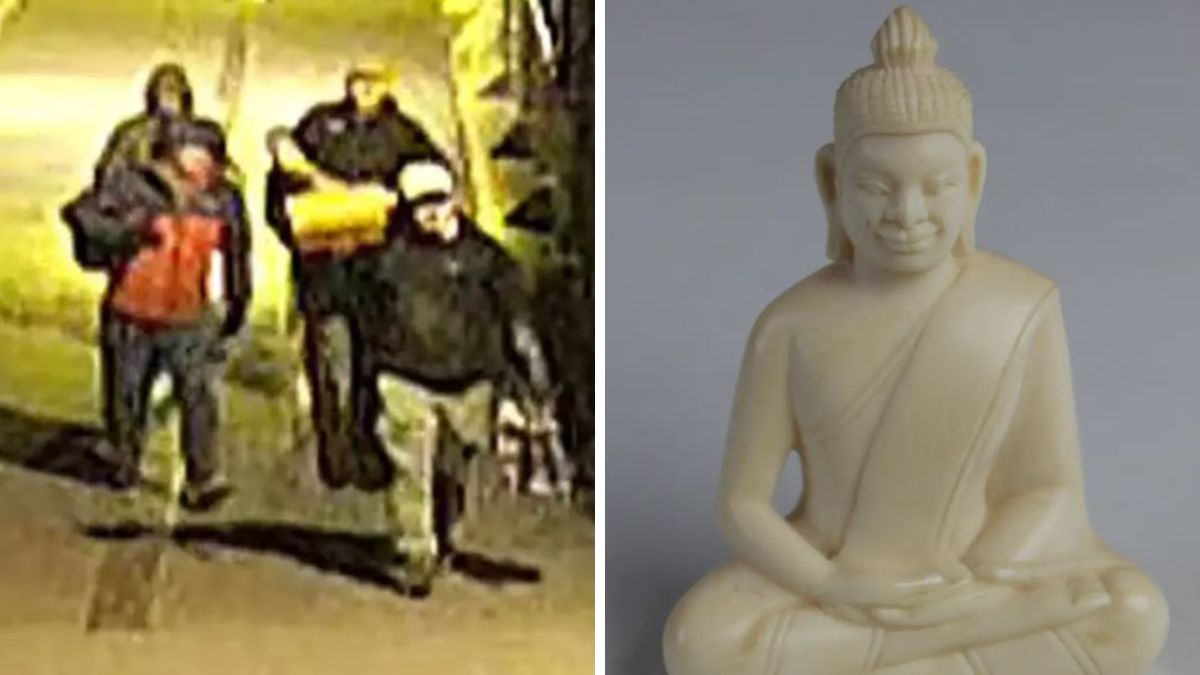
The Bristol City Council also released images of an elephant carved in ivory, an ivory statue of the Buddha, a ship lantern, and an Emancipation token.
The museum archived the links between Britain and countries in the British Empire from the late 19th century to recent times, including India. It had over 2,000 items in the film collections dating from 1920 to the 1970s, with footage from India and countries in Africa, and around 500,000 photographs dating from the 1860s to the 1970s. These include the African photographs of the writer Elspeth Huxley, the Crown Agents Railway archive, and Charles Trotter’s collection of negatives from 1950s Nairobi.
Investigation officer Det. Constable Dan Burgan claimed many of these collections were donations. “These items, many of which were donations, form part of a collection that provides insight into a multilayered part of British history, and we are hoping that members of the public can help us to bring those responsible to justice,” he told reporters.
Interestingly, Bristol, situated over 195 kilometers southwest of London, was a prominent spot of the slave trade, with ships based in the city transporting Africans into slavery. Most of the people in the city had benefited from and enjoyed the benefits of slavery until its ban in 1807.
In 2020, anti-racism demonstrators toppled the statue of Edward Colston, a 17th-century slave trader, which was later put on display in the museum.
4 men wearing hoodies
The theft happened on September 25 after four men, wearing hoodies and caps, broke into a building between 1 am and 2 am local time.
The theft was discovered only the next day. According to Philip Walker, head of culture and creative industries at Bristol City Council, the museum had been ransacked. “There were boxes that had been opened and spilled, the contents – if they hadn’t been taken – spilled on the floor, the shelves in disarray, and the collections scattered around. So it was a pretty devastating scene to discover,” he told reporters.
The CCTV images captured four white men dressed in jackets, trainers, and hoodies. One of them appeared to walk with a slight limp in his right leg.

Comments are closed.