
BUV collaborates with National Data Association to support data economy development in Vietnam

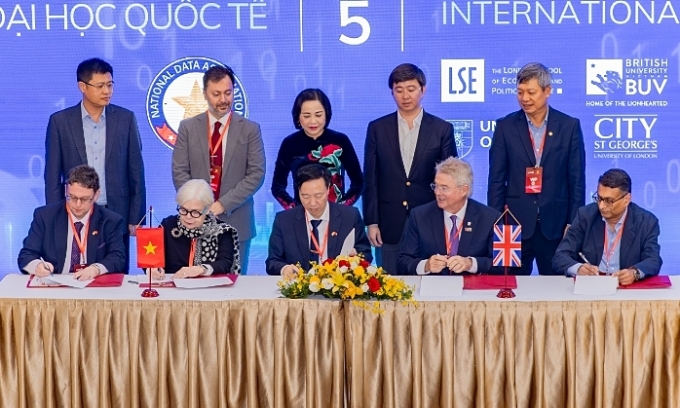
The agreements were signed during the International Conference on Data Economy, marking a new phase of cooperation among academic institutions and national organizations involved in data governance, research, and policy development.
The signing ceremony between the National Data Association and partner universities. Photo courtesy of BUV |
The MoU outlines several areas of cooperation. These include strengthening Vietnam’s participation in international discussions on the data economy, expanding academic and policy collaboration with overseas institutions, and supporting research related to data governance, cybersecurity, and regulatory frameworks.
The partnerships are also intended to facilitate cooperation among government bodies, universities, and research institutions to support talent development and long-term capacity building in the data sector.
The signing ceremony took place as part of the International Conference on Data Economy, co-organized by the Ministry of Public Security and BUV in Hung Yen province. The event brought together more than 350 delegates, including Nguyen Thi Thanh, Vice Chairwoman of the National Assembly of Vietnam, academics and data specialists from the United Kingdom, Australia, and the European Union, as well as representatives from Vietnamese ministries, diplomatic missions, international organizations, and technology companies.
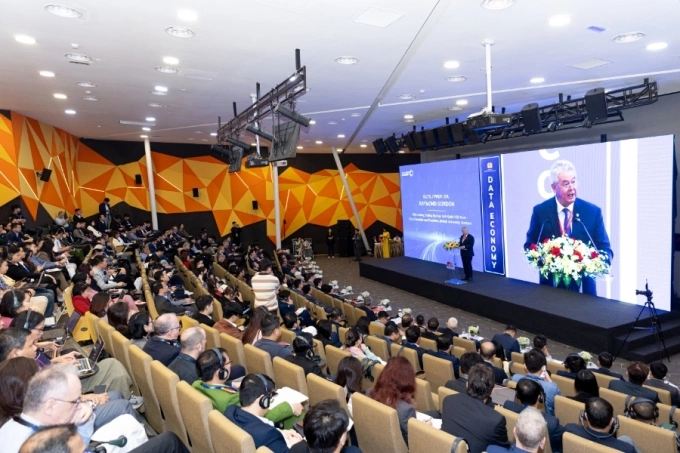 |
Overview of the conference. Photo courtesy of BUV |
Discussions at the conference focused on approaches to developing a national data strategy and enabling Vietnam to integrate more closely with regional and global data ecosystems.
In his opening remarks, Major General Nguyen Ngoc Cuong, Director of the National Data Center and Vice Chairman of the National Data Association, said global development models are shifting from reliance on traditional resources toward knowledge-based and data-driven economies.
He noted that data has increasingly become a factor of production alongside land, labor, and capital, contributing to productivity, innovation, artificial intelligence development, and economic growth. According to him, effective data governance and utilization are becoming key determinants of competitiveness among nations.
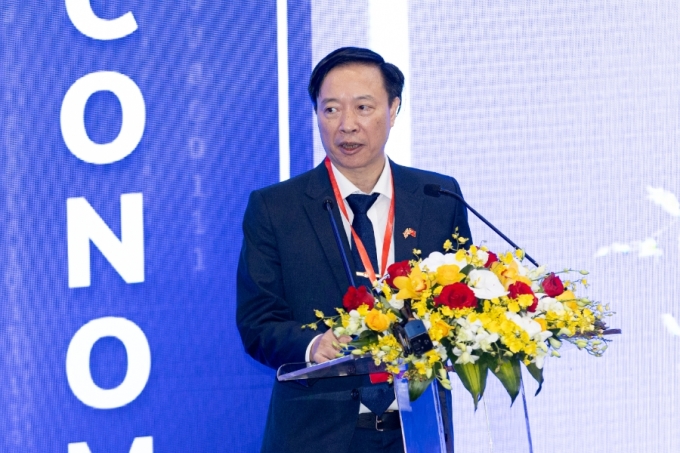 |
Major General Nguyen Ngoc Cuong, Director of the National Data Center and Vice Chairman of the National Data Association, delivering opening remarks at the conference. Photo courtesy of BUV |
Major General Nguyen Ngoc Cuong said the Government has designated the Ministry of Public Security as the national focal point for data management. The ministry is responsible for developing and operating major data platforms, including the National Population Database, the Electronic Identification and Authentication System, and the National Data Integration and Sharing Platform.
He added that the National Data Centre, currently under development, is expected to provide core infrastructure for digital government, artificial intelligence applications, and nationwide data connectivity, contributing to the formation of a data market and the broader data economy.
Speaking at the conference, Professor Raymond Gordon, President and Vice-Chancellor of BUV, said the data economy extends beyond technology and is closely linked to national development strategies, governance systems, and human resource development.
 |
Professor Raymond Gordon, President and Vice-Chancellor of British University Vietnam (BUV), delivering his remarks. Photo courtesy of BUV |
He noted that effective data systems require balancing innovation with trust and regulatory oversight, and that long-term competitiveness depends on how well these systems are designed and implemented.
According to Associate Professor Ali Al-Dulaimi of BUV, effective data governance combined with artificial intelligence could contribute an additional $79 billion to Vietnam’s GDP by 2030. AI, he noted, has the potential not only to optimize manufacturing and agriculture but also to deliver more personalized public services and improve citizens’ quality of life.
Associate Professor James Abdey from LSE highlighted challenges related to measuring the economic value of data. He said that without incorporating data assets into national accounting frameworks, it would be difficult to design effective policies to support the data economy.
In closing remarks, Major General Nguyen Ngoc Cuong said Vietnam has identified three long-term priorities for cooperation: research in data economics and data valuation, collaboration on data governance and security, and joint efforts to develop high-quality human resources.
He added that the conference and the newly signed agreements provide a basis for future research programs and international cooperation in the field of data economy.

Comments are closed.