
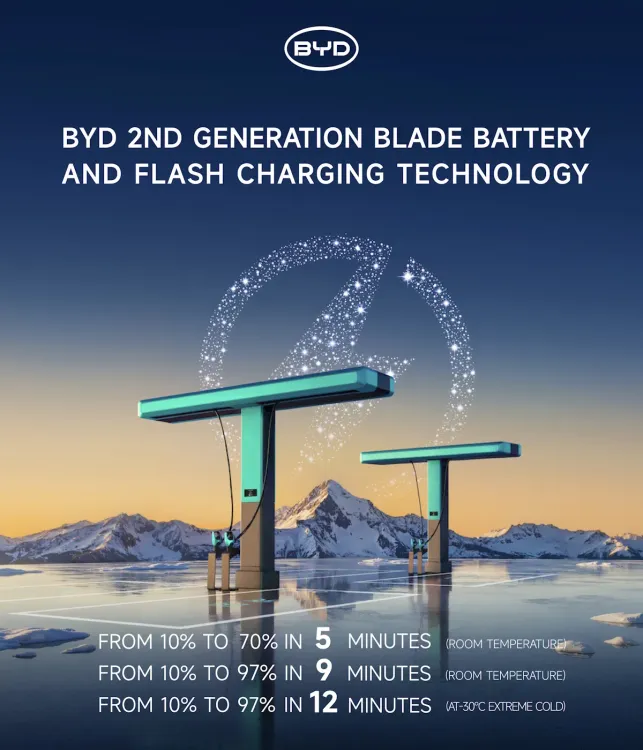

BYD has officially introduced its much-anticipated second-generation Blade Battery alongside a new rapid charging technology. Unveiled at a dedicated event in Shenzhen, China, the electric vehicle giant aims to tackle two of the biggest hurdles facing potential EV buyers: long waiting times at charging stations and severely reduced battery efficiency during extreme winter conditions. These technological leaps are expected to drastically improve the everyday ownership experience of electric vehicles.
By simultaneously upgrading both the internal battery chemistry and the external charging infrastructure, BYD claims to have achieved record breaking charging speeds. The company plans to rapidly deploy this new technology, announcing a massive initial rollout of 20,000 compatible charging stations across China, with a global expansion scheduled to begin by the end of 2026.
Record Breaking Charging Speeds
The headline feature of the new second generation Blade Battery is its ability to absorb power at an unprecedented rate. According to BYD, when connected to their new proprietary FLASH charging system, the battery can charge from 10 percent to 70 percent in a mere five minutes. And, it takes only nine minutes to reach a near full 97 percent charge. This effectively brings the EV recharging experience almost in line with the time it takes to refuel a traditional petrol car.
Crucially, the company has managed to solve the notorious issue of cold weather performance. Typically, electric vehicle batteries take significantly longer to charge in freezing temperatures. However, BYD states that even in extreme conditions of minus 30 degrees Celsius, the time required to charge the battery from 20 percent to 97 percent only increases by three minutes compared to standard room temperature times. This is a massive breakthrough for buyers in colder regions who have traditionally avoided electric cars.
Balancing Energy Density And Safety
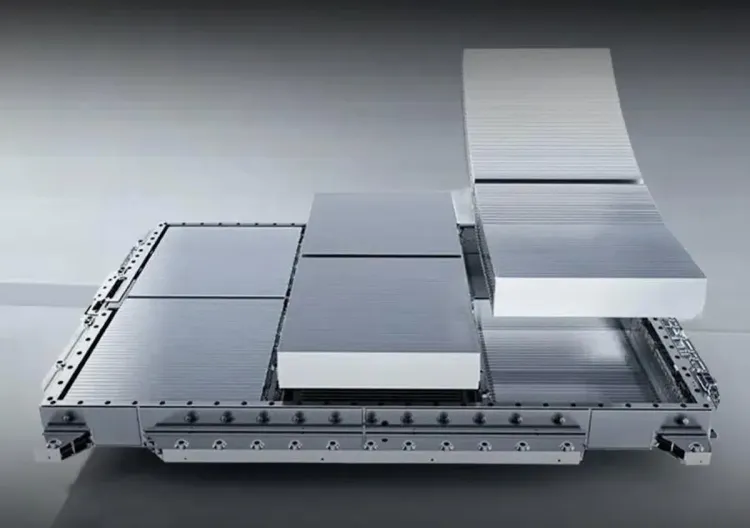
Historically, engineers have struggled to create a battery that charges incredibly fast while still holding enough energy for long range driving. BYD claims to have resolved this conflict with the second-generation unit. The new battery boasts a five percent increase in overall energy density compared to the first-generation model. When this dense battery is paired with BYD’s latest lightweight vehicle chassis, as seen in the new DENZA Z9GT, it can deliver a massive claimed range of up to 1,036 kilometres on a single charge.
To safely manage the intense heat generated by such rapid charging speeds without risking thermal runaway, the battery utilizes a newly designed Full-Spectrum Intelligent Thermal Management System. This is paired with a specific Lithium-Ion High-Speed Channel inside the cell architecture to maximize heat dissipation. Despite the higher energy density and faster charging capabilities, BYD asserts that the battery has passed stringent safety tests that far exceed current national standards, maintaining the brand’s core focus on fire safety.
Redesigned Charging Infrastructure
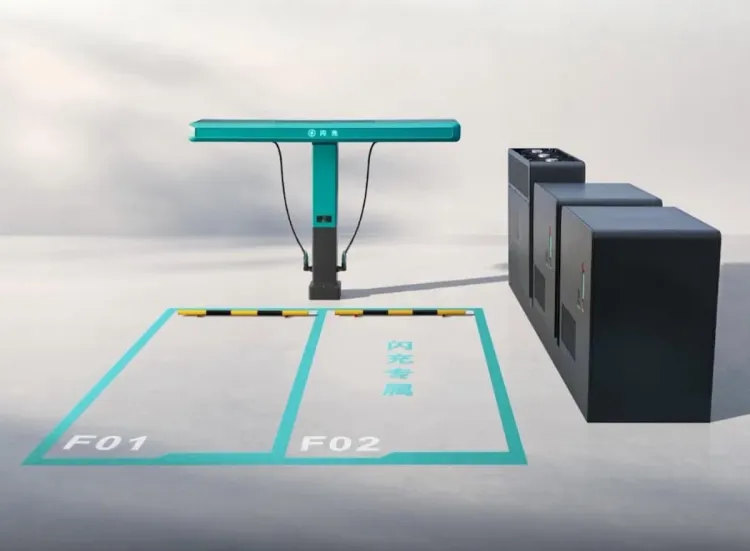
To support this battery tech, the new FLASH charger delivers a massive 1500 kW output through a single connector. It features the world’s first T-shaped pulley system.
This specific zero-gravity design allows users to easily lift the heavy high-voltage connector to either side of the vehicle while keeping the cables completely off the ground, ensuring a clean and hygienic user experience.
Each charging station is directly paired with a high-capacity energy storage system. This localized storage effectively bypasses the immediate capacity limits of the local electrical grid, preventing the massive power surges from overstressing the network during peak usage. The technology aligns closely with the integrated Solar-Storage-Charging vision heavily promoted by BYD Chairman Wang Chuanfu, aiming to completely overhaul public charging hardware.

Comments are closed.