

134
NEW DELHI: In a major push to accelerate industrial growth, strengthen infrastructure, and enhance energy security, the Union Cabinet has approved a series of high-value initiatives. These include the ₹33,660 crore Bharat Audyogik Vikas Yojana (BHAVYA), expanded MSP support for cotton farmers, key highway development projects, and a new small hydro power scheme.
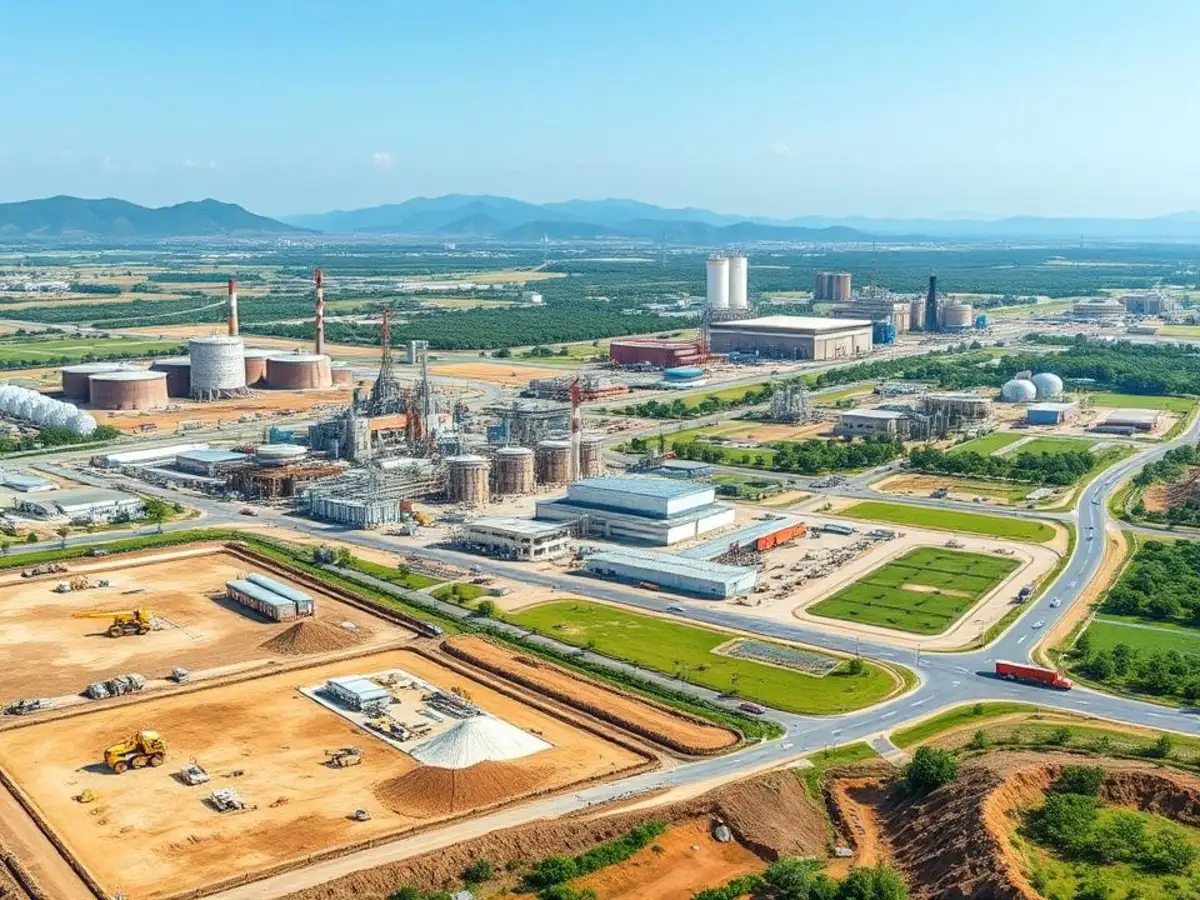
Among the key approvals is the Bharat Audyogik Vikas Yojana (BHAVYA), a central sector scheme aimed at developing investment-ready, plug-and-play industrial parks across the country. With an outlay of ₹33,660 crore, the scheme targets the creation of 100 industrial parks over a six-year period from FY 2026–27 to 2031–32.
Under the scheme, the Centre will extend financial assistance of up to ₹1 crore per acre. The projects will be implemented in partnership with state governments, central public sector undertakings, and private developers. Selection will be carried out through a challenge-based mechanism, with proposals evaluated on parameters such as alignment with PM Gati Shakti principles, adoption of green energy, provision of underground utility infrastructure, and reforms to improve ease of doing business.
The initiative is expected to unlock around 34,000 acres of plug-and-play industrial land, giving a boost to flagship programmes like Make in India and Atmanirbhar Bharat, while also generating large-scale employment opportunities.
Addressing the fall in cotton prices during the 2023–24 season, the government intervened through the Cotton Corporation of India (CCI) to procure cotton at the Minimum Support Price (MSP). This move entailed a total outlay of ₹11,712 crore, benefiting approximately 7.25 lakh farmers and involving the purchase of 33 lakh cotton bales. In addition, the Cabinet approved reimbursement of ₹1,718 crore spent on MSP operations, providing further relief to farmers affected by market fluctuations.
The Cabinet has also given its nod to the construction of a 101.5 km access-controlled four-lane highway connecting Barabanki and Bahraich in Uttar Pradesh, at an estimated cost of ₹6,969 crore. The NH-927 project is expected to cut travel time between the two cities from three hours to about one hour, while boosting India–Nepal trade connectivity. It will help ease congestion on key routes in eastern Uttar Pradesh and improve access to Shravasti airport as well as prominent Buddhist tourist destinations. The project also includes a six-lane bridge over the Ghaghara river and is expected to benefit sectors such as agro-processing, textiles, logistics, and pharmaceuticals by reducing transit time and costs.
In the energy sector, the Cabinet has approved a ₹2,585 crore Small Hydro Power Development Scheme for the period 2026–31 to tap India’s significant untapped hydro potential. The scheme will focus on projects ranging from 1 MW to 25 MW in capacity and is expected to add 1,500 MW of power while attracting investments of around ₹15,000 crore. Financial assistance will cover up to 30% of project costs (subject to a cap of ₹30 crore) in northeastern and border regions, and up to 20% (capped at ₹20 crore) in other parts of the country. The initiative aims to ensure reliable electricity supply in remote areas, reduce migration, improve grid stability, and cut carbon emissions by an estimated 4.3 million tonnes annually.
Emphasising its infrastructure push since June 2024, the government said it has approved projects across key sectors, including railways, highways, metros, airports, ports, and ropeways, along with major investments in housing, smart cities, and water supply schemes. Overall, projects worth about ₹22.3 lakh crore have been cleared, highlighting a strong focus on boosting economic growth, connectivity, and industrial development.

Comments are closed.