
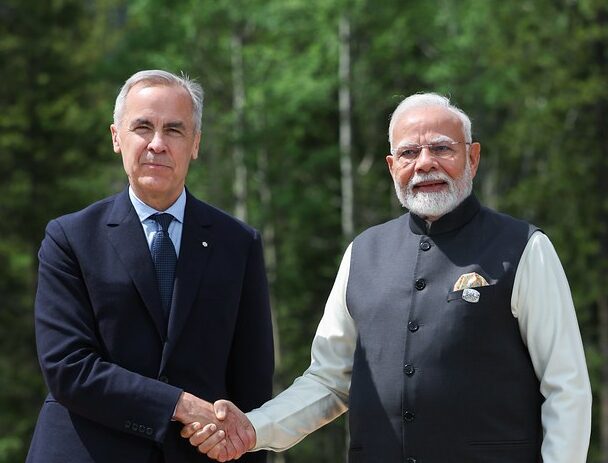
Carney and Modi Reset Canada–India Ties With $5.5 Billion in Agreements and Push for Free Trade Deal

Prime Minister Mark Carney and Indian Prime Minister Narendra Modi have unveiled what they describe as a new chapter in Canada–India relations, announcing billions of dollars in commercial agreements and a commitment to finalize a free trade pact by the end of the year. The announcement came after a one-on-one meeting at Hyderabad House in New Delhi, signalling a diplomatic thaw after years of tension tied to allegations of foreign interference.
Carney said Canada is accelerating efforts to diversify trade and reduce reliance on the United States, with India positioned as a central partner. The two countries have set a target of more than doubling annual two-way trade to approximately $70 billion by 2030. At the core of that ambition is a proposed Comprehensive Economic Partnership Agreement, which both sides aim to conclude by December. The agreement would address tariff barriers that have historically limited Canadian exports to the Indian market.
Among the headline announcements is a $2.6 billion uranium supply agreement between India and Saskatoon-based Cameco. The deal covers nearly 22 million pounds of uranium for nuclear energy production between 2027 and 2035, offering a significant boost to Saskatchewan’s mining sector. Energy cooperation featured prominently in discussions, with India expressing interest in securing reliable Canadian energy exports to support its rapidly expanding economy.
Technology and pharmaceutical investments also form part of the broader package. HCL Technologies plans to expand its artificial intelligence footprint in Canada, opening new AI centres in Calgary and Mississauga while growing its Vancouver operations. Jubilant Pharmanova will invest $155 million to expand sterile injectable production in Quebec, and OCT Therapies & Research will increase manufacturing in New Brunswick. In the agriculture and resource sectors, Elk Valley Resources will supply coal to India, while Saskatchewan announced collaboration on a pulse protein centre of excellence.

The diplomatic reset follows a period of strain after former prime minister Justin Trudeau accused Indian agents of involvement in the killing of Sikh activist Hardeep Singh Nijjar in British Columbia. The RCMP later alleged Indian-linked actors were tied to incidents of extortion and violence in Canada. According to the Prime Minister’s Office, Carney raised concerns about transnational repression directly with Modi and reaffirmed Canada’s commitment to protecting its citizens. Both governments agreed to enhance cooperation on security and law enforcement, including efforts to curb the flow of fentanyl precursors and combat organized crime networks.
While some members of Canada’s Sikh community have voiced concern over renewed engagement, Foreign Affairs Minister Anita Anand defended diplomatic dialogue as essential for progress. She emphasized that engagement does not negate Canada’s commitment to sovereignty and public safety. The agreements signed this week mark what Ottawa describes as the beginning of a broader economic and strategic partnership, one aimed at generating long-term opportunities while navigating complex political realities.

Comments are closed.