
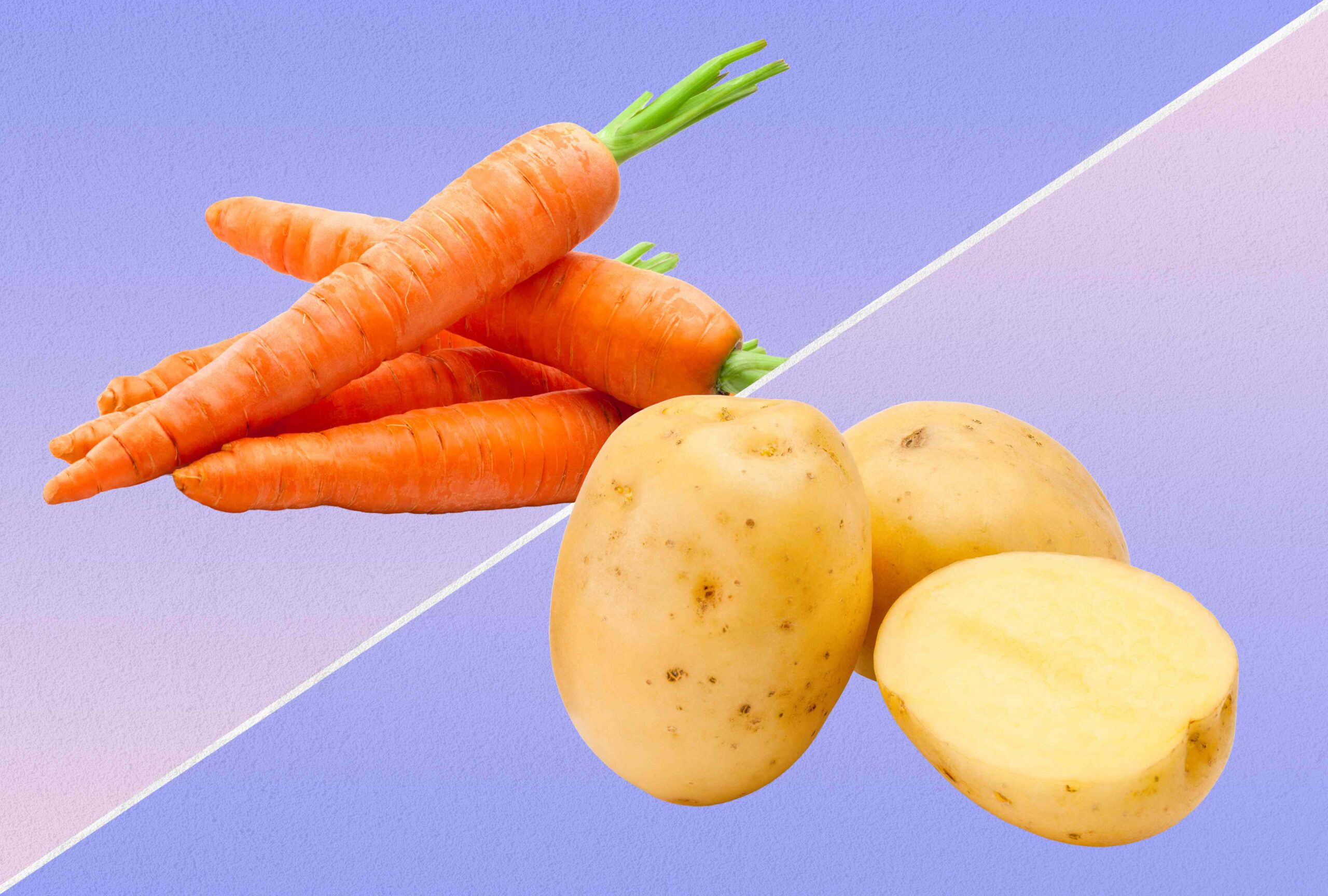

Carrots and potatoes are both nutritious vegetables, but they don’t affect blood sugar the same way. Here’s what dietitians say.
Reviewed by Dietitian Lisa Valente, M.S., RD
Key Points
- Carrots and potatoes are both vegetables that have some carbs, fiber and other nutrients.
- Potatoes have more carbs than carrots, but they can still be part of a blood-sugar-friendly diet.
- Pair carbs with protein and healthy fats, focus on fiber and pay attention to portion size.
If you’re trying to manage your blood sugar, you’ve probably heard conflicting advice about carbohydrates, including vegetables like carrots and potatoes. While both veggies are nutrient-dense foods that provide important vitamins, minerals, and fiber, they also contain carbohydrates, which can affect blood sugar levels.
However, blood sugar management isn’t as simple as labeling foods “good” or “bad.” According to Danielle Smiley, RDN, LDN, CD-N“The bigger factors are portion size, preparation method, and what they’re paired with. Blood sugar management is about building balanced meals, not villainizing a vegetable.”
So how do carrots and potatoes compare when it comes to blood sugar? Here’s what dietitians and the latest research say.
How Carrots Affect Blood Sugar
Carrots are considered a non-starchy vegetable and contain a relatively small amount of carbohydrates compared to many other side dishes. One cup of raw carrots contains about 12 grams of carbohydrates and about 4 grams of fiber, which can help slow digestion and help stabilize blood sugar levels. According to Kimberley Rose-Francis, RDN, CDCES, LD“Fiber is beneficial not only because it can help reduce blood sugar spikes, but also because it nourishes the good gut bacteria. The good bacteria play a role in maintaining healthy blood sugar levels.”
Research shows that carrot consumption may positively influence glucose metabolism and the gut microbiome, both of which are involved in blood sugar regulation. While more research is needed, current evidence supports including carrots as part of a balanced eating pattern for blood sugar management.
How Potatoes Affect Blood Sugar
Potatoes often get a bad reputation in conversations about blood sugar, but dietitians say the full picture is more nuanced. “Both carrots and potatoes can be part of a healthy eating pattern, including for individuals managing diabetes or prediabetes,” says Smiley. “The primary difference is that potatoes contain more carbohydrate per serving than carrots, which generally results in a greater impact on blood glucose levels.”
A medium potato contains approximately 30-35 grams of carbohydrates. According to Rose-Francis, “Potatoes are often vilified because of their starch content, but one medium potato with the skin contains about 2 grams of fiber.”
The type of potato and how it’s prepared also matter. Russet potatoes tend to be higher in starch than red or waxy varieties. Keeping the skin on increases the fiber content, while cooking and cooling potatoes can increase resistant starch, which is a type of carbohydrate that is digested differently and may help improve post-meal blood sugar responses.
Research suggests preparation methods matter as well. A recent study found that fried potatoes were associated with a greater risk of blood sugar issues, while baked, boiled and mashed potatoes had a lesser impact on blood sugar. Pairing potatoes with protein, healthy fats and non-starchy vegetables can also help blunt blood sugar spikes.,
Carrots vs. Potatoes: Which Is Better for Blood Sugar?
When comparing the two vegetables, Rose-Francis mentions that both carrots and potatoes are vegetables containing carbohydrates, which can affect blood sugar levels. “However, if you eat the same amount of each, potatoes typically cause a greater rise in blood sugar because they contain more starch than carrots, resulting in a higher glycemic response,” adds Rose-Francis.
“I recommend both,” says Smiley. “Each provides unique nutritional benefits, and most people do not need to eliminate either food to support healthy blood sugar levels.”
Instead, both dietitians emphasize focusing on the overall meal. Rose-Francis recommends pairing potatoes with a protein source such as salmon and serving carrots alongside lean proteins like chicken breast. Smiley offers examples such as roasted carrots with salmon and quinoa, a baked potato topped with lean chili or sheet-pan chicken with carrots and potatoes.
Ultimately, carrots may have a slight advantage for blood sugar due to their lower carbohydrate content, but both can fit into a blood sugar-friendly eating pattern when portions and meal composition are considered.
Other Tips for Better Blood Sugar
Choosing between carrots and potatoes is only one piece of the puzzle. Research consistently shows that overall eating patterns and lifestyle habits have a much greater impact on blood sugar management.
Here are a few additional tips for better blood sugar:
- Prioritize protein at meals and snacks. Protein slows digestion and can help to reduce blood sugar spikes after eating carbohydrates.
- Pair carbohydrates with healthy fats and fiber. Combining carbohydrates with foods such as nuts, avocado, beans, fish, or lean proteins can create a more balanced glycemic response.
- Be mindful of portions. Even healthy carbohydrate-containing foods can affect blood sugar when eaten in large amounts. Paying attention to serving sizes can help maintain steadier blood glucose levels.
- Take a walk after meals. Research suggests that even a 10- to 30-minute walk after eating may help lower post-meal blood sugar levels.
- Include more fiber-rich foods. Fruits, vegetables, legumes, and whole grains provide fiber, which can help support healthy blood sugar management and gut health.
Our Expert Take
When it comes to blood sugar, carrots and potatoes are both nutritious choices. Carrots generally have a lower impact on blood sugar because they contain fewer carbohydrates and more fiber. However, potatoes provide valuable nutrients, including potassium and vitamin C, and can still fit into a healthy eating pattern.
Rather than focusing on which vegetable is “better,” experts recommend paying attention to portion sizes, preparation methods, and overall meal balance. Pairing either carrots or potatoes with protein, healthy fats, and fiber-rich foods can help to support steadier blood sugar levels. As Smiley puts it, “Blood sugar management is influenced far more by the overall meal pattern and lifestyle habits than by choosing one vegetable over another.”

Comments are closed.