
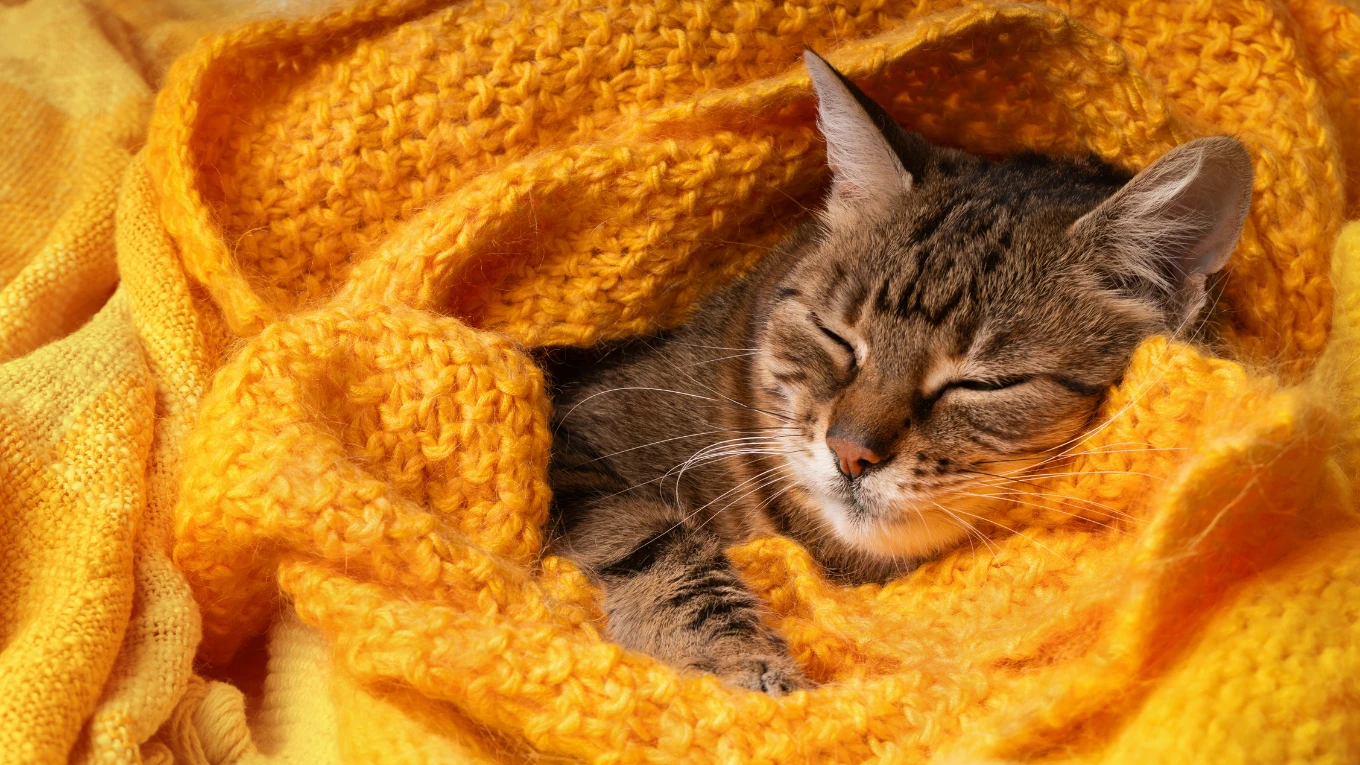

For as standard a part of cat ownership as it is, scientists don’t really know all that much about cats’ purrs. But a new study reveals a lot more about this odd cat habit, and it turns out there’s nothing standard about purring at all.
In fact, your cat’s purr is totally unique to them, and it never changes throughout their life. It is, in the end, the most unique and identifiable thing about a cat, and far more distinctive than what was previously thought to be the most individualized cat feature, its meow.
Your cat’s purr is unique to them and never changes, according to science.
For ages, it was thought that a cat’s meow was the most distinctive thing about it, but a new study from Museum für Naturkunde Berlin and the University of Naples Federico II has turned that long-held convention on its head.
My Ocean Production | Shutterstock
They found that purrs are basically the cat version of fingerprints to us humans. Meows vary significantly, too, especially since cats were domesticated. But scientists have found that meows also change throughout a cat’s life, much like our human voices do.
Purrs on the other hand? They stay unique and constant for a cat’s entire existence, no matter how much their environment or circumstances may change. And they’re so distinct that they can be used as identification, just like our fingerprints.
Purrs have more distinctive rhythm and frequency than meows do.
Cats have different meows for different situations, people, contexts, and all kinds of factors from their lives shift them over time. But when scientists reviewed recordings of cats and analyzed them with vocal-recognition software, they discovered that, despite their variance, they don’t hold a candle to purrs.
 Aleksandr Zotov | Getty Images | Canva Pro
“Once we examined the acoustic structure closely, the even, rhythmic purr turned out to be the better cue for identifying individual cats,” explains the study’s lead author, Danilo Russo.
To determine this, researchers used the same vocal-recognition software they used to analyze meows and found that purrs were a far more reliable differentiator between individual cats than meows were.
Which is, of course, a bit counterintuitive. All purrs just sound like a purr to most of us, whereas meows are audibly distinguishable. But the analysis found that the finer points of acoustics, rhythm, and pitch, perhaps in ways we humans can’t really hear, have much more variance.
Purrs also have far fewer uses than meows do.
Cats, as any owner will tell you, have myriad different meows for myriad different purposes, from asking to be fed to demanding snuggles and even complaining to their human owners. This is distinct from other types of felines in the wild, which have far fewer meows, if they have them at all. Scientists have determined, then, that domestication is what created this array of meows.
“Living with humans — who differ greatly in their routines, expectations, and responses — likely favored cats that could flexibly adjust their meows,” researcher Mirjam Knörnschild explains.
 Edwin Tan | Getty Images Signature | Canva Pro
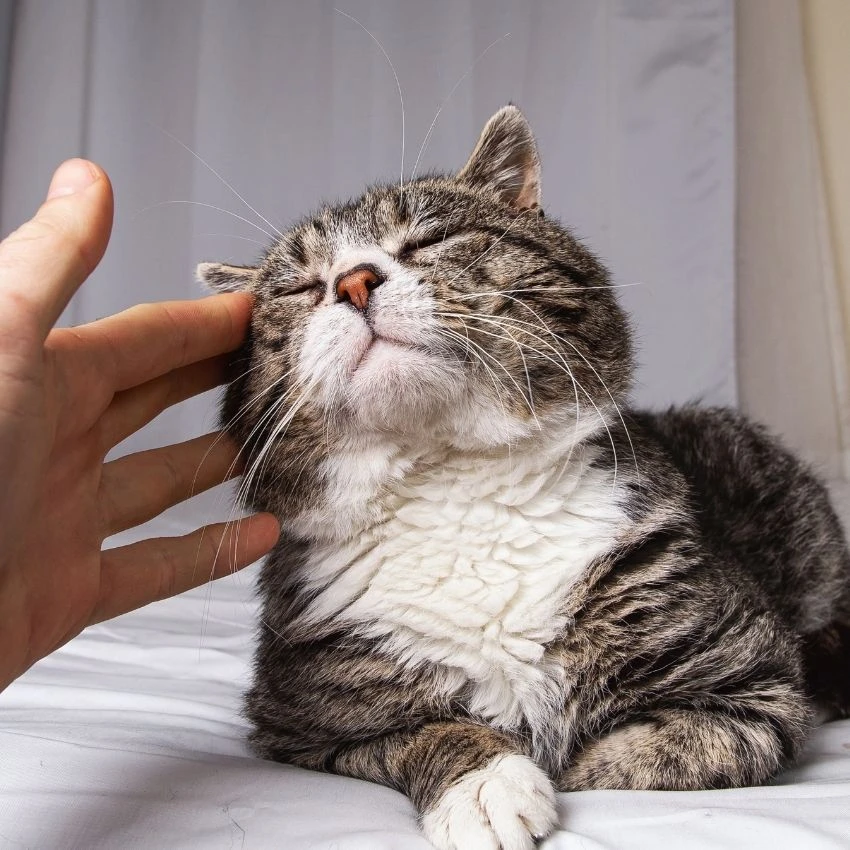
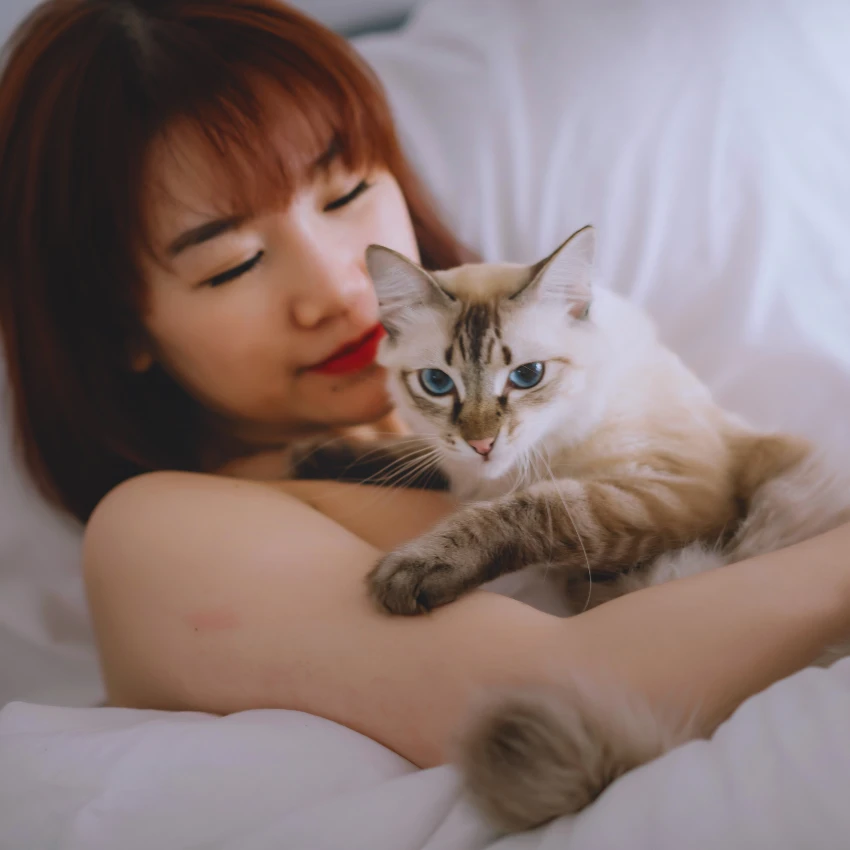
Purrs, on the other hand, are reserved for a very small number of discrete purposes. “Purring often occurs in relaxed situations, such as during petting or close contact with a familiar person,” explains another researcher, Anja Schild. “It also is used for communication between the mother and her kittens shortly after birth.” And, occasionally, cats will purr when stressed.
But that’s about it; beyond those few uses, purring rarely comes up. Making them further distinct is their low frequency, an intricacy we humans may not notice, but cats definitely do. They use it to identify each other in shared environments.
Scientists say this individuality is further underlined by the fact that neither life experience nor the history of domestication has changed the way cats purr. So the next time your cat is purring away in your lap, just know that it’s the most distinctive thing about them, and there will never be another quite like it.
John Sundholm is a writer, editor, and video personality with 20 years of experience in media and entertainment. He covers culture, mental health, and human interest topics.

Comments are closed.