
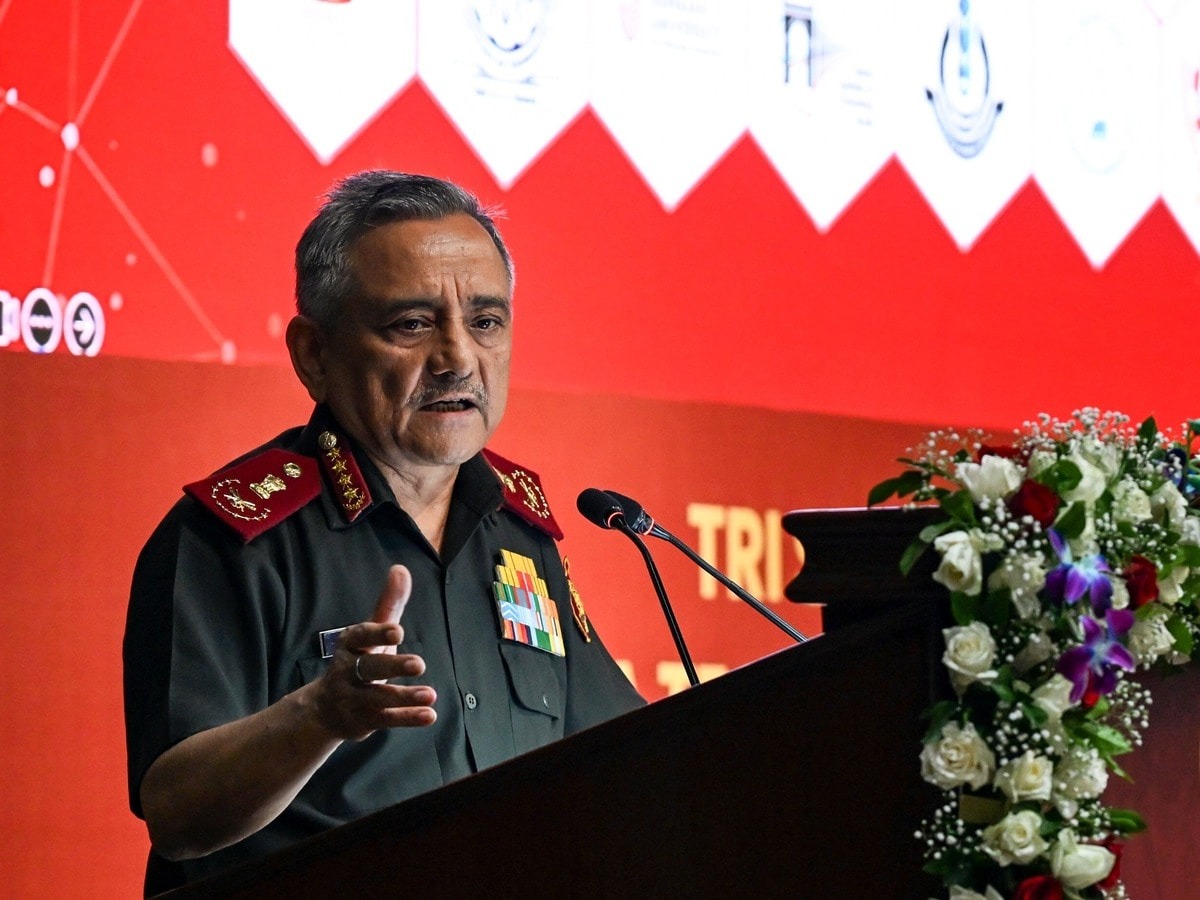

News India Live, Digital Desk: CDS General Anil Chauhan examined India’s foreign policy through the lens of history during a defense dialogue in New Delhi. He told that the ‘Panchsheel Pact’ of 1954 was not only a peace document, but the economic and military conditions of India at that time were also responsible for it.
1. Nehru’s thinking: Need for peace for development
According to General Chauhan, India was a nascent nation immediately after independence. Nehru believed that:
Economic Priority: India needed at least 20-30 years of continuous peace to eradicate its poverty and industrialize.
Avoidance of military expenditure: If a border dispute had started with China, India would have had to spend its budget on military instead of development. Therefore, he tried to avoid war through diplomacy.
2. End of buffer zone (Tibet Factor)
The CDS underlined that China’s occupation of Tibet in 1950 had raised India’s security concerns.
Straight Range: Earlier Tibet existed as a ‘buffer state’ between India and China. After its end, India’s border directly joined China.
Strategic Bets: Nehru thought that the border could be kept secure by building a relationship with China based on friendship (Hindi-Chini Bhai-Bhai) and principles (Panchsheel).
3. 5 basic principles of Panchsheel
At the heart of the agreement were these five things, which Nehru considered the basis of global peace:
Respect for each other’s territorial integrity and sovereignty.
Mutual non-aggression (not attacking each other).
Not to interfere in each other’s internal affairs.
Equality and mutual benefit.
peaceful coexistence.
4. Lessons in today’s context
General Chauhan said that history teaches us that relying only on agreements and papers is not enough.
Strength is the basis of peace: He stressed that today’s India wants ‘peace’ but with ‘power’. The 1962 war had proved that diplomacy is not successful unless it is backed by strong military power.
Changed strategy: Currently India is pursuing a policy of ‘Proactive Defence’, where development of border infrastructure and military modernization is a priority.

Comments are closed.