
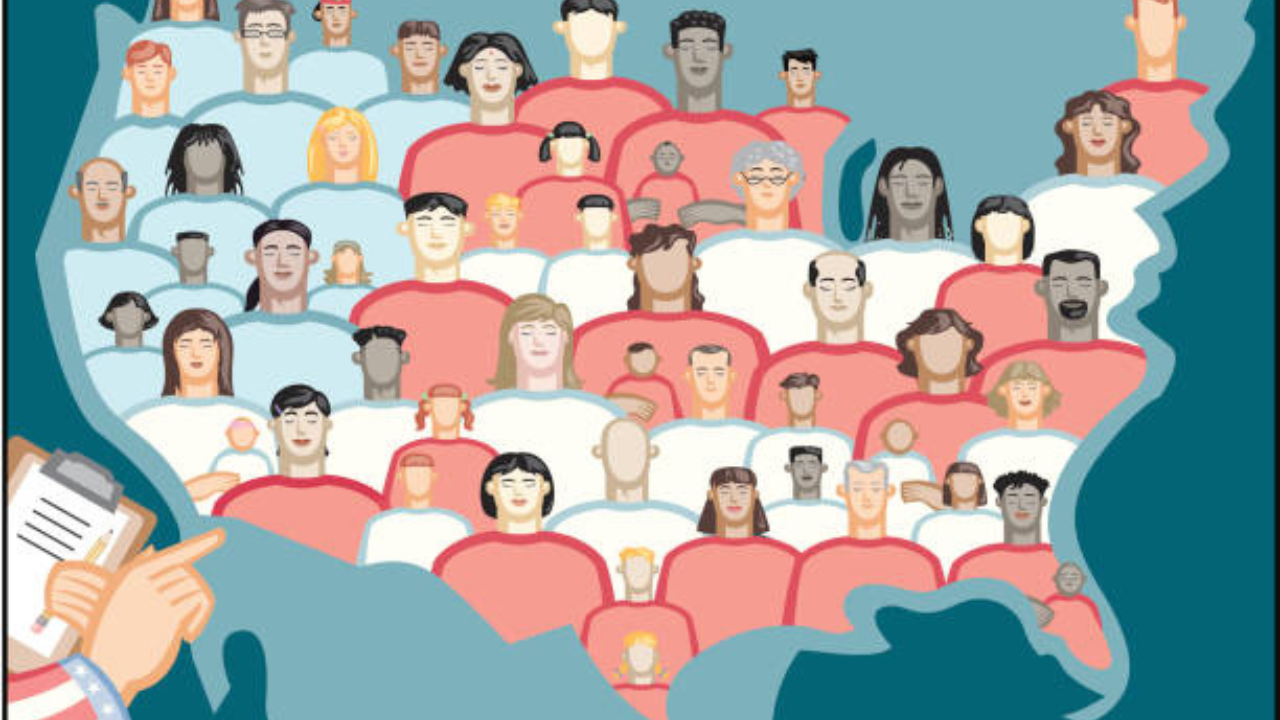
Census 2027: How the Census will be conducted in India in 2027, how the process is different this year; Know the complete process

- Census to be held in 2027
- How will the process be?
- Census will be done differently this year
The Union Cabinet has taken an important decision to conduct the census next year i.e. 2027. Although originally planned for 2021, it has been postponed by six years. The 2021 census was postponed due to the Covid-19 pandemic. For the first time, it will be a fully digital census, which will include census of castes.
Census is conducted in India every ten years. It collects the country’s population, socio-economic status and other important information. The first modern census of India was conducted in 1872 during the British rule. The first census of independent India was conducted in 1951. Till date 15 censuses have been conducted. The Census Act of 1948 provides the legal basis for the census, ensures confidentiality and mandates cooperation. Overall, it is a huge process involving millions of employees, who collect data and prepare reports.
What is Census Process?
Census What is the process, how is it done, how does the staff work and what data is collected? Census in India is conducted under the supervision of Registrar General and Census Commissioner (RGI) under Ministry of Home Affairs. This process is divided into two main stages.
CENSUS Notification: Census in India will be conducted in two phases, gazette notification issued by the government
Phase 1 – Inventory of houses and housing enumeration
This is the first phase, which usually starts a few months before the census. Families are listed. Enumerators work from house to house to collect information about the number of households and facilities. This phase lays the foundation for the census, ensuring that no household is missed. It runs from April to September when the weather is favorable.
Phase 2 – Population Enumeration
This is the main stage where the actual population is calculated. Enumerators go door to door and collect personal information of each person. This usually happens in February-March, when people are at home and the weather is cooler. This process takes place simultaneously across the country to avoid repetition or omission due to migration. It uses the “de jure” method, where individuals are counted at their usual place of residence.
What’s New in the 2027 Census?
Census 2027 will start from 1st March 2027 and preparation will start in 2026. The Cabinet has approved it. This will be a digital census. This means census workers will visit people’s homes with digital gadgets and use them instead of paper. Enumerators can use a tablet or mobile app.
- Citizens will have the option of self-enumeration, where they can enter their information themselves through an online portal. This will ensure paperless and speedy processing
- Caste Census – For the first time since 1931, data related to caste will be collected, which will be important for social policies
- GPS tracking will be used to create maps of houses, which will increase accuracy. States have been directed to appoint officers by January 15, 2026. The census is also politically important, as it may lead to a reshuffle of Lok Sabha seats.
How do the workers go from door to door?
Enumerators are government employees, such as school teachers, anganwadi workers or local officials, who receive special training.
- Preparation – Before the censusareas are divided into groups. Each enumerator will be assigned a group or 100-150 families. They will work in coordination with local authorities
- Door to Door – Enumerators will go door to door on foot, bicycle or vehicle. They work from morning till evening. If they find any house closed, they will visit again. In rural areas they visit every village and in urban areas they visit every locality
- Data collection – They fill out a form, ask questions and record information. This data is used for statistical purposes only.
What will the challenges be?
Need to reach remote areas. Every area needs to be covered. Linguistic diversity also creates challenges and people may not cooperate, but since this is mandatory, police or local help is also sought. Training will be given on how to interact and communicate with people, especially women, during home visits.
Digital Census: Two Phases, First Digital Census of the country; 34 lakh employees will collect information from smartphones
What data is collected?
- Demographic Data – Name, Age, Sex, Marital Status, Date of Birth, Death (if recent), Disability
- Social Data – Religion, caste/tribe, language, literacy level, educational qualification
- Financial Data – Occupation, employment status, source of income, migration
- Household data – Type of house, ownership, utilities like water, electricity, fuel, toilet, internet etc., assets like vehicles, mobile phones etc
- Other – Fertility (number of children), mortality and caste-based data in 2027.
How the final report is prepared
All this data is collected at village, tehsil, district, state and national level. Provisional results are released quickly, but final results are released after a period of time after the data is fully processed, which may take a year or more.
How was the 2011 census conducted?
The 2011 census was India’s 15th and largest ever census. 121.08 crore people were counted in it. It was completely paper based. It was done in two stages.
The first phase consisted of house inventory and housing census from April to September 2010. Then, in February, the population census enumeration carried out a nationwide census of every person at the same time. A repeat round was held from March 1 to March 5, 2011, in which excluded or new arrivals were added. In total, the main census took only 25 days. However, the entire process took about three years. The final population report was released in April 2011 and the full report was released from 2013 to 2016. A total of 2.7 million enumerators and supervisors participated. These were mostly government school teachers, anganwadi workers, patwaris, gram sevaks etc. Each enumerator had to enumerate an average of 120-150 families or 600-800 people
- For the first time, the National Population Register was also created simultaneously
- For the first time, third parties were given a separate category
- The total expenditure on this was approximately ₹2,200 crore

Comments are closed.