
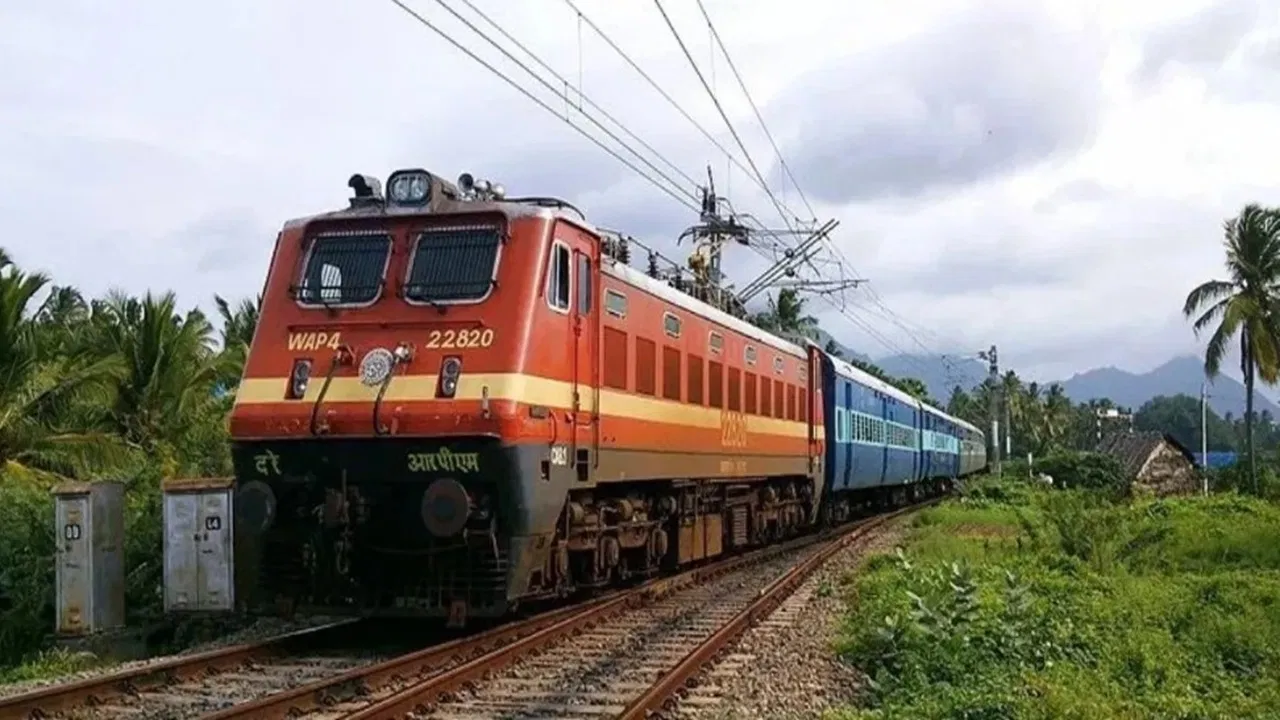
Centre approves railway projects worth Rs 9,072 cr in 4 states, to enhance connectivity to tourist places

New Delhi: Prime Minister Narendra Modi-led Cabinet Committee on Economic Affairs (CCEA) approved three projects of the Railway Ministry with the approximate cost of Rs 9,072 crore. These projects will cover eight districts in four states. The projects will be covered in Madhya Pradesh, Maharashtra, Jharkhand and Bihar.
What are these projects?
Among the three projects include – doubling of the Gondia-Jabalpur section, laying of the third and fourth lines between Punarakh-Kiul and Gamharia-Chandil sections. “The proposed multi-tracking project will enhance connectivity to approximately 5,407 villages which have a population of about 98 lakhs,” an official statement said.
It added, “The increased line capacity will significantly enhance mobility, resulting in improved operational efficiency and service reliability for Indian Railways. These multi-tracking proposals are poised to streamline operations and alleviate congestion.”
“The projects are planned on PM-Gati Shakti National Master Plan with focus on enhancing multi-modal connectivity and logistic efficiency through integrated planning and stakeholder consultations. These projects will provide seamless connectivity for the movement of people, goods and services,” the statement added further.
Improved rail connectivity to several tourist destinations
Pointing out that the steps would help in increasing rail connectivity in tourist places, it added, “The proposed capacity enhancement will improve rail connectivity to several prominent tourist destinations across the country, including Kachnar Shiv Temple (Jabalpur), Kanha National Park (Balaghat), Gangulpara Dam and Waterfall, Pench National Park, Dhuandhar waterfall, Bargi Dam, Gomji-Somji temple, Chandil Dam, Dalma Hill Top, Hesakocha Waterfall, Raijama Ghati, Dalma Wildlife Sanctuary, etc.”
“The Railways, being an environment-friendly and energy-efficient mode of transportation, will help both in achieving climate goals and minimising logistics cost of the country, reducing oil import (6 crore litres) and lowering CO2 emissions (30 crore kg), which is equivalent to the plantation of one crore trees,” it added.

Comments are closed.