


Twilio CEO Khozema Shipchandler revealed that he’s not just looking for job candidates who perform well in interviews. Instead, he also pays attention to word choice.
Few people would probably claim that they actually like participating in job interviews, but they are a good way to give a potential employer additional insight into why you’re the best person for the role. Unfortunately, they become a bit of a mind game when you have to not only answer the questions asked to the best of your ability, but also keep in mind other things that the interviewer may be paying attention to.
For Shipchandler, that extra thing is how frequently candidates use the word ‘I.’
Twilio, a communications tech company, is valued at $16 billion, so there’s a lot riding on him making the right choices with new hires. In an interview with Fortune, he shared his interview pet peeve that sounds awfully difficult to avoid.
Shipchandler explained that he likes to take potential senior hires out for dinner with a 45 minute interview included. When asked why he does this, Shipchandler said, “They’ve already got all the qualifications at that point. The question is, is there chemistry? Are we going to work well together?”
cem zaloğlu | Pexels
One sure sign that a candidate isn’t going to work well with Shipchandler is saying “I” too much. He explained, “I don’t really think that demonstrates leadership particularly well. What I do is easy because people are supposed to listen to me … But the hard leadership is when you’re not in charge. How do you get people, through data, passion, charisma, persuasion, to get people to do things?”
Shipchandler’s test might sound like a little bit of a trick because the whole point of a job interview is usually to share your own qualifications and accomplishments, which would require saying “I” an awful lot. Still, he doesn’t want to hire anyone who’s too focused on themselves.
There’s one other ‘red flag’ he watches out for in interviews as well.
If a candidate manages to pass the “I” test, there’s still a chance they might not measure up at the very end of the interview. That’s when Shipchandler gives them the chance to ask questions.
“For all of them, in the last 15-to-20 minutes, I give them an opportunity to ask questions — and if they don’t have any, I think that’s a pretty significant mark against them being curious about what they’re interviewing, the company, the way we might work together, chemistry, culture, all of those things,” he said.
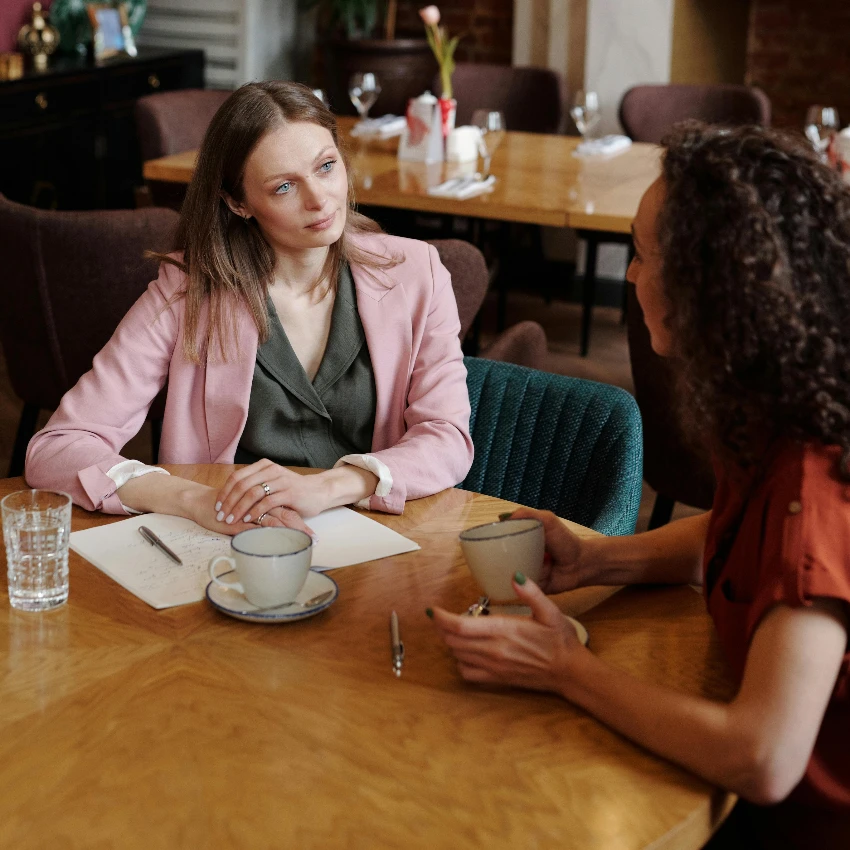 Edmond Dantès | Pexels
Anyone who’s been in a job interview before has faced that awkward moment at the end of the interview when the person conducting it asks if you have any questions, and you can’t come up with anything. It usually feels like everything relevant to the job was already covered, so what are you supposed to say?
Jenn Bouchard, chief people officer at Figure 8, told Fortune that “an interview is a two-way experience” and not having anything to ask makes it seem like you just don’t care. Some of the questions she finds most impressive aren’t really about specifics on the role, but a bit more general, like, “What are the top three strengths of the team?”
There’s no perfect interview formula, but there are some things you can do to get ready.
Job interviews can be quite intimidating, especially if you’re someone who is more introverted and doesn’t like to talk about themselves. And, trying to remember extra things the interviewer is listening for, like how much you say “I” or what questions you ask, makes it all feel even easier to overthink it.
 Tima Miroshnichenko | Pexels
The editors of the Harvard Business Review recommended practicing for the interview. Obviously, you don’t want to sound like you’re reading from a script, but it helps to have an idea of what you need to say. It’s also good to not treat the interview like it has some sort of rigid question-and-answer structure and do your best to have a real conversation.
Job interviews are often uncomfortable and nerve-wracking. Being better prepared may help some, but it’s also just a process of trial and error. You might want to avoid starting every single sentence with “I,” though.
Mary-Faith Martinez is a writer with a bachelor’s degree in English and Journalism who covers news, psychology, lifestyle, and human interest topics.

Comments are closed.