
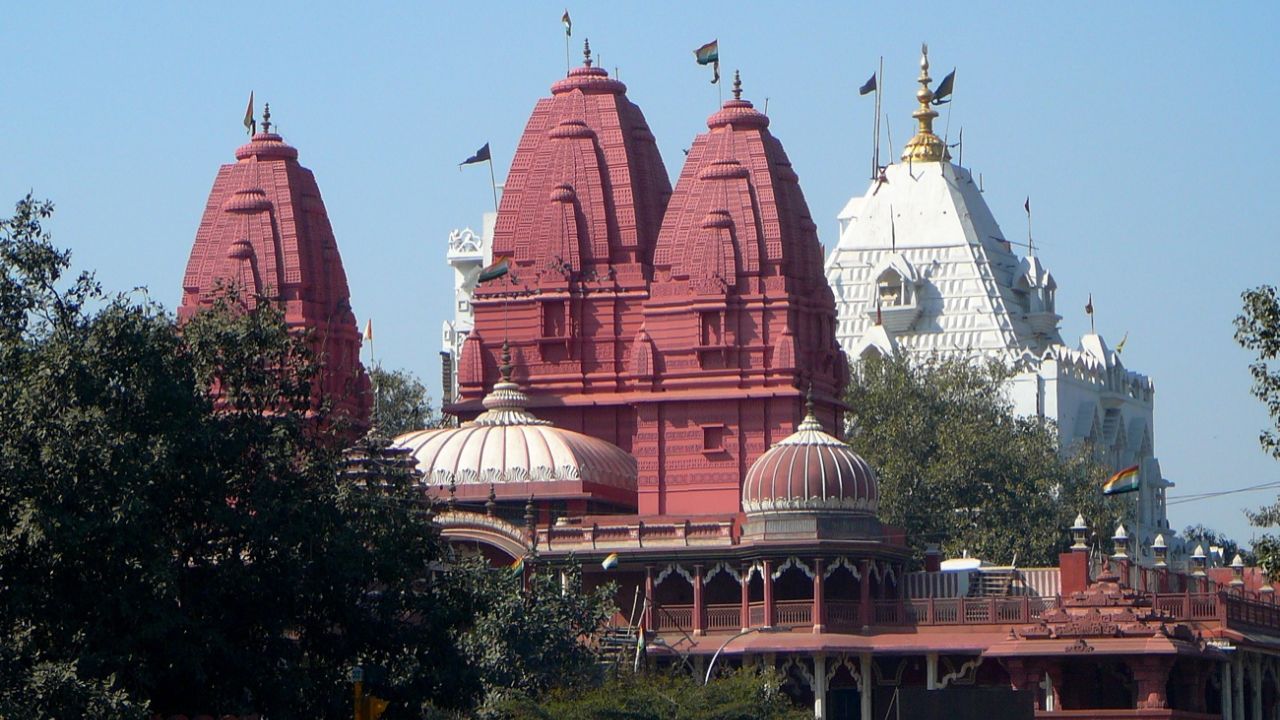
Chandni Chowk’s Digambar Jain temple, where the glass broke due to the explosion, what is its history?

The historic Shri Digambar Jain Lal Temple located in Chandni Chowk, Delhi is once again in the news. This ancient temple made of red sandstone is not only the center of faith of the Jain community but is also considered an important symbol of the religious and cultural heritage of the capital. After the recent blast near Red Fort metro station, security has been tightened in this area. Due to the explosion, many nearby establishments and historical places also suffered minor damage, in which the glass of the Red Temple was reported broken. At present, the temple administration has confirmed that the situation is under control and has appealed to the devotees to stay away from rumours.
This temple is dedicated to Lord Parshvanath and is famous worldwide for its Bird Hospital, where injured birds are treated free of cost. This hospital inside the temple is considered a symbol of the non-violence principle of Jainism. The carvings inside the temple, the grand dome and the tranquil atmosphere make it a spiritual center of Delhi. Located right in front of the Red Fort, the history of this temple dates back to the 17th century, when Mughal emperor Shah Jahan gave land here to Jain traders.
Also read: Thillai Nataraja Temple: From design to story, know everything here
Characteristics and religious beliefs of Red Temple
- This temple is one of the oldest Jain temples in Delhi and is commonly known as the Red Temple because it is built of red sandstone.
- It is primarily dedicated to Parshvanath, the 23rd Tirthankara of Jainism and the temple also has statues of other Tirthankaras including Adinath and Mahavira.
- There is a unique feature in the premises of this temple. A hospital for birds has been built in the temple premises, which provides free treatment to injured or sick birds.
- The temple is located in the market of Chandni Chowk and the old part of Delhi, while the Red Fort is situated right in front of it, which makes it special from architectural and historical point of view.
Construction period and history
- This temple was originally constructed in the middle of the 17th century. According to some sources it was built in 1656 AD or 1658 AD.
- The Mughal emperor Shahjahan had given land below Chandni Chowk to Jain traders, where they built the initial version of this temple.
- Later, around 1800–1807, King Harshukh Rai made major changes to the temple, including the shikhara (dome).
Also read:Lingaraj Temple: Where Lord Shiva and Vishnu are worshiped in the same Shivalinga.
Architecture and other features of the temple
- The Digambar Jain temple is made of red sandstone, hence it is also known as Red Temple. There are manastambhas (pillars) at the entrance and further there is a courtyard and stairs surrounded by pillars. The temple complex has a book store, a section for Jain texts and literature and a bird clinic as a symbol of non-violence.
- There is a tradition of removing shoes and slippers etc. of the visitors, because according to Jain principle non-violence (Ahimsa) has to be followed.
access route
Temple Address: Netaji Subhash Marg, Chandni Chowk, Delhi-110006.
Nearest metro station: Chandni Chowk Metro Station (Red Line) – The temple is at a distance of about 1-1.5 km.
By road, there are many buses and auto-rickshaws available in the Delhi-Chandni Chowk area.

Comments are closed.