
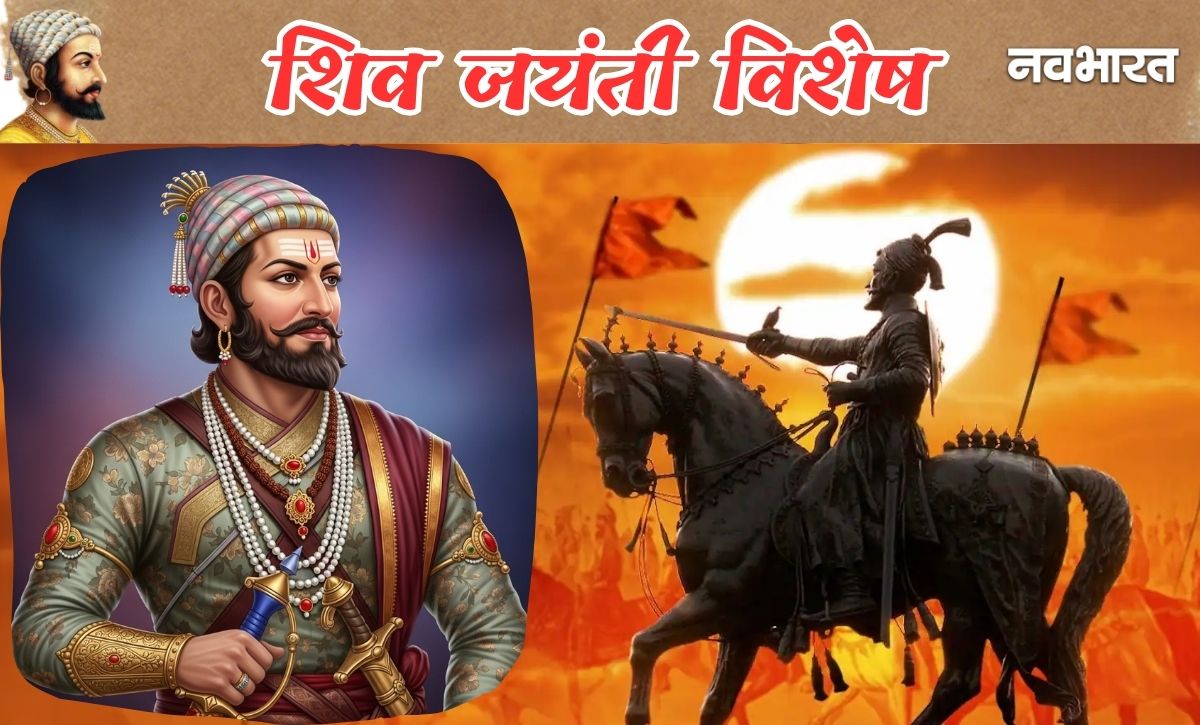
Chhatrapati Shivaji Maharaj: 8 wives, 3 swords and the only fort which could not be conquered, know the complete history

Chatrapati Shivaji Maharaj History: Chhatrapati Shivaji Maharaj is revered as a ‘adorable deity’ throughout Maharashtra. Every year on 19 February, the birth anniversary of Chhatrapati Shivaji Maharaj, the founder of Hindavi Swarajya, is celebrated with great enthusiasm and devotion. Most people know about his parents and sons, but do you know about his wives?
On the occasion of his 396th birth anniversary, we cannot live without remembering his unmatched courage, bravery and leadership. In such a situation, on the occasion of Shiv Jayanti, let us introduce you to the family of Chhatrapati Shivaji Maharaj and important information related to his life.
How many wives did Chhatrapati Shivaji have?
- Chhatrapati Shivaji Maharaj had 8 wives.
- Maharani Saibai (Nimbalkar)
- Maharani Soyrabai (Mohite)
- Maharani Putlabai (Palkar)
- Maharani Sakharvabai (Gaekwad)
- Maharani Kashibai (Jadhav)
- Maharani Sagunabai (Shirke)
- Maharani Gunvantabai (English)
- Maharani Laxmibai (thoughts)
Chhatrapati Shivaji Maharaj had two sons, Sambhaji Maharaj and Rajaram I. The names of his daughters were Sakhubai, Ranubai, Ambikabai, Deepabai, Kamlabai and Rajkunwari Bai.
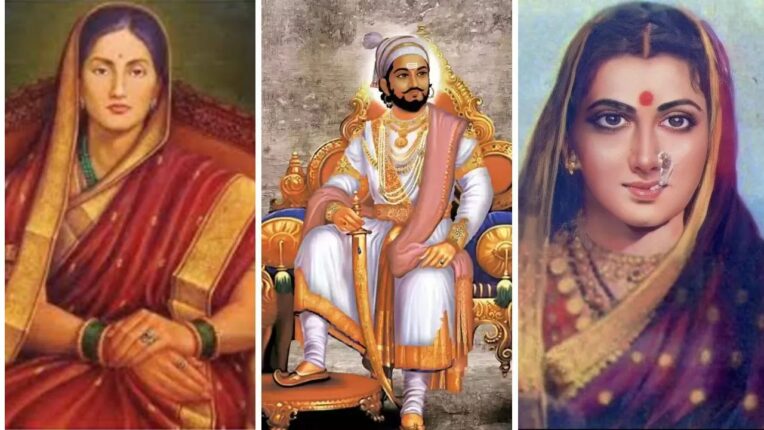
Chhatrapati Shivaji Maharaj and his wives
Where is Shivaji Maharaj’s Bhavani sword?
There are different beliefs about the actual location of Chhatrapati Shivaji Maharaj’s famous ‘Bhavani’ sword. It is generally believed that this sword is safe under the protection of the royal family of Satara, Maharashtra, especially Udayanraje Bhosale.
On the other hand, a sword preserved in London is often identified as ‘Jagadamba’ or some other royal sword of Shivaji Maharaj. This sword is currently with the Royal Collection Trust and demands to bring it back to India arise from time to time.
What were the names of the three main swords of Chhatrapati Shivaji Maharaj?
According to historical records, Maharaja had three major swords namely Bhavani, Jagadamba and Tulja.
Bhavani Talwar: On the basis of available historical documents and local traditions, it is considered safe in the royal house of Satara.
Jagadamba Talwar (London): The sword presented by the descendants of Shivaji Maharaj during the visit of the Prince of Wales to India in 1875-76 is today kept in the Royal Collection in London.
Other swords: Bhavani and Tulja are said to be the swords used by the Maharaja in the war, one of which is believed to be preserved in Satara and the other in Sindhudurg fort.
How many battles did Chhatrapati Shivaji Maharaj fight and how many did he win?
Chhatrapati Shivaji Maharaj established control over more than 300 forts during his reign of about 35 years. They mainly adopted guerilla warfare tactics and faced powerful armies like the Mughals and Adilshahis and won many decisive battles. Among the more than 30 major battles fought by him, the battles of Pratapgarh, Kolhapur and Sinhagarh are particularly notable.
Which fort was not conquered by Shivaji Maharaj?
Chhatrapati Shivaji Maharaj conquered many forts during his reign, but Janjira Fort (Murud-Janjira Fort) located on the Konkan coast was the only fort which he could not bring under his control. This sea fort was under the control of Siddi rulers and remained invincible due to its strategic location and strong fortifications.
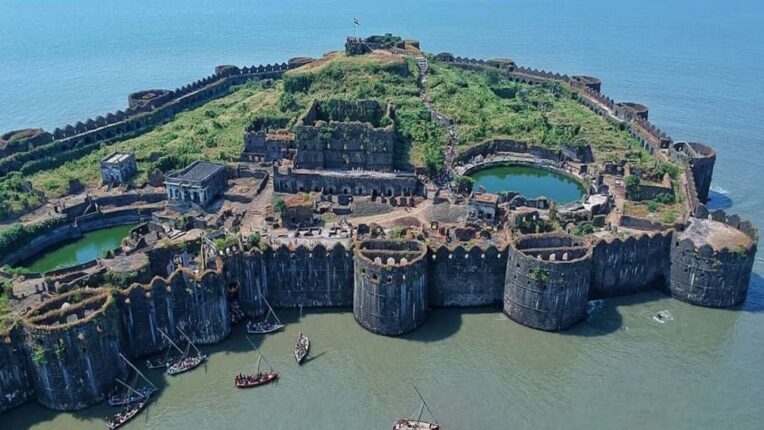
Murud-Janjira Fort
Janjira Fort (Murud-Janjira): This fort built under the sea in Raigad district of Maharashtra was under the control of Siddis and was considered very strong due to natural security.
Reason to remain invincible: Being surrounded by deep sea on all sides and high, thick walls were its biggest strengths. Despite many efforts of the Maratha Navy, it was not possible to conquer it.
Strategy of Shivaji Maharaj: In order to gain control over Janjira, he built a sea fort named ‘Padmadurga’ nearby, so that strategic pressure could be created. Despite this, Janjira Fort remained impenetrable for them.
When did Chhatrapati Shivaji Maharaj establish Hindavi Swaraj?
Chhatrapati Shivaji Maharaj completely separated from the Bijapur Sultanate and formally established ‘Hindavi Swaraj’ on 6 June 1674. On the same day, his grand coronation took place at Raigarh Fort and he was honored with the title of ‘Kshatriyakulavatans Shri Raja Shivchhatrapati’.
In how many battles did Shivaji Maharaj defeat Aurangzeb?
Chhatrapati Shivaji Maharaj defeated Aurangzeb’s Mughal army in many important battles and guerrilla campaigns. The basis of his military strategy was guerrilla warfare policy, through which he challenged the bigger power even with less resources. Attack on Surat (1664), Battle of Sinhagarh (1670), Battle of Wani-Dindori (1670) and Battle of Salher (1672) are counted among his major successes.
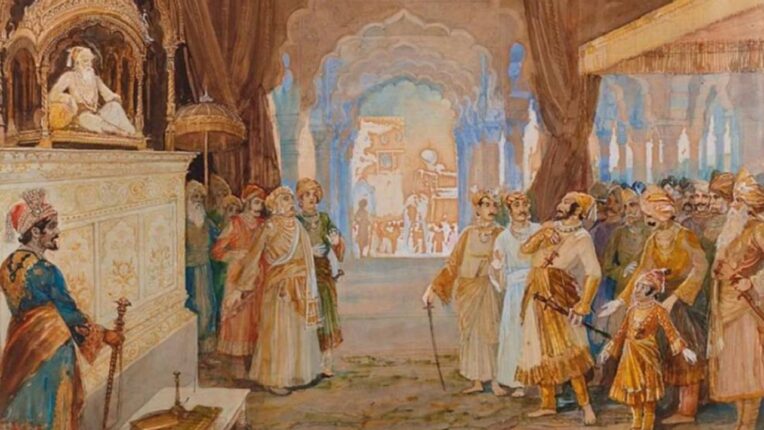
Aurangzeb’s court was shaken by the roar of Chhatrapati Shivaji Maharaj
Major victory of Shivaji Maharaj against Aurangzeb
Attack on Surat (1664): This action dealt a major blow to the economic strength of the Mughals.
Battle of Sinhagad (1670): The Maratha army under the leadership of Tanaji Malusare defeated the Mughals and captured the fort.
Battle of Wani-Dindori (1670): In this conflict the Marathas defeated the Mughal army.
Battle of Salher (1672): In this big one-on-one battle, the Maratha army gave a decisive defeat to the Mughals.
Apart from this, in battles like the siege of Purandar Fort (1665) and Chakas (1660), Shivaji Maharaj, with his wisdom and strategic skills, gave a tough challenge to the Mughals and proved his military capability.
How did Shivaji Maharaj die?
Chhatrapati Shivaji Maharaj died in the year 1680 at Raigarh Fort. Different historical sources give his death date as 3 April or 5 April. At that time his age was considered to be between 50 and 53 years. According to historians, he was seriously suffering from dysentery and high fever in his last days. Some accounts also mention that he suffered from bleeding for about 12 days, which is considered to be the main reason for his death.
Also read:- Maratha Empire: Chhatrapati Shivaji Maharaj thwarted the plans of the Mughals, established the Maratha Empire, know the history.
Who are the descendants of Chhatrapati Shivaji Maharaj?
The descendants of Chhatrapati Shivaji Maharaj are today known to be mainly divided among the two major royal families of Maharashtra, Satara and Kolhapur. Both these families are playing active roles in social and political fields.
satara gharana
The Satara royal family is linked to the lineage of Chhatrapati Sambhaji Maharaj, the eldest son of Shivaji Maharaj.
Udayanraje Bhosle: He is considered to be the 13th generation descendant of Shivaji Maharaj. Presently he is associated with Bharatiya Janata Party. He is an MP from Satara Lok Sabha constituency and has also previously been a Rajya Sabha member.
Shivendraraje Bhosale: Member of the Satara royal family. Active as MLA from Satara assembly constituency.
Kolhapur Gharana
The Kolhapur royal family is believed to be related to the tradition of Chhatrapati Rajaram Maharaj, the second son of Shivaji Maharaj.
Shahu Chhatrapati II: He is considered to be the present Chhatrapati of Kolhapur and is said to be related to the 12th generation of Shivaji Maharaj. In the year 2024, he became MP by winning Lok Sabha elections from Kolhapur on Indian National Congress ticket.
Sambhajiraje Chhatrapati: He is the eldest son of Shahu Maharaj. Has been a former Rajya Sabha MP. Presently active in socio-political work through ‘Maharashtra Swarajya Paksha’. Marathas are vocal on issues like reservation and preservation of historical forts.
Malojiraje Chhatrapati: He is the younger son of Shahu Maharaj. Has been active in politics and has also been a former MLA.
Apart from this, the lineage of Shivaji Maharaj’s brother Vyankoji Maharaj is also known in Thanjavur (Tamil Nadu). Over time, after the links of direct blood relation ended, these royal families have carried on the lineage through adoption.

Comments are closed.