
Chhatrapati Shivaji Maharaj History: The history of rich Chhatrapati Shivaji Maharaj must be read by the new generation in English media.

- Shivaji Maharaj’s birth anniversary on February 19
- History of Shivaji Maharaj
- A history that the new generation should know
Rich one of India’s bravest sons About Chhatrapati Shivaji Maharaj Everyone knows. Many call him the Hindu Heart Emperor, while others call him the pride of the Marathas, yet he was a great hero of the Indian Republic. Chhatrapati Shivaji Maharaj was born on February 19, 1630 in a Maratha family. Some believe that he was born in 1627. His full name was Shivaji Shahaji Bhosale.
Shivaji was the son of Shahaji Maharaj and Jijabai. His birthplace is Shivneri Fort near Pune. A devoted devotee of freedom, the brave Shivaji Maharaj strove to free the country from foreign and tyrannical rule and to establish a sovereign independent state in the whole of India. Similarly, he is recognized as a leading hero and an immortal freedom fighter. Like Maharana Pratap, Shur Shivaji was a living symbol and avatar of nationalism. Let’s know about the great Chhatrapati Veer Shivaji Maharaj.
Shivaji was not anti-Muslim
It is alleged that Shivaji was not anti-Muslim, but this is not true as there were many Muslim leaders and warriors in his army as well as numerous Muslim chieftains and governors. In fact, Shivaji’s entire struggle was against the bigotry and arrogance fostered by rulers like Aurangzeb and under his patronage.
In the summer of 1674, Shivaji ascended the throne with great fanfare and laid the foundations of an independent sovereignty. He freed the oppressed Hindus from fear. While Christian and Muslim rulers used force to impose their views and collect taxes on the majority population, Shivaji’s rule not only protected the places of worship of both sects but also created a fear-free environment for Muslim and Christian converts. Shivaji ruled for six years through a council of eight ministers. His administrative service included many Muslims.
Shivjayanti 2026: 5 precious thoughts of Chhatrapati Shivaji Maharaj, will make a big change in life; Children must be taught
Development of religious values
Shivaji Maharaj’s childhood was spent under the guidance of his mother Jijabai. While pious, Jijabai was a brave woman in her qualities and demeanor. Therefore, she brought up the boy Shivaji by telling and teaching him the stories of Ramayana, Mahabharata and other Indian heroes. Under the guidance of Dada Konddev, he was trained in all contemporary war techniques. He also received proper education in religion, culture and politics. His association with Ramdev, the great saint of the time, made Shivaji a thoroughly patriotic, dutiful and devoted warrior.
Learning to Conquer Forts as a Child: As a child, Shivaji used to gather children of his age and play leader games, fight and conquer forts. As he reached adulthood, his play became his real work. Attack the enemies and conquer their castles. After capturing forts like Purandar and Torna, his fame and exploits spread across the south and news spread like wind to Agra and Delhi. The tyrannical Turks, the Yavans and their allies, were filled with fear and anxiety at the mere mention of his name.
Wife and son
Chhatrapati Shivaji Maharaj was married to Saibai Nimbalkar on 14 May 1640 at Lal Mahal in Pune. His son’s name was Sambhaji. Sambhaji (14 May 1657 – 11 March 1689) was the eldest son and successor of Shivaji, who ruled from 1680 to 1689.
Not only this, Shivaji Maharaj’s son Sambhaji is considered the world’s first children’s writer. At the age of 14, he wrote books like Budhabhushanam (Sanskrit), Nayikabheda, Satshatak and Nakhsikh (Hindi). He was proficient in Marathi, Hindi, Persian, Sanskrit, English and Kannada languages. He wielded his sword as deftly as his pen. It is said in history that Shivaji Maharaj had 7 wives and two sons.
Shiv Jayanti 2026: Why Shiva Jayanti is celebrated 3 times a year? Chhatrapati Shivaji Maharaj’s date of birth exact dispute?
When there was an attempt to kill Shivaji Maharaj by treachery
When Adil Shah, the ruler of Bijapur, Shivaji Maharaj’s Alarmed by the growing prowess and failing to capture Shivaji Raja, he arrested Shivaji Maharaj’s father Shahaji Raje. On learning this, Shivaji was enraged. Using strategy and courage, he immediately launched a raid and freed his father from captivity.
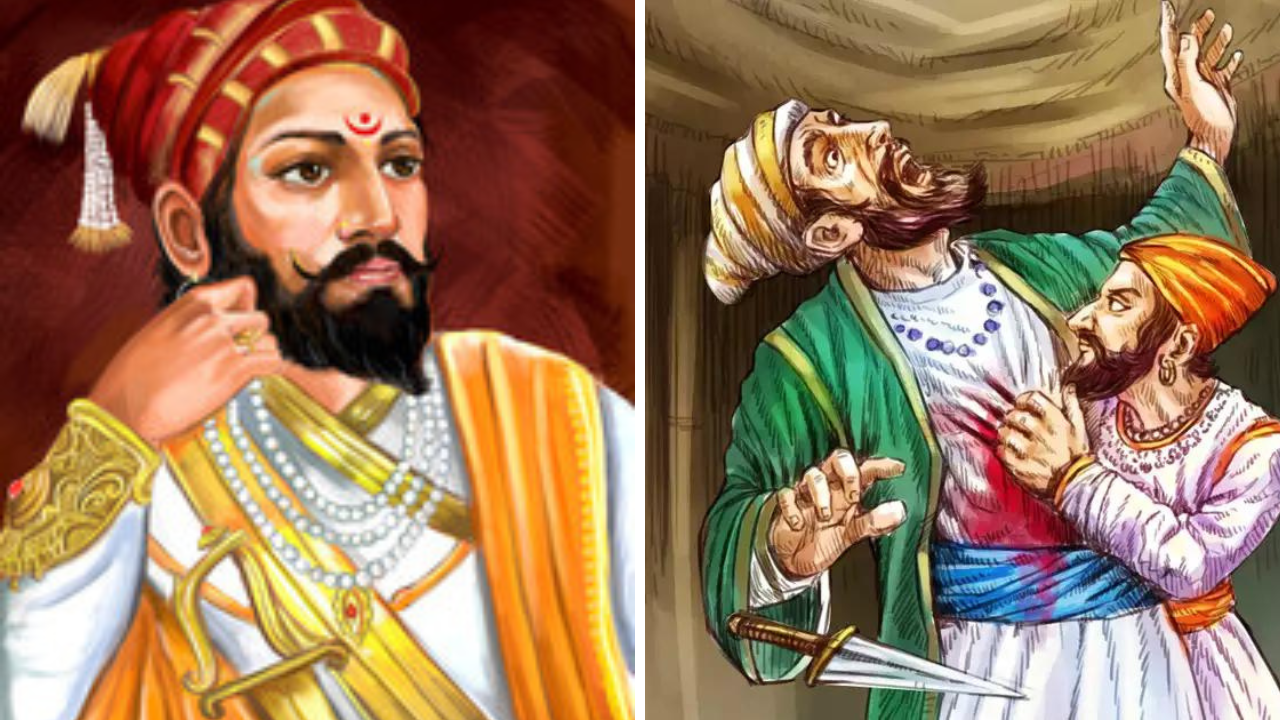
Thereafter, the ruler of Bijapur sent his cunning general Afzal Khan with orders to capture Shivaji Maharaj alive or dead. He feigned brotherhood and reconciliation and tried to kill him by holding him in his arms, but he himself was killed by a hidden dagger in the hand of Gnani Shivaji Maharaj. His army fled and their commander was found dead.
Struggle with the Mughals
The Mughal emperor Aurangzeb, worried about Shivaji Maharaj’s growing power, ordered his governor in the south to attack him. However, the governor was defeated. During the war with Shivaji, he lost his son and his own fingers were cut off. He had to flee from the battlefield. After this incident, Aurangzeb sent an army of about 100,000 soldiers under the command of his most influential general, Mirza Raja Jai Singh.
In order to crush Shivaji Maharaj, Raja Jai Singh entered into an agreement with the Sultan of Bijapur and conquered the Vrajgarh fort on 24 April 1665 as the first step in his plan to conquer the fort of Purandar. Shivaji Maharaj’s bravest general Murarji Baji was killed while defending the fort. Unable to defend the fort of Purandar, Shivaji Maharaj offered a treaty to Maharaja Jai Singh. Both leaders agreed to the terms of the treaty and the Treaty of Purandar was signed on 22 June 1665.
Shivaji Maharaj conquered many forts during his lifetime and expanded the Maratha Empire. Shivaji Raja was instrumental in stopping the Mughal Empire and established his influence throughout the country. Shivarai’s strategy is still as effective today and hence it is very important for the next generation to understand this history.

Comments are closed.