
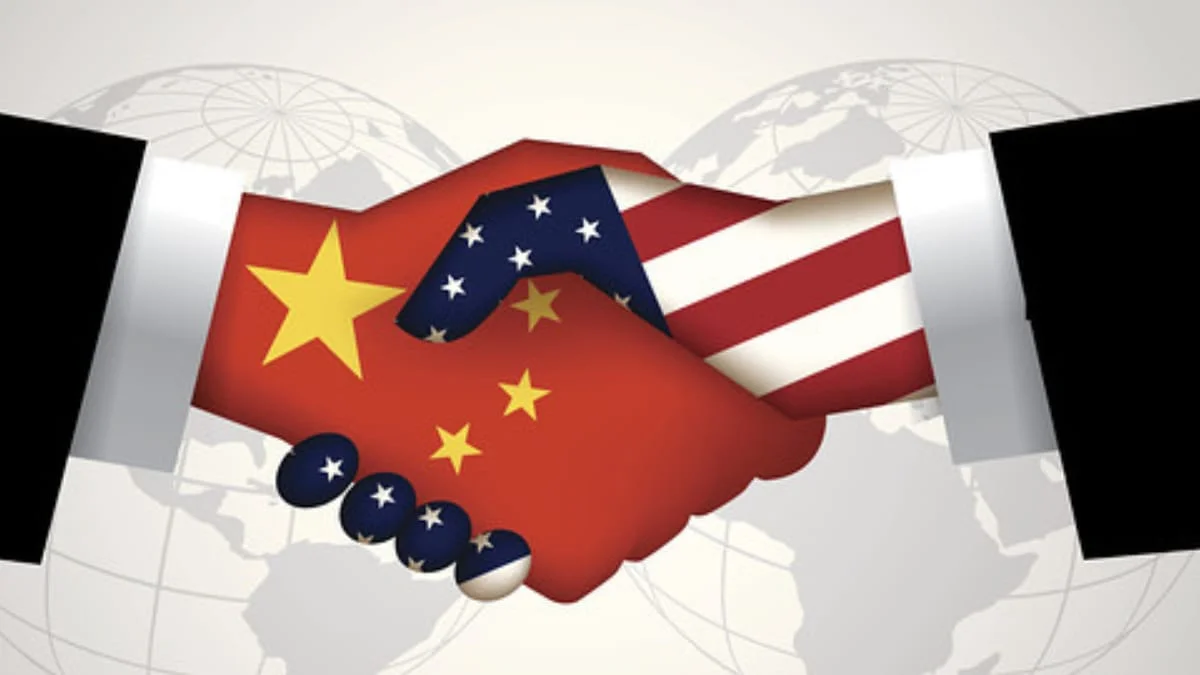
China and the United States diplomatic communication over Trump’s visit reflects the evolving geopolitical architecture of power relations

The confirmation that China and the United States remain in communication regarding a potential visit to China by United States President Donald Trump represents a development of notable diplomatic significance within the broader framework of contemporary international relations. According to statements issued by a spokesperson for the Chinese Foreign Ministry, discussions concerning the visit continue through established diplomatic channels. Although the announcement appears procedural in nature, the implications extend far beyond routine protocol because high level visits between the leaders of the world’s two largest economies frequently shape the trajectory of global economic governance, strategic stability and international legal cooperation.
The legal architecture governing state visits between major powers is grounded in a complex network of diplomatic conventions that regulate the conduct of international relations. Central among these is the Vienna Convention on Diplomatic Relations, which establishes the legal principles guiding diplomatic engagement, state representation and the privileges accorded to foreign officials during official visits. Although the convention primarily addresses the functioning of embassies and diplomatic missions, its principles also underpin the broader norms governing interactions between heads of state and senior government officials. When a sitting United States president visits China, the event becomes a carefully choreographed exercise in diplomatic protocol shaped by both international law and long standing traditions of statecraft.
Historically, visits by American presidents to China have played pivotal roles in transforming the geopolitical landscape. The landmark visit by President Richard Nixon to Beijing in 1972 stands as one of the most consequential diplomatic breakthroughs of the twentieth century, opening the door to the normalisation of relations between the United States and the People’s Republic of China after decades of estrangement. Since that moment, high level exchanges between Washington and Beijing have repeatedly served as platforms for negotiating trade agreements, addressing security concerns and managing differences between two political systems that remain structurally distinct yet deeply interconnected through global economic networks.
The potential visit by President Donald Trump must therefore be understood within the broader context of contemporary strategic rivalry between the United States and China. Over the past decade relations between the two countries have experienced periods of heightened tension driven by disputes over trade policy, technological competition and regional security dynamics in the Indo Pacific. Tariffs imposed during the trade disputes of recent years, restrictions on technology transfers and disagreements regarding supply chain resilience have reshaped the economic relationship between the two powers. Diplomatic engagement at the presidential level provides a rare opportunity to address these issues directly through negotiation rather than through unilateral economic measures.
From a legal perspective the economic dimension of the bilateral relationship involves a wide array of international regulatory frameworks. Trade interactions between the United States and China are formally governed by the rules of the World Trade Organization, which establish principles of non discrimination and fair competition among member states. However the increasing use of national security based export controls, investment screening mechanisms and industrial policy interventions has complicated the operation of these rules. Presidential diplomacy can therefore play an important role in clarifying how the two governments interpret their obligations within the existing international trade regime.
Security considerations also form an essential component of the diplomatic agenda surrounding any potential visit. Issues relating to maritime navigation, regional alliances and military transparency have become central to the strategic dialogue between Washington and Beijing. International law governing maritime conduct, particularly the United Nations Convention on the Law of the Sea, frequently appears in discussions concerning freedom of navigation and the management of territorial disputes in the South China Sea. Although the United States has not formally ratified the convention, it recognises many of its provisions as reflecting customary international law, thereby shaping its diplomatic engagement with China on maritime issues.
Beyond the formal legal structures that govern international relations, presidential visits often carry powerful symbolic significance. They demonstrate a willingness by political leaders to maintain dialogue even in periods of strategic competition. In the context of global governance such dialogue remains essential because many of the challenges confronting the international community including climate change, financial stability and technological regulation require cooperation between the world’s largest economies.
Ultimately the communication between China and the United States regarding a potential visit by President Donald Trump illustrates the enduring relevance of diplomacy in managing complex geopolitical relationships. While legal frameworks provide the structural foundation for international engagement, it is the willingness of political leaders to engage in dialogue that often determines whether disputes escalate or are resolved through negotiation. In a world characterised by economic interdependence and strategic rivalry, sustained communication between Beijing and Washington remains a critical component of global stability.

Comments are closed.