
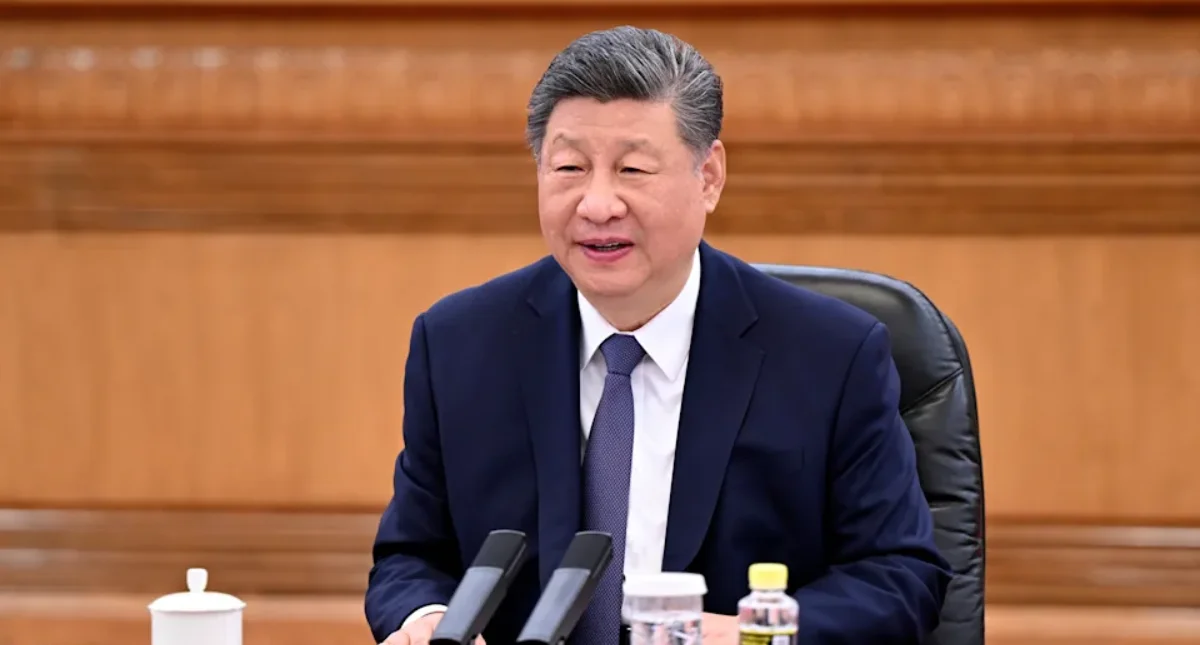

China has announced a new package of measures to improve cross-strait ties after the rare Beijing visit by Taiwan opposition leader Cheng Li wun, signalling a calibrated mix of political outreach and pressure. The move is aimed at promoting exchanges and cooperation, but it also reinforces Beijing’s insistence that Taiwan is part of China and that any dialogue must reject Taiwan independence.
Political message
The timing is highly significant because Cheng’s trip was the first by a sitting KMT leader to China in a decade, making it a major political moment in cross-strait relations. China used the visit to project openness to dialogue with Taiwan opposition figures, while Xi Jinping again framed reunification as an historical inevitability and made clear that Beijing will not tolerate separatism. That combination of conciliation and coercion is central to China’s Taiwan strategy.
Policy package
The measures unveiled by the mainland focus on exchanges, cooperation, and what Beijing describes as shared prosperity across the strait. Reported elements include political dialogue, youth exchanges, trade facilitation, infrastructure connectivity, and cultural cooperation, all designed to deepen links with groups in Taiwan that are willing to engage on Beijing’s terms. In practical terms, this is a soft power package with a hard political boundary, because it explicitly rests on opposition to Taiwan independence.
Strategic implications
For Taiwan, the legal and strategic question is whether such outreach can reduce tension without undermining the island’s democratic autonomy. The ruling Democratic Progressive Party has criticised the visit and warned that Beijing has not softened its broader military and political pressure on Taiwan. That matters because cross-strait dialogue cannot be separated from the security environment, where military drills, diplomacy, and trade incentives are all being used at once. The broader implication is that China is trying to shape Taiwan’s politics through selective engagement, rewarding actors willing to accept dialogue while isolating those it labels separatist. That makes the new measures less a breakthrough than a strategic instrument in Beijing’s long campaign to steer the future of Taiwan under the one-China framework.

Comments are closed.