
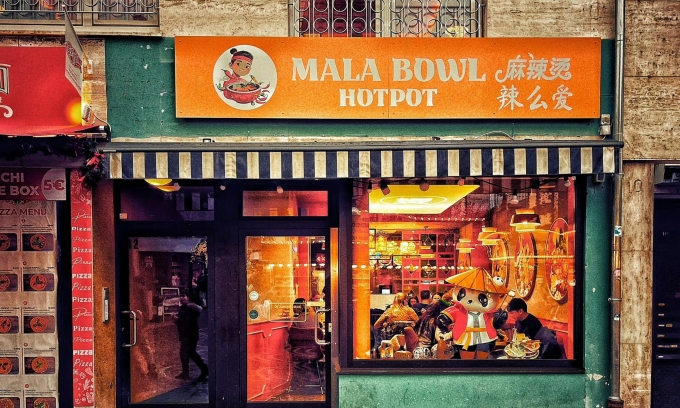

A malatang restaurant storefront. Illustration photo by Pexels |
According to the South China Morning Postmalatang, literally meaning “numbing, spicy and hot,” originated in Sichuan Province in southwestern China. Often described as a “personal hotpot,” malatang allows customers to choose their own ingredients by weight or by skewer before they are cooked together in a shared broth, making the meal both customizable and relatively affordable.
Since last year, the dish has surged in popularity internationally. In Japan, visiting malatang restaurants has become a trendy activity among young women. Some social media users claim the broth contains more than 20 types of spices and Chinese herbs, which they say can improve skin and even aid weight loss.
“After drinking it, your skin will glow,” one Japanese diner said in a video shared online.
In South Korea, exposure to the dish on social media has driven young diners to malatang shops, fueling a boom in such eateries, according to Chosun Biz.
One malatang franchise reported opening 25 branches between June and November 2025 and had plans to launch 20 more outlets at the time.
In Germany, some diners have even opted to celebrate birthdays at malatang restaurants instead of hosting traditional banquets.
Chinese internet users living abroad have also shared stories about introducing the dish to friends and partners. One user recounted how a British man took her to a malatang restaurant on their date in London.
“He asked me if I wanted to try Zhang Liang Malatang,” she wrote. “He said it was the best restaurant in all of London in his opinion. I was shocked that he actually knew Zhang Liang Malatang.”
Another user living in Paris said her boyfriend has become so familiar with the dish that he now confidently selects ingredients and even mixes his own dipping sauce.
Some diners say malatang’s customizable format also helps ease concerns over dietary restrictions. One Chinese social media user recalled bringing a German colleague, who often avoids Chinese takeaway because of allergy concerns, to a malatang restaurant.
“The first time I took him to eat malatang, he stood in front of the refrigerator for 10 minutes carefully selecting ingredients and finally checked out with a bowl full of vegetables,” the user wrote. “After finishing, he said it was the first time he felt completely at ease eating Chinese food.”
Lifestyle publication Tatler attributed the craze to malatang’s highly customizable nature, which allows diners to design meals suited to their personal tastes and lifestyles. The magazine has included malatang in its list of seven food trends to watch this year.

Comments are closed.