

Highlights
- Chromecast, Fire TV, and Roku lead the global streaming device market with distinct ecosystem strengths.
- Chromecast focuses on personalization and wide app availability.
- Fire TV integrates deeply with Amazon services and offers strong HDR performance.
- Roku prioritizes simplicity, stability, and ease of use.
- Device choice depends on user ecosystem, content access, and smart home preferences.
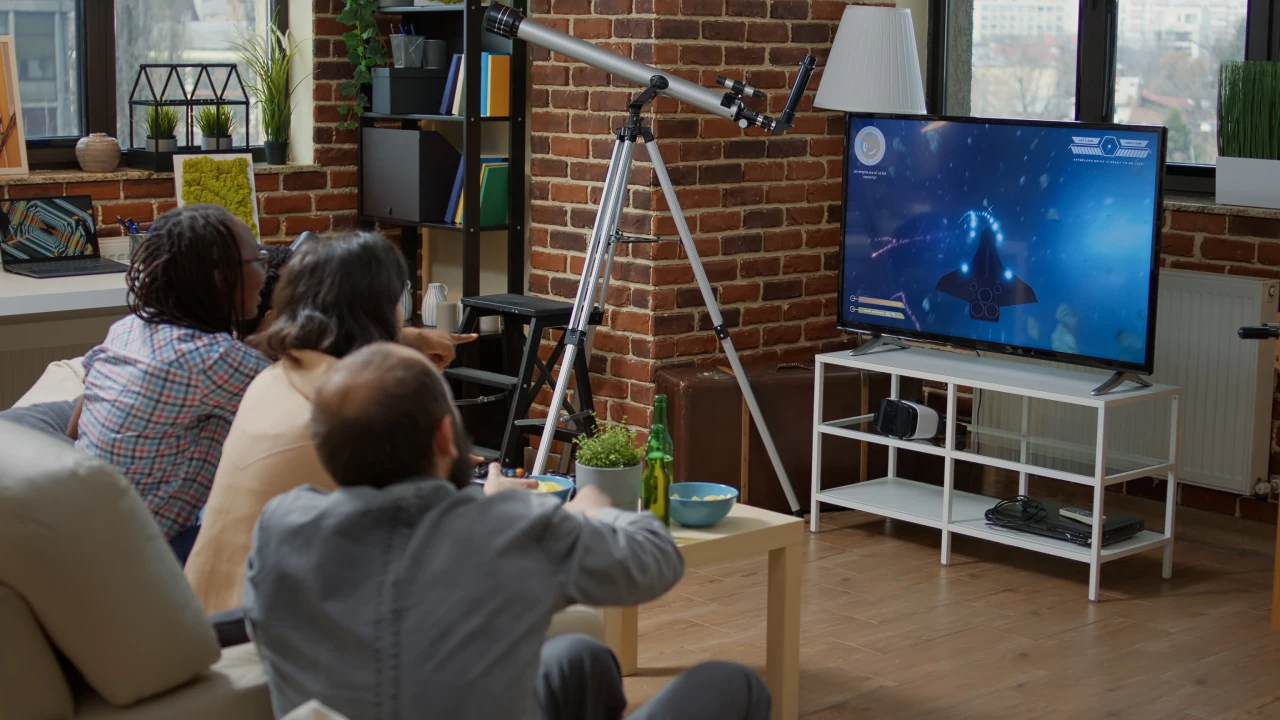
Streaming devices have changed how people around the world watch entertainment because these devices turn standard televisions into complete smart entertainment systems. Dedicated streaming devices still lead the market because most modern televisions now have built-in smart platforms, which let viewers access programs, yet dedicated devices provide faster software updates, wider app support, and better user experiences. The market remains dominated by Google Chromecast, Amazon Fire TV, and Roku because these three platforms determine how millions of people watch content throughout the world.
Glenn Carstens-Peters/Unsplash
People must now select between these devices because Netflix and YouTube access represent only one part of their decision-making process. Users today want systems that provide smooth operation across all applications, together with voice assistant support and dependable 4K HDR video playback. Users can select among three platforms because their needs, their country region, and their current technology system determine which platform suits them best.
The feature evaluation of Chromecast, Fire TV, and Roku provides users with their most suitable streaming device through an analysis of system performance, content accessibility, smart assistant support, and video playback capabilities.
Understanding the Modern Streaming Device Market
Streaming devices function as external media players that link to televisions through HDMI ports so users can watch content from internet streaming services. Television manufacturers usually stop software support for their products within three years, which creates an ongoing need for external streaming devices in the market despite smart TV growth. External streaming devices deliver longer software support, better performance, and user-controlled system upgrades when compared to TV hardware replacement needs.
People in North America, Europe, India, and Southeast Asia show strong interest in streaming devices because their broadband connections and subscription-based entertainment options continue to expand. Chromecast, Fire TV, and Roku represent three different design philosophies: content-driven personalization, ecosystem integration, and minimalist usability.
User Interface and Navigation Experience
Chromecast with Google TV Interface
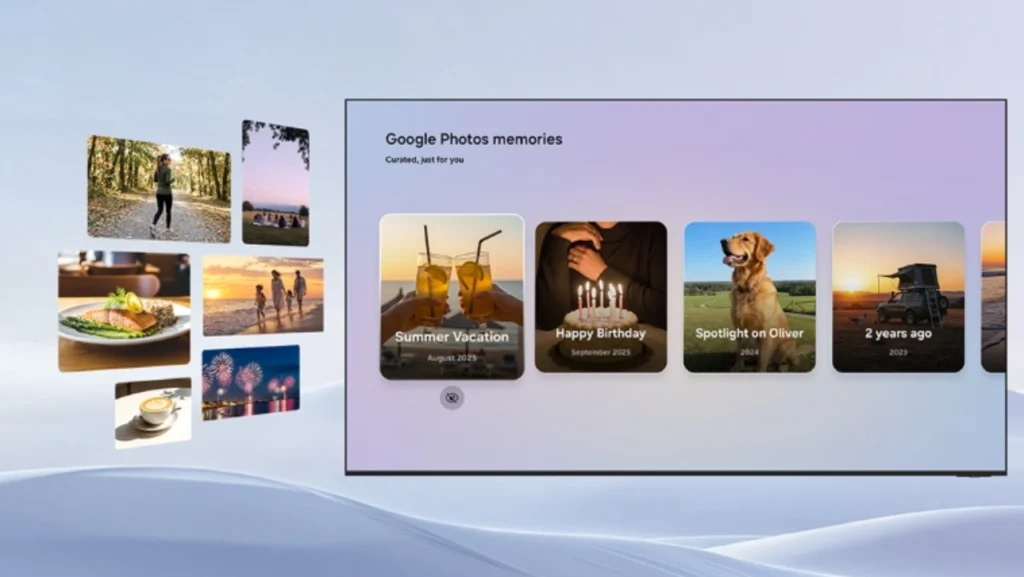
The Google TV system on Chromecast devices uses personalized content recommendations to help users find new shows to watch. The interface combines content recommendations from different streaming services and provides users with tailored suggestions based on their Google account usage.
Google TV uses content-first navigation to provide users with visually appealing navigation that does not require them to browse through applications. Users can search across streaming services simultaneously, which reduces the need to manually open individual apps. The interface provides watchlists that users can access through their Android devices and Google services, which enable watchlist synchronization.
The platform provides users with numerous content recommendations through its extensive personalization options, yet these recommendations become too much for users to handle. The platform’s focus on content suggestions can sometimes overshadow manual browsing preferences.
Amazon Fire TV Interface
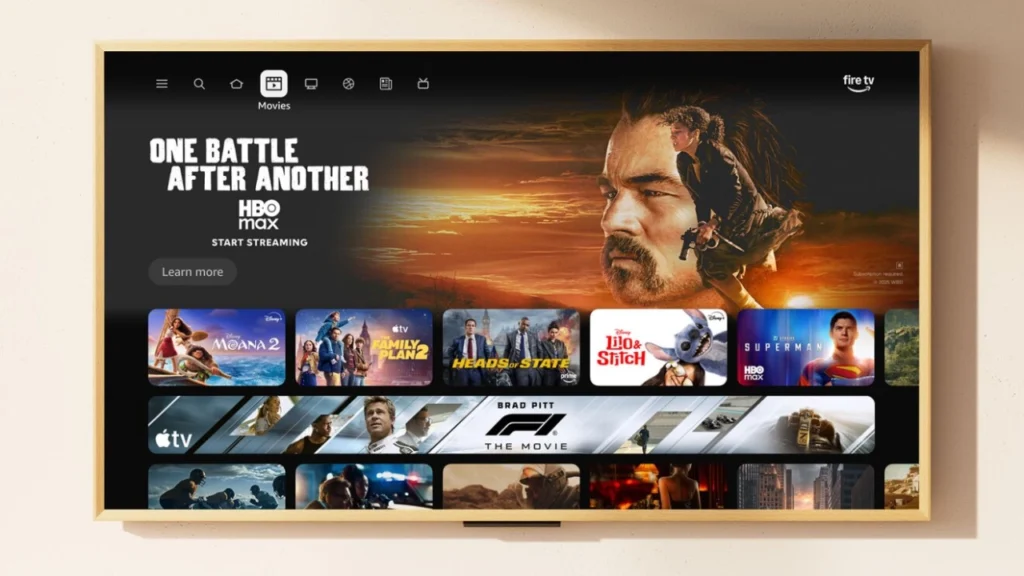
Fire TV devices provide users with an interface that operates at high speed while maintaining instant responsiveness because it depends on Amazon services. The home screen displays Amazon Prime Video content as its main element while showing promotional materials that connect with Amazon subscription services and rental options.
The interface enables users who know Amazon’s ecosystem to move through the system easily because it provides quick links to their most used applications and customized content recommendations. The Fire TV interface receives negative feedback because it shows too many advertisements, while it gives priority to Amazon’s content collection, which affects how users discover new material.
Roku Interface
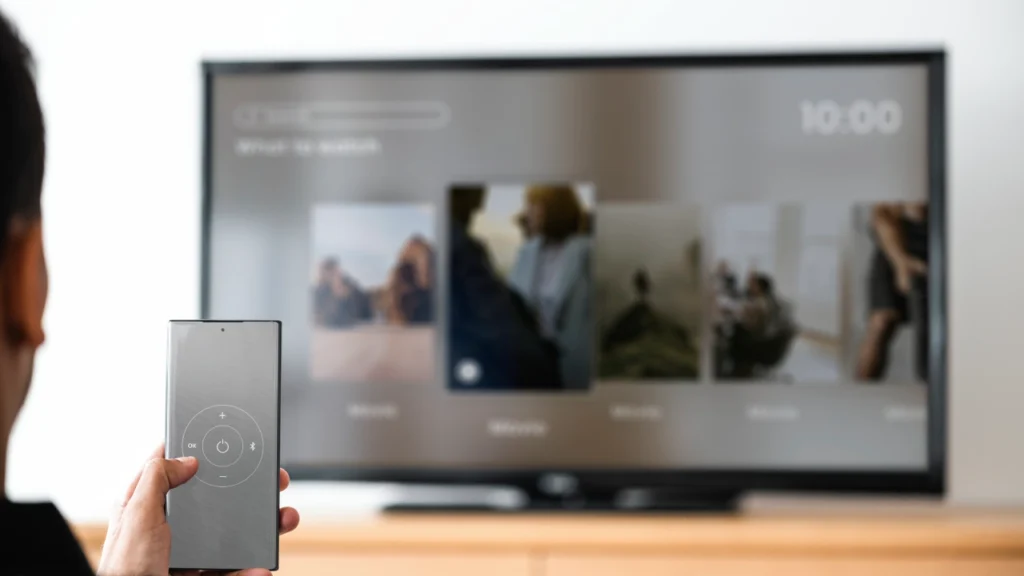
Roku stands out for its simplicity. The home screen displays a grid system that shows all installed applications through their tile design, which prevents content recommendations from taking over the main display. The design of the Roku interface system enables users to operate the system easily while maintaining a simple interface, which makes it attractive to both non-technical users and elderly people.
Roku’s interface design does not match the contemporary aesthetic of Google TV or Fire TV, yet its consistent performance, together with fast processing times, enables users to navigate their experience smoothly. The system provides basic personalization options, which can make its interface seem outdated because it lacks advanced features that other systems offer.
UI Comparison Verdict
- The Chromecast system provides users with the most personalized experience, which enables them to discover content.
- The Fire TV system provides users with the best experience when they use Amazon services.
- The Roku system provides users with the simplest interface, which they can use without difficulty.
App Ecosystem and Global Content Availability
Chromecast App Ecosystem
Chromecast utilizes Google Play Store infrastructure, which enables access to its extensive app collection that ranks among the largest streaming device app collections. The service provides access to international platforms, which include Netflix, Disney+, YouTube, Prime Video, and Apple TV+, together with regional applications that operate in various parts of Asia and Europe through its Android compatibility.
Chromecast enables users to stream content from their mobile devices because its technology allows users to cast content from their smartphones to their television screens.
Fire TV App Ecosystem
Fire TV depends on Amazon to supply its application store, which contains the most popular streaming services, although it sometimes omits tiny local streaming services. The Fire TV platform enables users to install extra applications through sideloading, which gives them more control over their device, but requires them to understand technical procedures.
Fire TV provides optimal performance for users who have Amazon subscriptions because it seamlessly integrates all Amazon services, which include Prime Video, Amazon Music, and Kindle media content.

Roku Channel Store
The app store that Roku operates through its Roku Channel Store provides dependable applications that meet performance standards. The Roku Channel Store delivers reliable access to major Western streaming services and their associated live television content. Roku presents fewer international app options than Chromecast because its platform distribution depends on regional streaming services, which dominate developing markets.
App Ecosystem Verdict
- Chromecast provides the most extensive international app access for its users.
- Fire TV provides optimal integration with Amazon services for its users.
- Roku offers users a streamlined application interface that includes selected applications.
Voice Assistants and Smart Home Integration
Google Assistant works with Chromecast through its built-in voice search and home automation features. Users can control smart devices, lighting, calendar information, and streaming content through natural voice commands. Chromecast provides global households with a useful tool because it supports multiple languages.
Fire TV and Alexa Integration
Fire TV devices use Amazon Alexa to enable users to search for content through voice commands, operate smart home devices, and make purchases. Users can create automated routines in Alexa, which enable them to execute multiple tasks automatically, including dimming lights and opening entertainment applications. Fire TV devices enable users to operate their devices without touching them by using the Echo device connections.
Roku Voice Assistant
Roku provides users with a basic voice control system, which enables them to search for content and issue playback commands. The smart home functionality on Roku offers basic capabilities but lacks the advanced features and ecosystem integration that Google Assistant and Alexa provide.
Voice Assistant Verdict
- The Voice Assistant Verdict shows that Chromecast and Fire TV provide the best smart home integration capabilities.
- The Chromecast system provides the best voice recognition system, which can understand multiple languages.
- The Roku system is the best system for handling basic voice commands.
4K HDR Playback and Performance Stability
The system provides 4K HDR playback together with stable performance throughout its operation. Streaming quality depends on both resolution and three essential factors, which include playback stability, HDR format support, and device thermal performance.
Chromecast Performance
The system provides HDR10 and HDR10 and Dolby Vision support through all compatible Chromecast devices. The system provides outstanding visual quality combined with excellent adaptive streaming capabilities. The majority of Chromecast devices use wireless connections, which results in connection problems when users experience low Wi-Fi network strength.
Fire TV Performance
Fire TV provides users with multiple hardware options, which include streaming devices that support Ethernet connections. The Fire TV devices offer users excellent HDR capabilities, high-quality long-duration viewing experiences, and efficient heat management. Premium Fire TV models often deliver superior performance for 4K streaming.
Roku Performance
Roku devices prioritize dependable operation rather than offering advanced features. The Roku system supports the main HDR formats, but it does not provide users with detailed settings. The operating system of the Roku System works together with its resource management system to provide users with a dependable streaming experience that lasts throughout extended viewing periods.
Playback Verdict
- Roku System delivers the most reliable playback experience because it shows the least amount of playback interruptions.
- The Fire TV system shows the best HDR capabilities, which include its superior hardware choices.
- Chromecast provides the best system for adaptive streaming, which allows users to stream content from their devices.
Privacy, Advertising, and Ecosystem Lock-In
Streaming platforms now depend on user information to create customized content suggestions and targeted advertisements.
Chromecast utilizes Google data connection, Fire TV utilizes Amazon user data, and Roku functions as a content distribution platform that maintains its independence between different content providers and advertising partners.
Roku provides users with a privacy-friendly option because it operates as a neutral platform, while Chromecast and Fire TV deliver advanced personalization features through their enhanced data collection methods.
Pricing and Value Considerations
The company sets different pricing structures for various regions, yet the following statement demonstrates general pricing trends.
- Chromecast provides excellent mid-priced options, which include advanced user interface components.
- Fire TV offers users a selection of budget-friendly and high-end device choices.
- Roku maintains a strong market position through its affordable entry-level product offerings.
Users who want to spend less money choose either Roku or Fire TV Lite models, while users who want the best experience select Chromecast with Google TV or advanced Fire TV models.
Which Streaming Device Should You Choose?
- Select Chromecast when you need to access Google services and use Android devices to stream content from international sites.
- Select Fire TV when you have an Amazon Prime membership and operate smart home devices through Alexa.
- Select Roku when you want a system that provides basic functions and maintains dependable performance through its straightforward user interface.
Conclusion
Chromecast, Fire TV, and Roku represent three distinct approaches to modern streaming. Chromecast enables users to personalize their experience while accessing content from around the world, and Fire TV delivers extensive system compatibility through its diverse hardware offerings, while Roku provides users with dependable performance through its straightforward design. The best streaming device comes down to user preferences, the smart home systems they use, and the content from their area.
The ongoing development of streaming technology will create a competitive environment between platforms, which will result in better user interfaces, content discovery systems, and video playback capabilities. Consumers should select devices that match their watching patterns and existing digital systems because this choice will enable them to achieve smooth home entertainment experiences that will remain effective in upcoming years.

Comments are closed.