
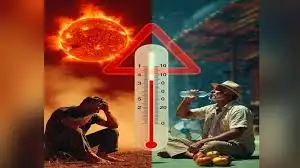
Shocking warning! Heat stroke can happen not only during the day but also at night, be careful.

The effects of summer heat are not limited to just the intense heat of the day; Its effect can persist on the body even throughout the night. Often, due to high temperature and increase in humidity at night, the body is not able to cool down properly, due to which there is a risk of heatstroke. When the body does not get any relief even at night after the intense heat of the day, it becomes very difficult for it to return to its normal temperature.
In urban areas, rising temperatures, concrete buildings and reduced greenery further increase the heat at night. As a result, even though people consider the night a safe time, being in a constantly hot environment puts constant stress on the body. People often ignore the heat while sleeping—a mistake that can lead to many other health problems later on. Therefore, it is important to understand that the risk of heatstroke is not limited to daytime only; Its danger remains even throughout the night.
Why does the risk of heatstroke increase at night?
The risk of heatstroke increases at night because the body does not get enough time to cool down. When the temperature does not drop even after the heat of the day, the body is constantly exposed to the hot environment. Due to excess moisture, sweat does not dry properly, making it difficult for the body to control its internal temperature. Apart from this, sleeping in closed rooms or in places where there is no proper ventilation can further increase the heat. Also, many people do not drink enough water, which increases the risk of dehydration (lack of water). Overall, all these factors together increase the chances of having heatstroke at night.
Who is at greater risk?
Some people are more likely to be adversely affected by the heat at night. The elderly, young children, and pregnant women are especially vulnerable because their bodies are less able to regulate their core temperature as quickly. Additionally, people who have pre-existing medical conditions or have a weak immune system are also at greater risk. This risk increases even more for those who live in small, closed or poorly ventilated houses.
How can you keep yourself safe?
To avoid heatstroke at night, make sure your room is cool and well-ventilated. Keep drinking water before sleeping and throughout the night, so that there is no shortage of water in your body. Wear light and loose-fitting clothes, so that your body remains cool. If possible, use a fan or air cooler. If you feel too hot, take immediate measures to cool your body.

Comments are closed.