
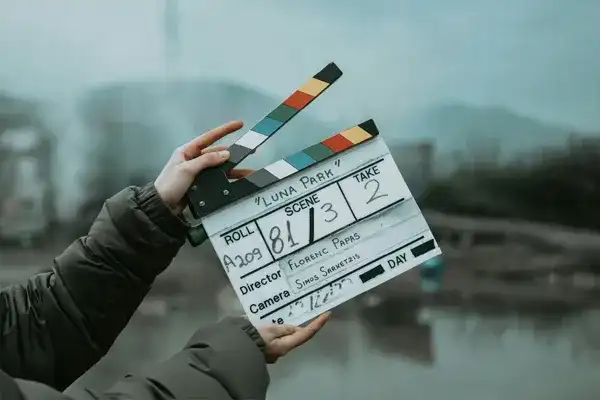

Introduction to Clapboard
Mumbai: When you watch behind-the-scenes footage during the shooting of films or advertisements, you must have often seen a black board, which is brought in front of the camera before the start of every scene and is closed with the sound of ‘Katt’. Have you ever wondered what this board is and why it has such an important place in film making? Why are the name of the film, scene number and other details written on it? If you also have questions about this small but important device, today we will share the science and interesting facts behind it.
definition of clapboard
This special device is called a ‘clapboard’ or ‘clapperboard’ in filmmaking parlance. In earlier times, when cinema started, it was completely in black and white. Over time, cinema technology changed and clapboard also evolved. Today’s modern clapboards are not only attractive, but also have a special colored stripe, which has technical significance.
use of clapboard
Nowadays, we have state-of-the-art digital cameras that record both video and audio simultaneously. But some time ago, it was not possible to record audio and video simultaneously while shooting movies. Therefore, before shooting every shot, this clapboard was clapped loudly. This provided a sharp ‘audio spike’ to the audio track during editing, allowing the video and audio to be properly mixed.
Details on clapboard
Information like name of the film, documentary or advertisement, scene number, take number, director’s name and day and night are written on the clapboard with chalk or marker. All this happens for the convenience of the editor. The shooting of the film lasted for several months and scenes were often shot back and forth. In such a situation, by looking at this board in the editing room, the editor immediately knows which scene it is and what is its sequence.
Importance of colored stripes
Older clapboards were only black and white, whereas today’s clapboards have colored stripes. This is because older films were only made in black and white, so there was no need for a color strip. In modern color cinema, this strip helps the editor and director correctly match the color tones of the film during post-production. This ensures that every scene in the film has a uniform and natural color tone, causing no discomfort to the audience’s eyes.

Comments are closed.