
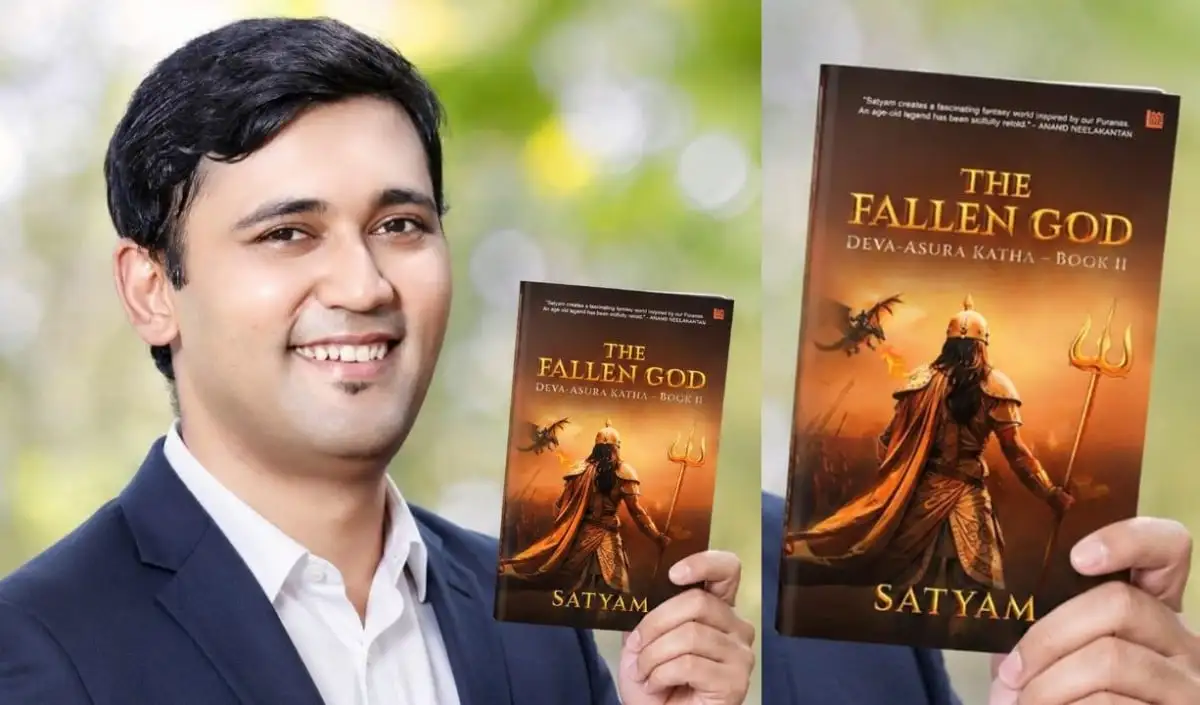

Satyam Srivastava’s new book
Satyam Srivastava’s book ‘The Fallen God’, which presents Indian mythology in a unique way, is fast becoming a topic of discussion. This book is the second part of his ‘Dev-Asur Katha Trilogy’, which continues the story of the first book ‘The Wielder of the Trishul’. This is not just another chapter, but an expansion into a vast fantasy world where power, war and faith collide.
The story is set in Dhruva-Lok, a fantasy world where mythological elements are presented not from a traditional religious perspective, but from a political and conflict perspective. Here the fall of kingdoms, change of alliances and the use of divine weapons are not merely for worship, but as symbols of power and destruction. This is why the world of this book always remains unstable and mysterious.
The protagonist of the story is Lakshya, who is initially an ordinary soldier. There is a change in his life when he becomes the holder of Lord Shiva’s Trishul. This power brings him more problems than respect. His presence increases the tension between the kingdoms and gradually the entire Dhruv world reaches the brink of war. Every decision leads to big consequences, which always keeps readers thrilled.
The rise of Vritra and the Dev-Demon conflict are also given important place in the book, but its biggest feature is that it is not just a war story. The author has also deeply depicted the characters’ mental dilemmas, moral conflicts and questions of duty. No one is completely right or wrong here, and that’s what makes the story all the more real and impactful.
Satyam Srivastava, an IIT Bombay alumnus and Indian Revenue Service employee, is one of the new Indian writers who are presenting Indian mythology as modern fantasy. Through ‘The Fallen God’ he has proved that stories based on Indian myths can also create fantasy worlds of international standards. Instead of reproducing mythological stories, this book tries to see and understand them from a new perspective.

Comments are closed.