
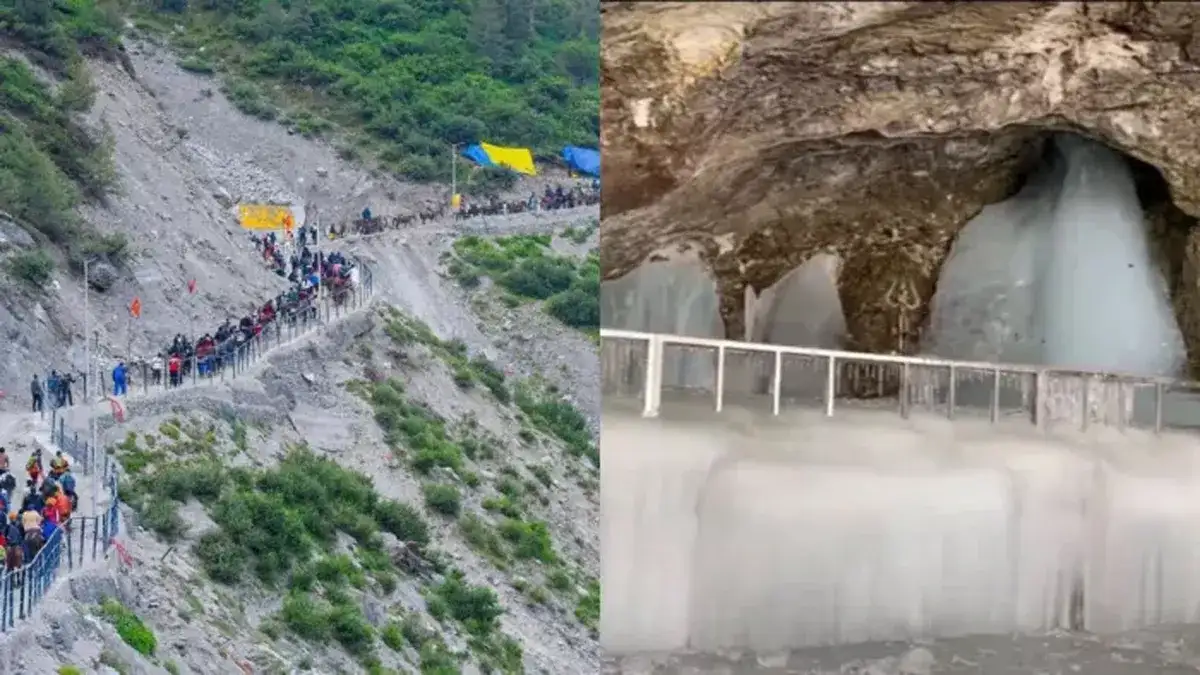
Must read this guide before going on Amarnath Yatra 2026! Registration, route, fees, necessary documents and all rules related to travel.

Every year, lakhs of devotees make the holy pilgrimage to the Amarnath cave shrine in Jammu and Kashmir. If you are planning to join this journey in 2026, here is a complete travel guide. This includes travel dates, registration methods, routes and other important information that will make your journey easier.
**Amarnath Yatra 2026 dates**
Shri Amarnathji Shrine Board has announced that Amarnath Yatra will start on 3rd July 2026 and end on 28th August 2026. This year the journey will be of 57 days.
**How to register**
Registration for the Amarnath Yatra will begin from April 15, 2026 and can be completed in two ways: either by visiting the official website of Shri Amarnathji Shrine Board or by visiting any one of the over 550 authorized bank branches – including State Bank of India (SBI), Punjab National Bank (PNB), ICICI Bank, Yes Bank and Axis Bank. Registrations are accepted on a ‘first come, first served’ basis, depending on the daily quota. If you wish to travel on a specific date, you must book at least seven days before the start of the tour; After that deadline, booking for a particular date will be closed.
**Qualification and Health Requirements**
Since Amarnath Yatra involves traveling at high altitude, devotees have to fulfill certain conditions before starting the yatra.
* To do Amarnath Yatra, your age should be between 13 to 70 years.
* Health Certificate (CHC) issued by an authorized doctor or medical institution on or after 8th April 2026 is required. Verification of health certificate is necessary before issuing travel permit.
Travel Permit and RFID Card
After completion of registration, devotees will receive a Yatra Permit mentioning the date of Yatra, route chosen, entry gate and reporting time. Every registered devotee will also be given an RFID card, which will help the authorities keep track of their activities and take immediate action in case of emergency. Pahalgam Route: About 48 kilometers long, this route leads gradually uphill, so it is great for first-time pilgrims.
Baltal Route: Although the distance is only around 14 kilometers, this route is steeper and more physically demanding.
Insurance and Security Measures
All registered pilgrims will be given accident insurance cover of ₹10 lakh. Authorities have also strengthened security measures by deploying trained mountain rescue teams on both routes and improving emergency response systems.

Comments are closed.