
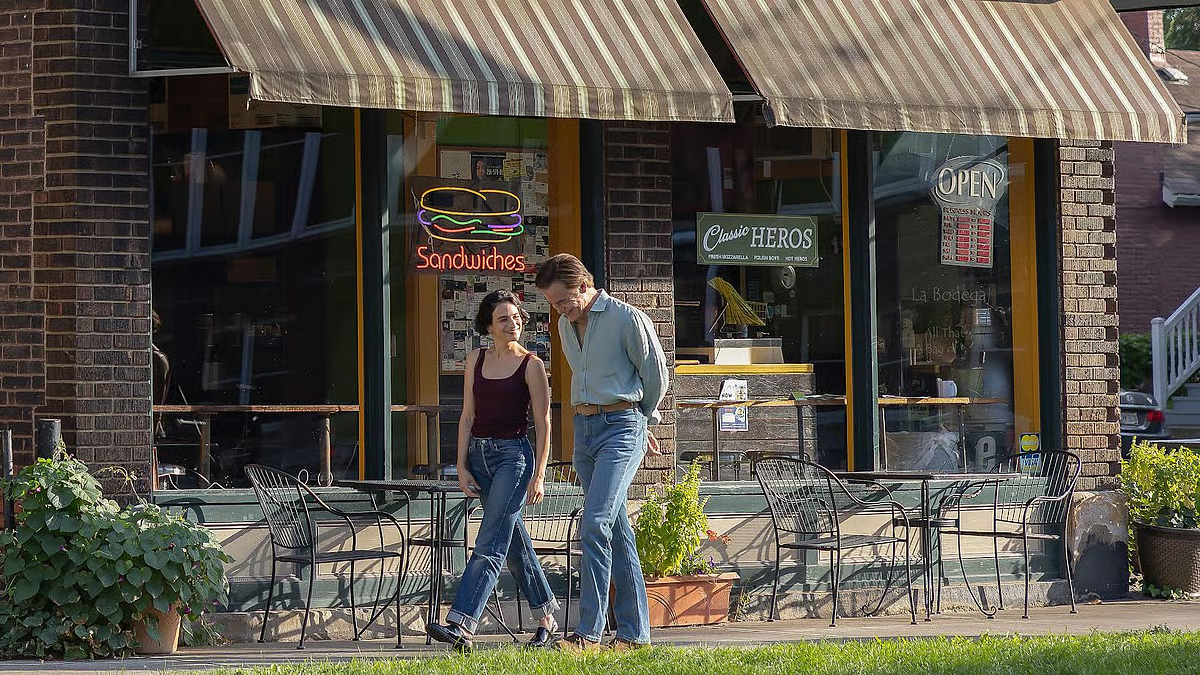

An indie romance premiering at Sundance Film Festival somehow makes one expect the freshness and charming naturalism of a film like Marc Webb’s (500) Days of Summer (2009) or John Carney’s Once (2006). However, writer-director Rachel Lambert’s Carousel, which featured in the festival’s US Dramatic Competition lineup this year, gets weighed down by a needless staidness, that too despite the presence of a charismatic Chris Pine in the lead.
Of course, Carousel, unlike (500) Days of Summer and Once, is a romance for the grown-ups with Pine as a silver fox looking a far cry from his usual jaunty self. Those distinctive blue eyes, though, are a dead giveaway. He plays Noah, a divorced doctor in Cleveland, Ohio, devoted to his medical practice and his anger and anxiety-prone daughter Maya (Abby Ryder Fortson). In the midst of the familial and financial challenges and the essential loneliness of being, things take a major turn for him when his high school sweetheart Rebecca (Jenny Slate) comes back. What’s more, having taken to teaching at the town’s high school now, after a stint at Capitol Hill, she also ends up being Maya’s debating guide.
Is it for the better or for worse? All of this leads to the familiar theme that gets dealt with in countless romcoms, especially the mediocre Hallmark Christmas romances—of love finding its way back. But is the return journey easy to negotiate?
The essential predictability notwithstanding Carousel does deal with truths about life that resonate. How time and distance might not quite dim the affection and how age and maturity can, in fact, help individuals connect better in time. How beyond the callowness and fervour of the heady days of youth, love in the autumn of life is about mellow companionship and acceptance of the fact that rather than holding on, love could be as much about letting go. Additionally, you have the theme of responsibilities of parenting a troubled adolescent coming in the way of committing to a new relationship. And, in the case of an ambitious Rebecca it’s about putting her career on the backburner to become a caregiver to aging parents. Where then is the time for love?
But these ideas don’t cut deep enough. The film doesn’t go beyond skimming the surface. There’s a flatness to the explorations and a resistance to plunge into the many complexities of the situation. It’s what you end up reading into and drawing from the film rather than what it readily offers or delivers to you.
Production designer Dan Maughiman and cinematographer Dustin Lane do manage to create the right small town/provincial textures, with music by Dabney Morris (a bit too much of it, in fact) adding to the feel of the place and its people. Together they also capture the sense of family and community effectively. The mundane, everyday moments get built and strung together rather well. Where things come undone is when the narrative becomes too laden and lumbering without quite offering anything truly insightful. You are left longing for a lightness of touch and easy whimsicality along with some heft and depth. But the film with its deliberate attempt at obliqueness and playing down things, most so emotions, readily falls into the trap of pretence profundity. The supposedly subtle ends up feeling slight and superficial.
Lambert is not able to harness the cast well, a surefire recipe for disaster in a character and relationship-centred drama. Although wonderful individually, the estranged and sensitive Pine and confident but struggling Slate don’t quite hit the right notes together as a couple. There seems to be little connection, forget chemistry, between the two and the audience, in turn, feels no empathy or warmth for them either. Carousel is disappointing in not being able to deliver on its many promises. A love story that, despite all the attention and curiosity and interest for it, unfortunately, lacks both sagacity and sparkle.
Comments are closed.