
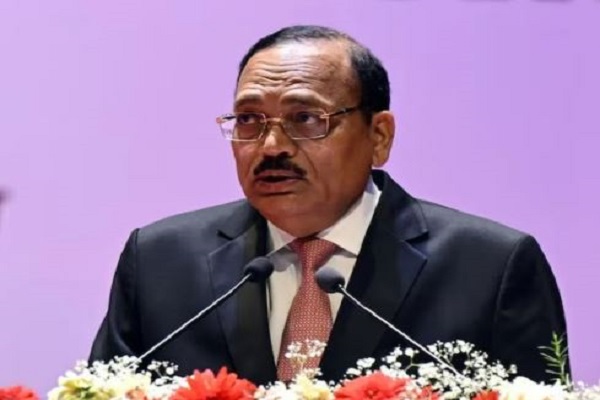
CJI Surya Kant said – Court should become the center of solution, not just date and hearing.

Panaji, 26 December. Chief Justice of India (CJI) Surya Kant has said that arbitration is not a sign of the law being weak but of its great development. CJI Surya Kant made this comment while addressing the conference ‘Mediation: How significant in the present-day context’ organized by the Indian International University of Legal Education and Research at Sankole village in South Goa on Friday. He also said, ‘This (mediation) is a process of moving from a culture of adjudication to a culture of participation, where we promote harmony.’
Arbitration is not a sign of the law being weak but of it being highly developed.
The Chief Justice, who participated in a symbolic walk for ‘mediation awareness’ near the Academy of Arts in Panaji ahead of the conference, said he envisions a court where the court is not just a place for hearing cases but a comprehensive center for resolving disputes. He said that mediation is increasingly being accepted as a successful, cost-effective and mutually beneficial method of resolving disputes.
compromise not defeat, rather strategy
The Chief Justice said that active efforts are being made to reduce the pressure on the lower courts by decisively disposing of the cases involving long pending and repetitive issues in the Supreme Court. Describing mediation as an effective alternative to litigation, he said that compromise is not a defeat but a strategy. An appeal was made to the government to give up the trend of unnecessary appeals and to the lawyers to choose the appropriate forum. Along with this, Lok Adalats were described as ‘successful Indian model of justice at the grassroots level’.
Technology is an aid to justice, not an option
CJI Surya Kant said that technology is an aid to justice, not a substitute for it. E-filing, digital summons and online case tracking may reduce delays, but any reform that excludes digitally deprived sections will not be a real reform.
He said that the justice system cannot survive without adequate courts and resources. He also stressed the need for special courts and special/exclusive courts for time bound trials for complex crimes.

Comments are closed.