
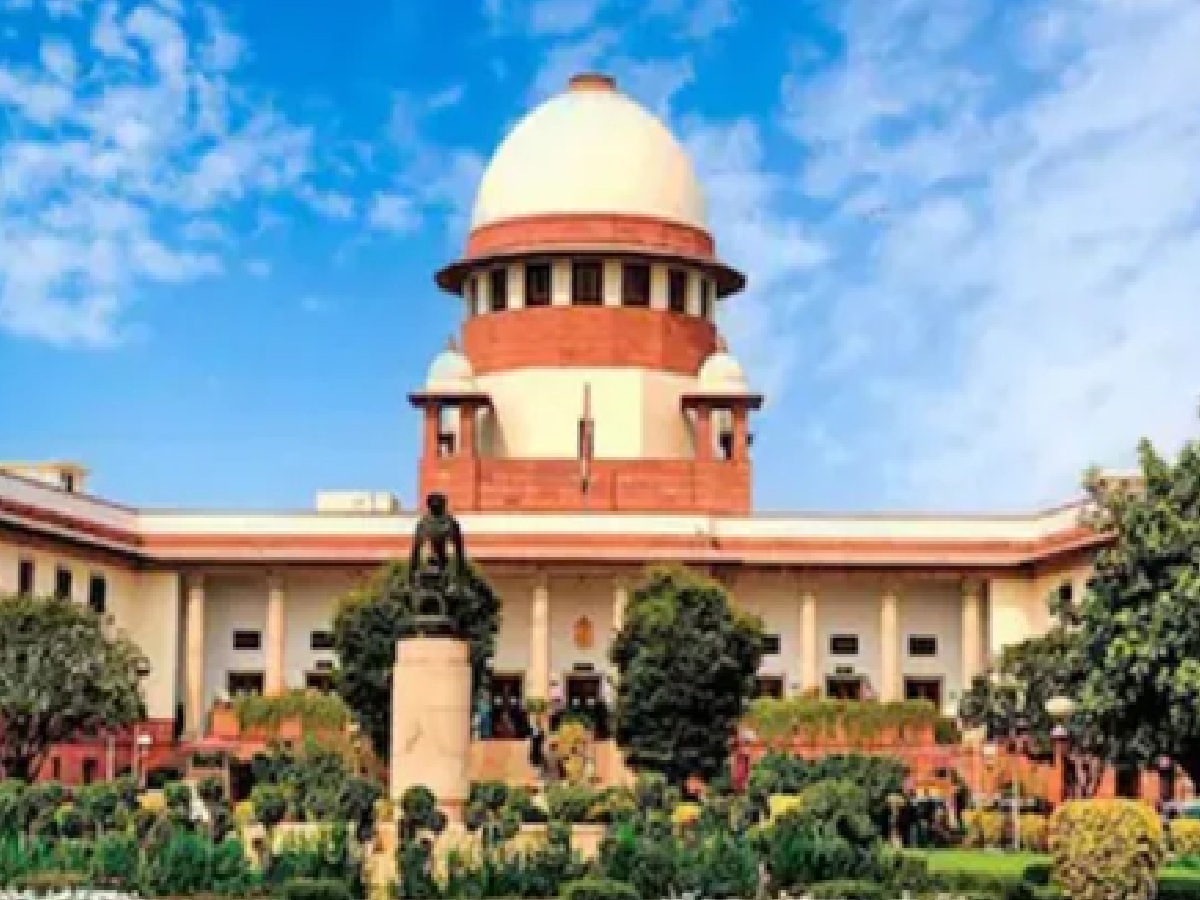
Class 8 Syllabus Makeover: NCERT Rewrites Judiciary Chapter After Supreme Court Crackdown on ‘Corruption’ Text:

New Delhi: In a major administrative and academic overhaul, the National Council of Educational Research and Training (NCERT) on Tuesday officially released its newly revised Class 8 Social Science (Part 2) textbook. The publication comes as a direct fallout of a high-profile legal standoff earlier this year, when the Supreme Court of India took strict exception to the book’s critical portrayal of the Indian legal system. Yielding to judicial directives, the educational council has completely stripped the controversial text of its heavily critical framing, recasting it into a highly balanced civics lesson.
How the Supreme Court Confrontation Triggered the Rewrite
The controversy originally erupted when the previous volume of the textbook featured a section explicitly titled “Corruption in the Judiciary” and detailed structural challenges like “massive backlog of cases.” Taking suo motu cognizance of the text, an apex court bench observed that such unverified material could deeply damage institutional credibility among young minds and ordered an immediate halt to its digital and physical circulation.
Following a formal apology from NCERT characterising the text as an “error of judgment,” a high-level expert oversight committee was constituted to thoroughly sanitize the content. The newly released book features an official acknowledgment stating that the changes have been executed in strict compliance with the directions of the Hon’ble Supreme Court.
From Institutional Criticism to Constitutional Core
The structural tone of Chapter 4, now retitled as ‘The Role of the Judiciary in Our Society’has shifted entirely from institutional scrutiny to systematic institutional explanation. The heavily disputed sections on corruption, judicial delays, and internal complaints have been permanently dropped. Instead, the chapter now introduces standard critical thinking questions for eighth-graders, shifting the focus to: “What is the concept of justice?” and “Why is it important for a just and harmonious society?”
The rewritten text strongly highlights the doctrine of separation of powers, explaining the judiciary as an impartial, independent pillar of governance that works to ensure the legislature and executive stay within constitutional boundaries.
New Additions: Embracing PILs, Tribunals, and Legal Innovations
To replace the deleted text, NCERT has introduced comprehensive, data-backed sections on modern judicial functions and accessible justice. A massive new segment details the concept of Public Interest Litigation (PIL) as a brilliant innovation of the Supreme Court to safeguard vulnerable sections. It educates students using landmark historical interventions like the Hussainara Khatoon case for undertrials, MC Mehta’s iconic environmental battles, and the Vishaka guidelines on workplace safety.
Additionally, the curriculum has been modernized to include:
Alternative Dispute Resolution (ADR): Detailed explanations on Lok Adalats, mediation, and Gram Nyayalayas designed to reduce courtroom burdens.
Specialized Tribunals: Introductory insights into functional bodies like the National Green Tribunal (NGT) and the National Company Law Tribunal (NCLT).
Digital Upgrades: A dedicated look into the digitalization of Indian courts, highlighting e-filings, hybrid virtual hearings, live-streaming of cases, and the National Judicial Data Grid.
Updated Laws: Structural references reflecting the replacement of colonial-era laws (IPC, CrPC) with the newly implemented Bharatiya Nyaya Sanhita framework.

Comments are closed.