
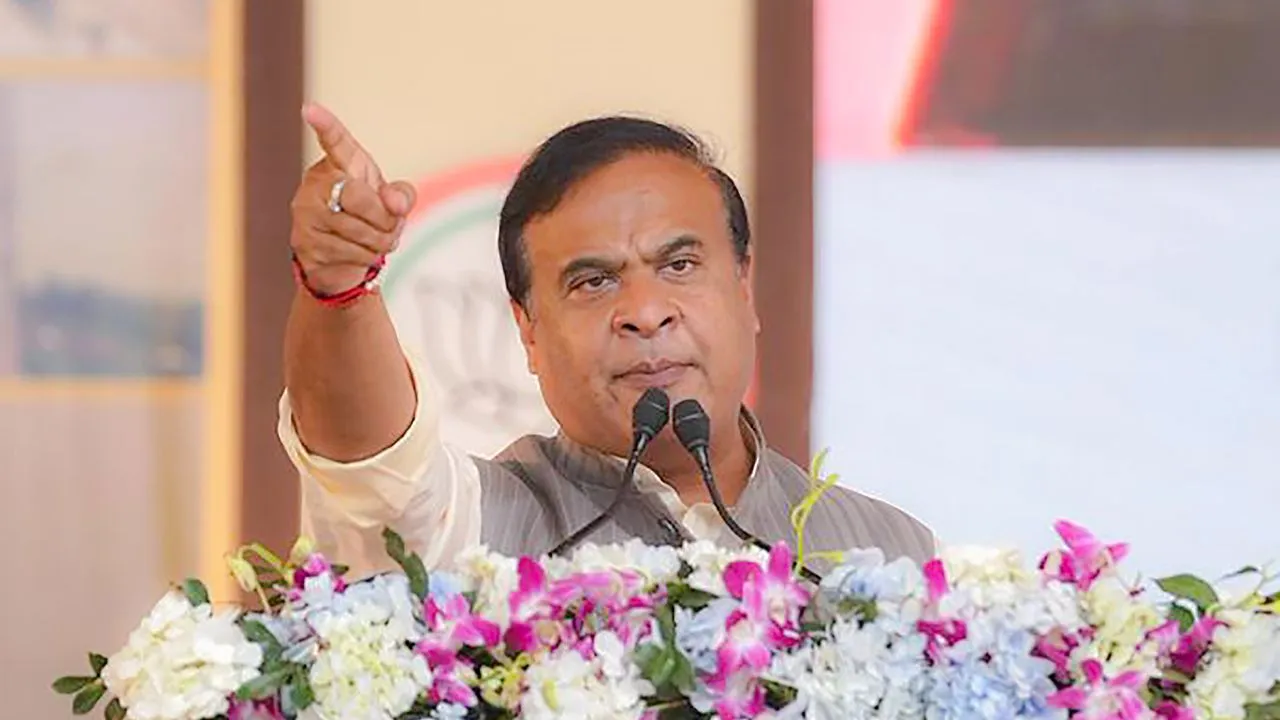
Assam Elections 2026: Why does ‘high voltage CM’, Himanta Biswa Sarma contest elections from Jalukbari?

CM Sarma Jalukbari Seat: Jalukbari seat of Assam which is considered a stronghold of BJP. Himanta Biswa Sarma has contested elections from here throughout his assembly career. He contested elections from this seat for the first time in 2001 on a Congress ticket and won. Then in 2006 and 2011, he scored a hat-trick by registering consecutive wins. Joining BJP in 2016, he again contested elections from the same seat and won and in the year 2021, he won for the fifth time by more than 1 lakh votes. This proved that it was impossible to defeat him from Jalukbari seat.
This time also Himanta Biswa Sarma is contesting from here. It is believed that Himanta Biswa Sarma contesting from this seat also increases the importance of this seat. Because of which it is called ‘VIP seat’ and ‘power center seat’ Is also called.
Why is this seat special?
Jalukbari is part of the Guwahati Lok Sabha constituency. This seat is a mixture of urban and semi-urban vote bank. It is said that the vote bank of Jalukbari seat is also quite stable. Also, this seat is near the educational, administrative and business centers of the state, hence the voters here are also very aware. Also, it is like an impenetrable fort for Himanta Biswa Sarma from where he never loses the election.
Why contest elections from here?
CM Sarma has been continuously winning elections from this seat. The reason for this is clear and that is that they have a strong hold in this area. The development work done is well accepted among every section of the society, Hindu, Muslim, Assamese and Bengali. For this reason, he is going to contest the Assam Assembly elections 2026 with the aim of winning for the sixth time.
Also read: Bengal Chunav 2026: Mamata Banerjee will not be able to save her seat, Suvendu Adhikari challenged; What is the reality?
Is it special even from religious equations?
If we look at religious equations, the Hindu voters on this seat are around 65 to 75 percent. Whereas Muslim voters are 20 to 30 percent. Besides, voters of Sikh and Christian religions also have an important role in this seat. It is noteworthy that the effect of voting on the basis of religion in this seat is not as much as it is seen in rural or border areas.

Comments are closed.