

Export volume rose 9.7% year-on-year to 1.1 million metric tons during the period, with June shipments accounting for 150,000 tons worth $552.6 million.
The average export price in the first half was around $4,435 per ton, down 22% year-on-year following a period of high prices in 2024-25, according to the Ministry of Agriculture and Environment.
Germany, Italy and the U.S. remained Vietnam’s three largest markets, accounting for 14.1%, 7.9% and 6.9% of total coffee exports, respectively. However, shipments to these markets in the first five months of this year declined by 21.7%, 9.6% and 2.2% in value from a year ago.
Exports to China surged 70.7% in value, the strongest growth among the top 15 importers of Vietnamese coffee.
Domestically, coffee prices have bounced back to above VND90,000 (US$3.42) per kilogram. Trading remains cautious as remaining inventories are limited.
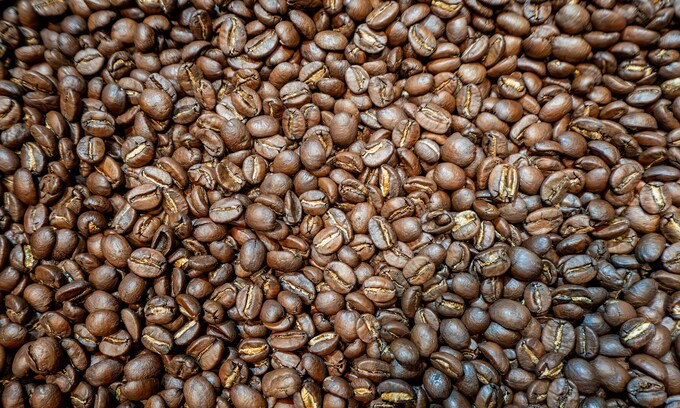
Coffee beans at a roastery in Hanoi. Photo by Read/Hoang Giang |
The Vietnam Coffee Cocoa Association said the global coffee market is entering a more challenging phase as supply growth, driven largely by Brazil, outpaces consumption, which has grown only modestly in recent years.
It noted that the larger supply is expected to keep downward pressure on prices in the coming months, particularly in the Robusta segment, Vietnam’s main export product.
The association warned that achieving this year’s export revenue target will be difficult as export prices continue to fall and shipments in the second half of the year are typically lower than in the first half.
Thai Nhu Hiep, chairman of exporter Vinh Hiep, said higher prices in recent years have improved coffee farmers’ livelihoods. However, greater financial independence has also made it more difficult to encourage them to participate in production linkages, implement traceability systems and comply with sustainable farming practices.
The coffee association has stressed the need for the industry to shift its focus from expanding output to creating more value by increasing exports of high-quality coffee beans with sustainability certifications and boosting shipments of roasted, instant and blended coffee products.
About 30% of the country’s coffee-growing area is now certified under sustainable production standards, providing a solid foundation for meeting increasingly stringent requirements in export markets.
The association also called for stronger trade promotion in promising markets, including China, Russia, South Korea, Algeria and Nordic countries, as well as expanding links with major retail chains in Asia and Europe to support processed coffee exports.
Comments are closed.