

Rose Growing Mistakes: Rose is the pride of the balcony, terrace and courtyard of almost every house. Its colorful petals and pleasant fragrance enhance the beauty of the entire garden. But people often complain that although the plant is green, new leaves are emerging, yet flowers are not coming from it. The reason for this is not the weather or the variety of the plant, but some common mistakes made during care. If these mistakes are corrected in time, the potted rose will remain healthy for a long time and will produce abundant flowers throughout the season.
planting roses in small pots
Rose roots spread quickly and need plenty of room to grow. In a small pot, the roots get shrunk, due to which the plant does not get the right amount of nutrition and moisture. This directly affects the number of flowers. Always choose a pot 12 to 16 inches deep and wide. If the plant is two-three years old, it is also necessary to transfer it to a bigger pot.
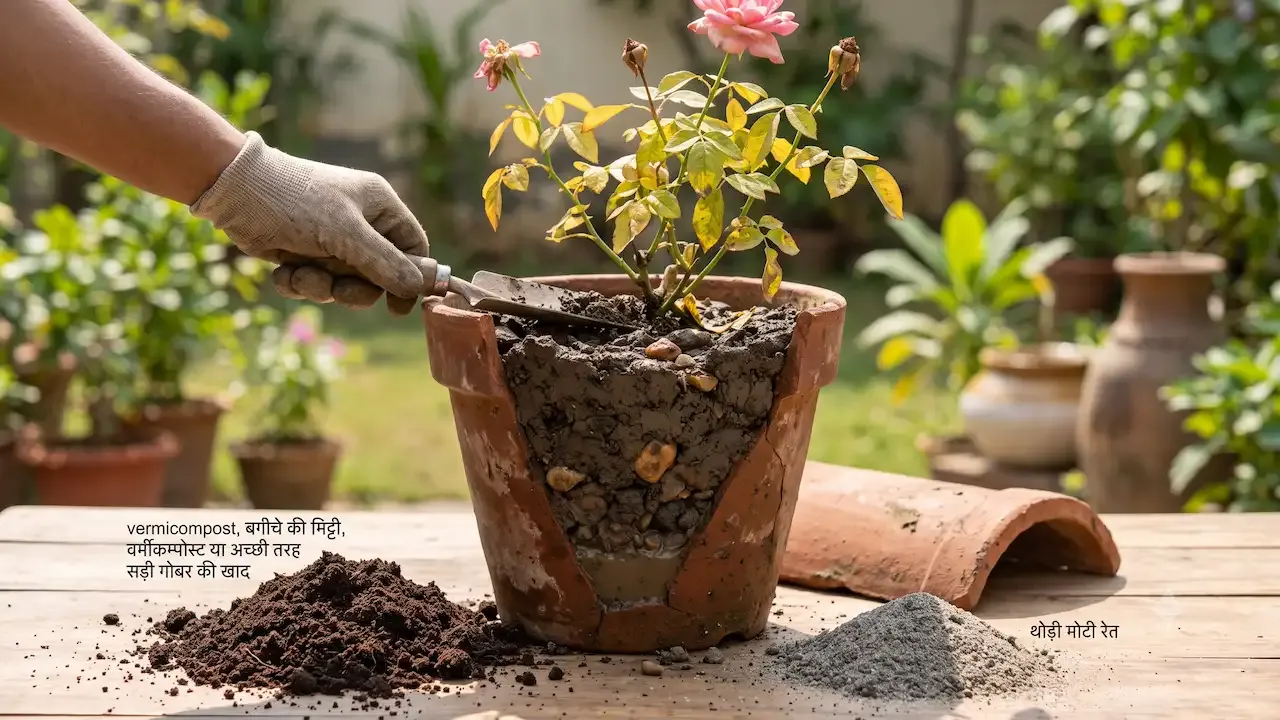
Wrong soil and drainage
Roses prefer fertile, friable and well-drained soil. Due to stagnation of water in heavy or clay soil, the roots start rotting and the growth of the plant is affected. The best mixture is garden soil, vermicompost or well-rotted cow dung and some coarse sand. It is equally important to have an open drainage hole at the bottom of the pot, so that excess water can drain out.
Buds do not form due to lack of sunlight
Rose is a sun loving plant. If it doesn’t get enough sunlight every day, it will only form leaves but not flowers. The plant should receive at least five to six hours of direct sunlight daily. Keep the pot in a place where there is good sunlight from morning to afternoon. Changing the location of the pot frequently can also affect the growth of the plant.
give more water and fertilizer
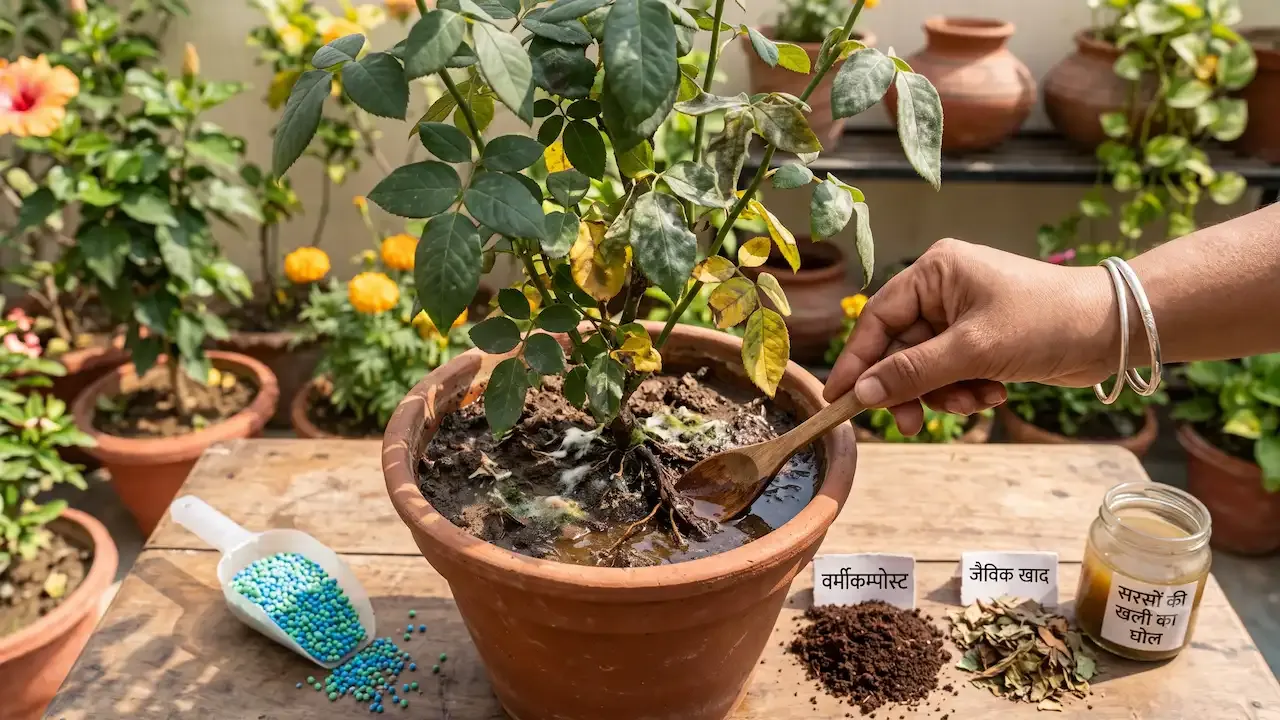
This is the most common mistake. Constantly wet soil can cause root rot and fungal problems. Water only when the top layer of soil feels dry. Similarly, giving more chemical fertilizers than required causes a lot of leaves to grow, but less flowers. Giving organic fertilizer, vermicompost or mustard cake solution once a month is considered sufficient.
not pruning on time
Withered flowers, dry branches and yellow leaves waste the plant’s energy. By removing them from time to time, new branches and buds develop faster. Light pruning in late winter or early spring helps roses produce more flowers the next season. The habit of immediately removing withered flowers also increases the plant’s ability to produce flowers.
Ignoring pests and diseases
Problems like aphids, mealybugs, thrips and black spot are the biggest enemies of roses. Initially their effect is less visible, but if timely treatment is not received, the plant may stop giving flowers. Check the leaves once a week and spray neem oil solution if needed. Most diseases can be easily avoided with regular cleaning and proper care.
If you want a potted rose to be laden with big, colorful and fragrant flowers every season, then it is very important to avoid these small but important mistakes. The right pot, suitable soil, plenty of sunlight, balanced irrigation, timely nutrition and regular pruning are the biggest secrets of a healthy and continuously blooming rose.
FAQ
Which fertilizer is best to get more flowers in potted roses?
Vermicompost, old cowdung manure and mustard cake fertilizer are considered best for roses. Apart from this, giving small amount of bone meal provides phosphorus which helps in bigger blooming of buds.
When should the rose plant be pruned?
The best time to prune roses is October-November (beginning of winter) and February-March (spring season).
What to do if there are black spots or white insects on rose leaves?
Mix 5 ml of neem oil and 2-3 drops of liquid dishwash in 1 liter of water and spray the plant every 7-10 days.
Should rose plants be watered daily?
No, instead of watering daily, check the soil moisture. Water only when the top surface of the soil feels dry.
Is tea leaf fertilizer beneficial for roses?
Yes, used tea leaves make the soil slightly acidic, which is very beneficial for the growth of rose plants.

Comments are closed.