

As businesses increasingly migrate their applications, databases, and workloads to the cloud, protecting sensitive information has become one of the biggest challenges in cybersecurity. While cloud providers have made significant advances in encrypting data stored on servers and data traveling across networks, one critical security gap has remained: protecting data while it is actively being processed.
This is where confidential computing comes in. Often described as the next evolution of cloud security, confidential computing ensures that sensitive data remains encrypted and protected even during computation. This breakthrough technology allows organizations to process highly confidential information in public or hybrid cloud environments without exposing it to cloud providers, system administrators, or malicious attackers.
In this article, we’ll explore what confidential computing is, how it works, why it matters, its benefits, real-world applications, challenges, and its future.
Credits: NVIDIA Blog
What Is Confidential Computing?
Confidential computing is a cloud security technology that protects data while it is being processed inside a computer’s processor (CPU). Unlike traditional security methods that only encrypt data when it is stored or transferred, confidential computing secures data in use.
The technology isolates sensitive workloads inside a Trusted Execution Environment (TEE), a hardware-protected region within the processor. Only authorized application code can access the information inside this secure environment. Everything else—including the operating system, hypervisor, cloud provider, administrators, and even malware—is blocked from viewing or modifying the data.
In simple terms, confidential computing creates a highly secure digital vault inside the processor where sensitive computations can occur safely.
Why Is Confidential Computing Needed?
Modern organizations rely heavily on cloud computing because it offers scalability, flexibility, lower infrastructure costs, and easier collaboration. However, moving sensitive workloads to the cloud also means trusting third-party infrastructure.
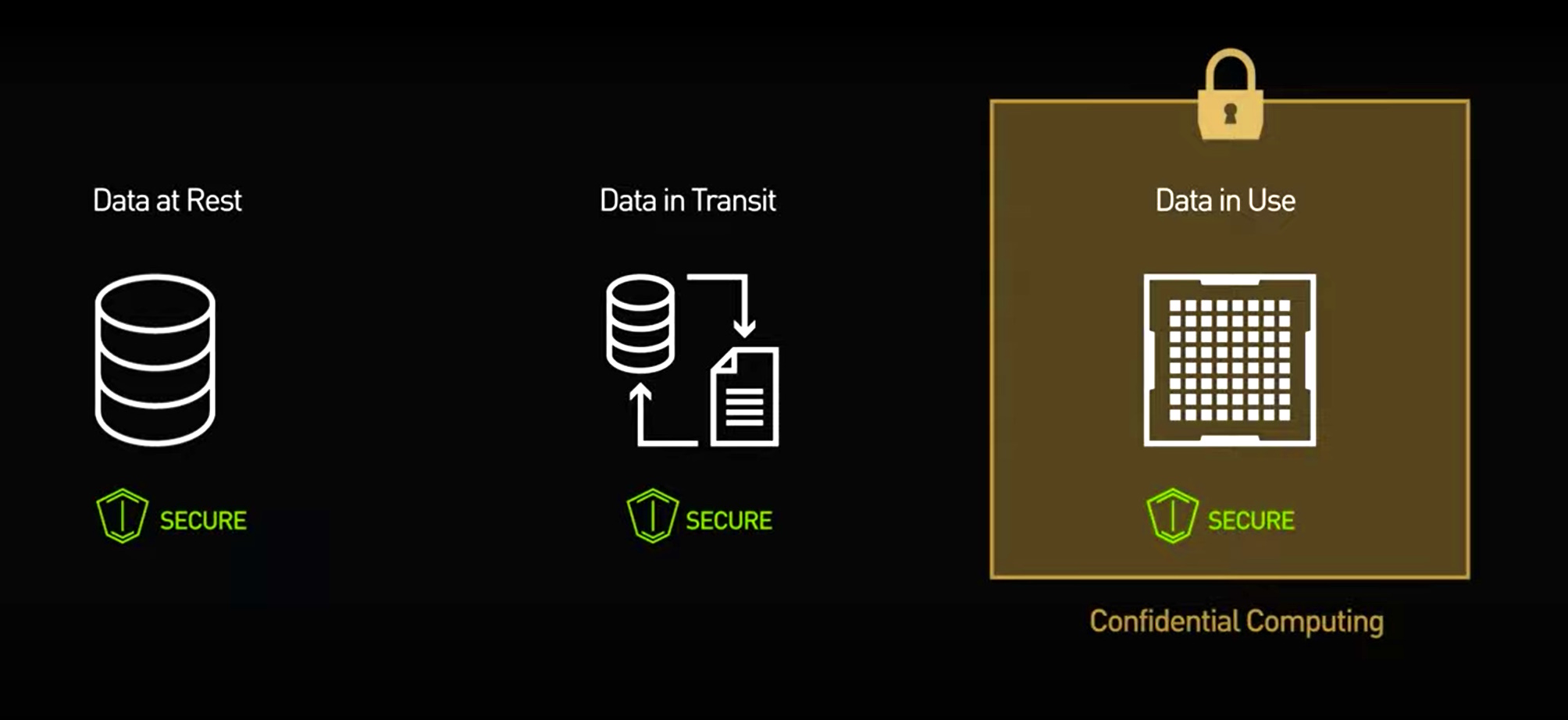
Traditionally, cloud security has focused on protecting data in two states:
- Data at Rest: Information stored in databases, storage drives, or backups is encrypted.
- Data in Transit: Information traveling between devices or across networks is encrypted using protocols like TLS.
While these protections are essential, they leave one major vulnerability.
Whenever an application needs to process encrypted information, it must first decrypt it in the computer’s memory (RAM). During this brief period, the data becomes visible to the operating system and anyone with sufficient privileges.
This creates opportunities for attackers to exploit memory vulnerabilities or compromised administrator accounts.
Confidential computing closes this long-standing security gap by ensuring data remains protected even while being processed.
The Three States of Data
Understanding confidential computing becomes much easier by looking at the three different states in which digital information exists.
Data at Rest
This includes files stored in hard drives, SSDs, cloud storage, databases, and backup systems. Encryption technologies like AES are commonly used to protect this data.
Data in Transit
This refers to information moving across networks, such as between users and cloud servers or between applications. Technologies like HTTPS and VPNs protect this data during transmission.
Data in Use
This is the information currently being processed by applications. Traditionally, this data had to be decrypted in memory before processing, making it vulnerable.
Confidential computing introduces encryption and hardware isolation for this third and previously unprotected state.
How Confidential Computing Works
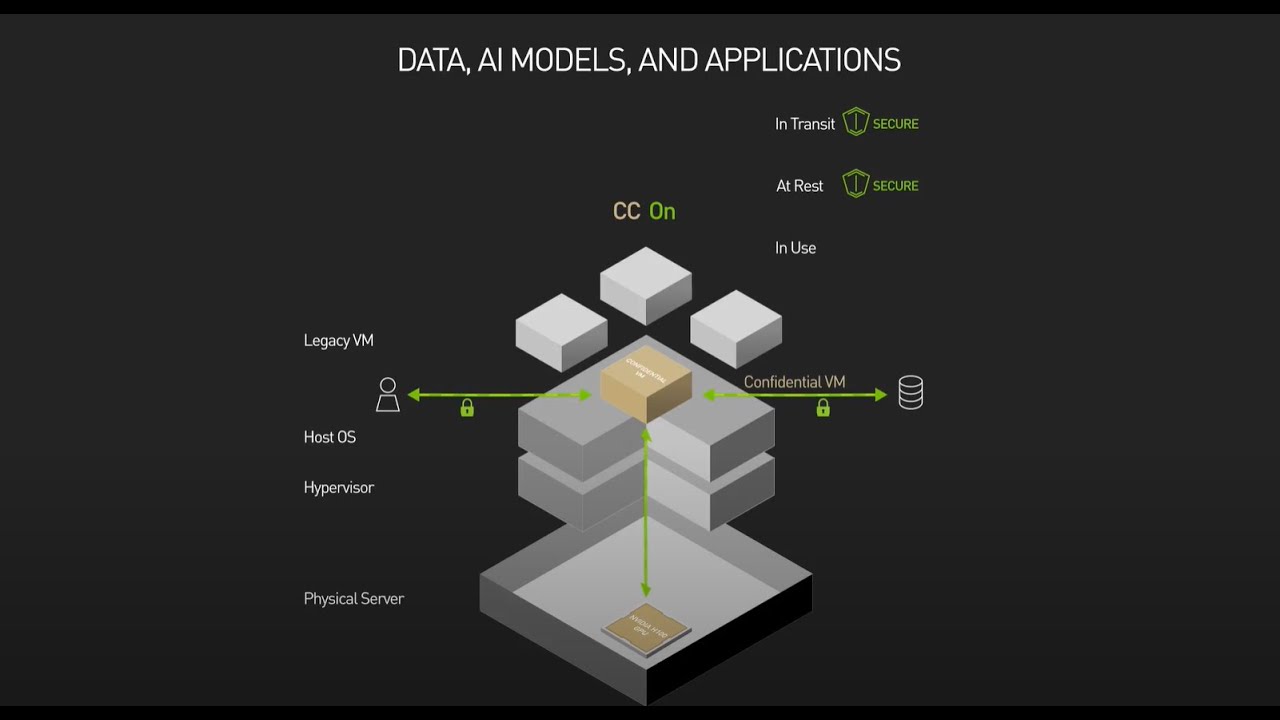
At the heart of confidential computing lies a hardware-based security architecture known as the Trusted Execution Environment (TEE).
Here’s how the process works:
Step 1: Application Requests Sensitive Data
An application needs access to confidential information such as customer records, financial transactions, medical data, or AI models.
Step 2: Data Enters the Trusted Execution Environment
Instead of exposing decrypted information to the operating system or memory, the processor moves the encrypted data into the TEE.
Step 3: Hardware-Based Verification
Before allowing any computation, the processor verifies that the application requesting access is legitimate.
This process is known as attestation, where the processor proves that the correct software is running in a secure environment.
Step 4: Secure Decryption
Only inside the protected TEE does the processor decrypt the data.
No external software—including the operating system, hypervisor, cloud administrator, or malware—can view the decrypted information.
Step 5: Computation
The application performs its calculations inside the isolated environment.
Everything remains invisible to unauthorized users and programs.
Step 6: Encryption Again
After processing, the results are immediately encrypted before leaving the TEE.
This ensures complete end-to-end protection throughout the data lifecycle.
Credits: NVIDIA Blog
Trusted Execution Environment (TEE)
A Trusted Execution Environment is the foundation of confidential computing.
Think of it as a secure room built directly inside the processor.
Only approved applications are allowed inside this room.
Everything outside—including:
- Operating systems
- Hypervisors
- Virtual machines
- Cloud providers
- System administrators
- Malware
- Other applications
is prevented from accessing the information.
Modern processors include hardware features that make this isolation extremely difficult to bypass.
Attestation: Verifying Trust
One of the most important features of confidential computing is remote attestation.
Before sensitive information is shared with an application, the processor generates cryptographic proof showing that:
- The software has not been modified.
- The TEE is genuine.
- The hardware is authentic.
- No unauthorized code is running.
Only after successful verification is confidential data released.
This allows organizations to trust cloud environments without trusting the cloud provider itself.
Threats Confidential Computing Prevents
Confidential computing helps defend against several advanced cyber threats.
Memory Dump Attacks
Attackers may intentionally crash a system to force RAM contents to be written to disk, allowing sensitive information to be extracted.
Since confidential computing keeps decrypted information inside the TEE, these attacks become ineffective.
Privileged Insider Attacks
System administrators traditionally possess extensive access to cloud infrastructure.
Confidential computing prevents even privileged administrators from viewing sensitive workloads.
Malware
Malicious software attempting to read memory or intercept sensitive data cannot penetrate the TEE.
Hypervisor Attacks
Even if attackers compromise the virtualization layer, confidential workloads remain isolated.
Cloud Provider Access
Perhaps the biggest advantage is that cloud providers themselves cannot inspect confidential workloads.
This creates a “trustless” security model where customers no longer need to rely solely on provider integrity.
Why Confidential Computing Is a Breakthrough
Confidential computing fundamentally changes cloud security.
Instead of asking organizations to trust infrastructure providers, it allows them to trust cryptographic hardware protections.
This shift is especially valuable because:
- Businesses increasingly rely on cloud infrastructure.
- Data privacy regulations continue to expand.
- Cyberattacks targeting cloud environments are becoming more sophisticated.
- AI workloads require enormous amounts of sensitive data.
By eliminating the last major security gap, confidential computing significantly increases confidence in cloud adoption.
Credits: Decentriq
Benefits of Confidential Computing
Protects Sensitive Data During Processing
The biggest benefit is safeguarding information throughout its entire lifecycle—from storage to transmission to computation.
Organizations can safely process confidential information without exposing it to cloud infrastructure.
Protects Intellectual Property
Confidential computing secures not only data but also proprietary business logic.
Companies can protect:
- Algorithms
- AI models
- Machine learning pipelines
- Financial models
- Trade secrets
- Software code
This prevents competitors or attackers from stealing valuable intellectual property.
Enables Secure Collaboration
Multiple organizations can collaborate on shared projects without revealing their confidential datasets.
For example:
- Banks can jointly detect fraud.
- Pharmaceutical companies can collaborate on research.
- Hospitals can analyze patient data collectively.
Each participant keeps its proprietary information private while contributing to shared computations.
Improves Regulatory Compliance
Industries subject to strict regulations benefit greatly.
Examples include:
- Healthcare
- Banking
- Insurance
- Government
- Defense
Confidential computing helps organizations satisfy compliance requirements by reducing unauthorized access to sensitive information.
Builds Customer Trust
Customers become more willing to share sensitive information when they know it remains protected—even from the cloud provider.
This increased trust encourages wider adoption of cloud-based services.
Secures Edge Computing
Edge devices often process confidential information before sending results to the cloud.
Confidential computing protects workloads running at the network edge, reducing exposure during distributed processing.

Credits: Duality Technologies
Real-World Applications
Confidential computing is already being used across multiple industries.
Healthcare
Hospitals securely process patient records while maintaining privacy under healthcare regulations.
Medical researchers can collaborate without exposing individual patient data.
Financial Services
Banks protect transaction processing, fraud detection systems, customer information, and trading algorithms.
Artificial Intelligence
Organizations can train AI models using confidential datasets without revealing sensitive information.
Model owners also protect proprietary algorithms.
Government
Government agencies securely process classified information in cloud environments while maintaining strict confidentiality.
Manufacturing
Manufacturers protect product designs, production data, and proprietary processes from industrial espionage.
Telecommunications
Network providers secure customer information while processing massive amounts of communication data.
Confidential Computing and Artificial Intelligence
One of the fastest-growing applications is AI.
Training modern AI models often requires highly sensitive datasets containing:
- Medical records
- Financial transactions
- Customer behavior
- Legal documents
- Personal information
Confidential computing allows AI developers to process these datasets securely while reducing privacy risks.
It also protects valuable AI models themselves from theft or reverse engineering.
The Confidential Computing Consortium (CCC)
Recognizing the growing importance of confidential computing, leading technology companies established the Confidential Computing Consortium (CCC) in 2019.
The consortium aims to accelerate adoption by developing open standards and open-source software that works across different hardware platforms.
Founding members include major technology companies such as AMD, Intel, IBM, Google, Microsoft, Oracle, Alibaba, VMware, Tencent, Swisscom, Baidu, and Red Hat.
The consortium supports projects like:
- Open Enclave SDK
- Red Hat Enarx
These tools simplify application development across different Trusted Execution Environment implementations.

Credits: Fortanix
Current Technologies Supporting Confidential Computing
Several processor manufacturers already provide hardware support.
Examples include:
- Intel Software Guard Extensions (SGX)
- Intel Trust Domain Extensions (TDX)
- AMD Secure Encrypted Virtualization (SEV)
- ARM Confidential Compute Architecture (CCA)
Major cloud providers—including Microsoft Azure, Google Cloud, IBM Cloud, Oracle Cloud, and others—now offer confidential computing services built on these technologies.

Comments are closed.