
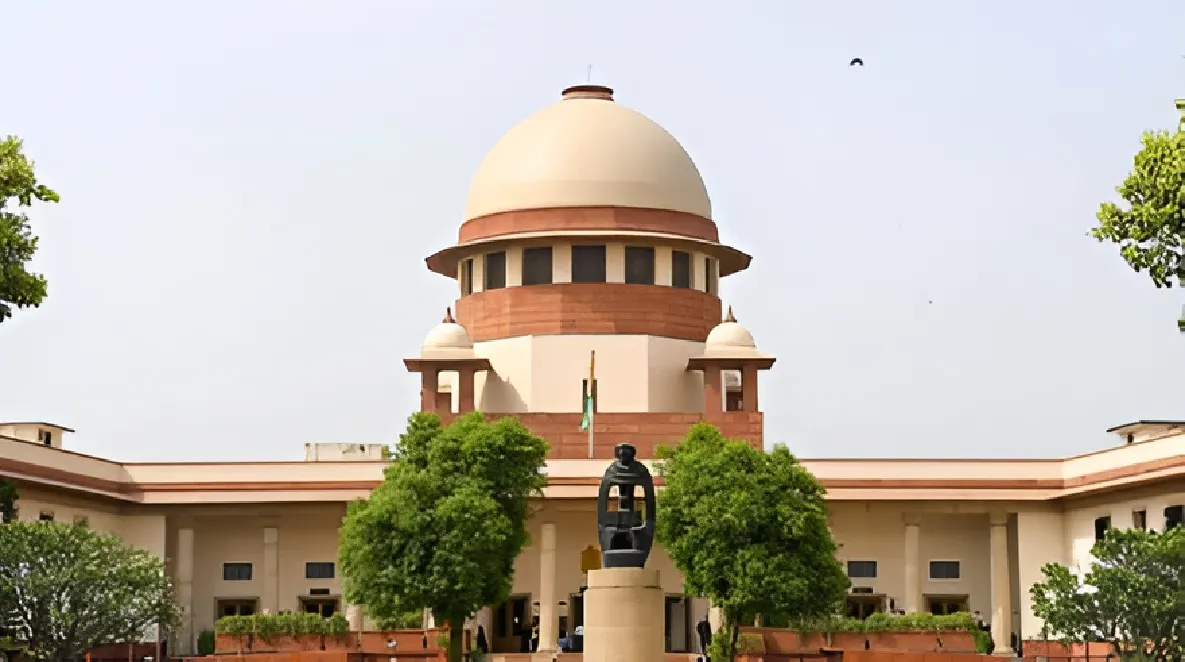

Chief Justice Surya Kant on Monday told lawyers that in cases requiring urgent hearing, Supreme Court Registry should be contacted. He clarified that instead of merely mentioning the cases in the court, the lawyers should submit concrete reasons for Supreme Court Urgent Hearing before the registry, so that the hearing can be fixed on the basis of their priority.
CJI Surya Kant made this comment while sitting in the vacation special bench along with Justice Jaimalya Bagchi while hearing some urgent cases. The bench was considering such cases which required immediate judicial intervention. As soon as the hearing began, many lawyers started orally mentioning their respective cases for early hearing.
On this the Chief Justice said that instead of the process of mentioning, the reasons should be given in writing to the Registry. The Registry will examine these reasons and if the case is found to be genuinely urgent, it will be listed for hearing on an appropriate date. He said such cases could be provisionally listed for hearing on December 26 or December 29.
The bench also clarified that the judicial process remains fully active even during the vacation period and cases requiring immediate intervention are heard on priority basis. For this very purpose, this special meeting was organized on Monday, so that the important and sensitive matters pending during the holidays could be considered in time.
The CJI said that the Supreme Court Registry takes decisions keeping in mind the nature, urgency and potential impact of the cases. Therefore if a case requires urgent hearing, lawyers should apply with clear and solid grounds. This will facilitate the court to decide which cases require urgent hearing (Supreme Court Urgent Hearing) and which can be kept in the regular list.
The court also indicated that this process would not only lead to better management of judicial time but would also enable timely relief to truly serious and urgent cases. The purpose of the vacation bench is to ensure that there is no unnecessary delay in justice and that constitutional rights are protected.

Comments are closed.