
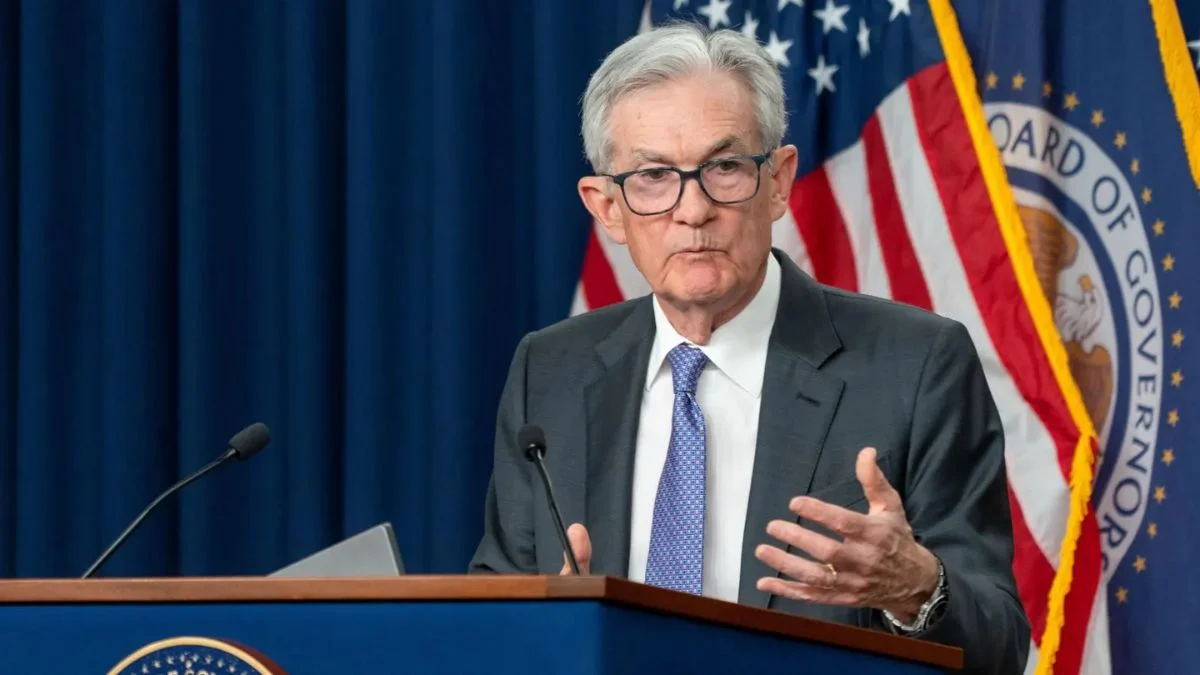

A U.S. federal court has blocked a criminal investigation by the U.S. Department of Justice into Jerome Powellthe chair of the Federal Reserveruling that prosecutors failed to demonstrate a legitimate criminal basis for issuing grand jury subpoenas linked to Powell’s Senate testimony about the central bank’s headquarters renovation project.
The decision by Chief U.S. District Judge James Boasberg halts the probe initiated by federal prosecutors in Washington, D.C., who sought to investigate Powell’s statements before the United States Senate regarding the costs and management of renovations at the Federal Reserve’s main building. In his ruling, Boasberg concluded that the subpoenas appeared to function as a pressure mechanism rather than a legitimate criminal inquiry.
“There is abundant evidence that the subpoenas’ dominant purpose is to harass and pressure Powell either to yield to the President or to resign,” Boasberg wrote, adding that the government had offered no evidence that Powell committed any crime.
The ruling represents a significant legal development concerning the limits of federal investigative authority and the protection of institutional independence for economic regulators. Courts in the United States have long recognized the independence of the Federal Reserve as a critical element of monetary governance, insulating interest-rate decisions and financial policy from political pressure.
The investigation had been led by the office of Jeanine Pirrothe U.S. attorney for the District of Columbia. Following the ruling, Pirro announced that her office would appeal the decision, arguing that the court had improperly intervened in the grand jury process.
Speaking at a press conference, Pirro criticized the judge’s decision, saying it prevented the grand jury from performing its investigative role. She said the appeal would seek to restore what prosecutors view as the lawful authority of the grand jury to examine potential criminal matters.
The legal dispute has broader policy implications because it intersects with ongoing debates about the leadership of the Federal Reserve and the direction of U.S. monetary policy. Donald Trump has repeatedly criticized Powell’s handling of interest rates, arguing that the central bank should lower borrowing costs to stimulate economic growth.
Powell, however, has defended the Federal Reserve’s policy framework as necessary to maintain economic stability and control inflation. He has also suggested that the investigation into his testimony formed part of a broader campaign aimed at influencing central bank policy decisions.
The controversy has intensified because Powell’s current term as Federal Reserve chair is set to expire in May. The administration has nominated former Federal Reserve governor Kevin Warsh as a potential successor, but the confirmation process has become entangled in the legal dispute surrounding Powell.
Republican Senator Thom Tillis has indicated that he would block the confirmation process for Warsh until the investigation into Powell is resolved. Tillis also warned that an appeal by federal prosecutors could prolong the confirmation process and delay any leadership transition at the central bank.
The case highlights a broader institutional debate in the United States over the balance between executive authority and the independence of regulatory institutions responsible for economic policy. The Federal Reserve, established by Congress to manage monetary policy and oversee the financial system, operates independently from direct political control.
Legal scholars note that judicial oversight plays a crucial role in ensuring that prosecutorial powers are not used in ways that could undermine the autonomy of independent agencies. The court’s decision therefore reinforces constitutional limits on federal investigations while emphasizing the importance of protecting regulatory institutions from political interference.
The planned appeal means the legal dispute is likely to continue in higher courts, potentially prolonging uncertainty surrounding both the investigation and the leadership transition at the Federal Reserve. The outcome could have significant implications for U.S. economic governance, particularly as policymakers navigate inflation pressures, interest-rate decisions and broader financial stability concerns.

Comments are closed.