
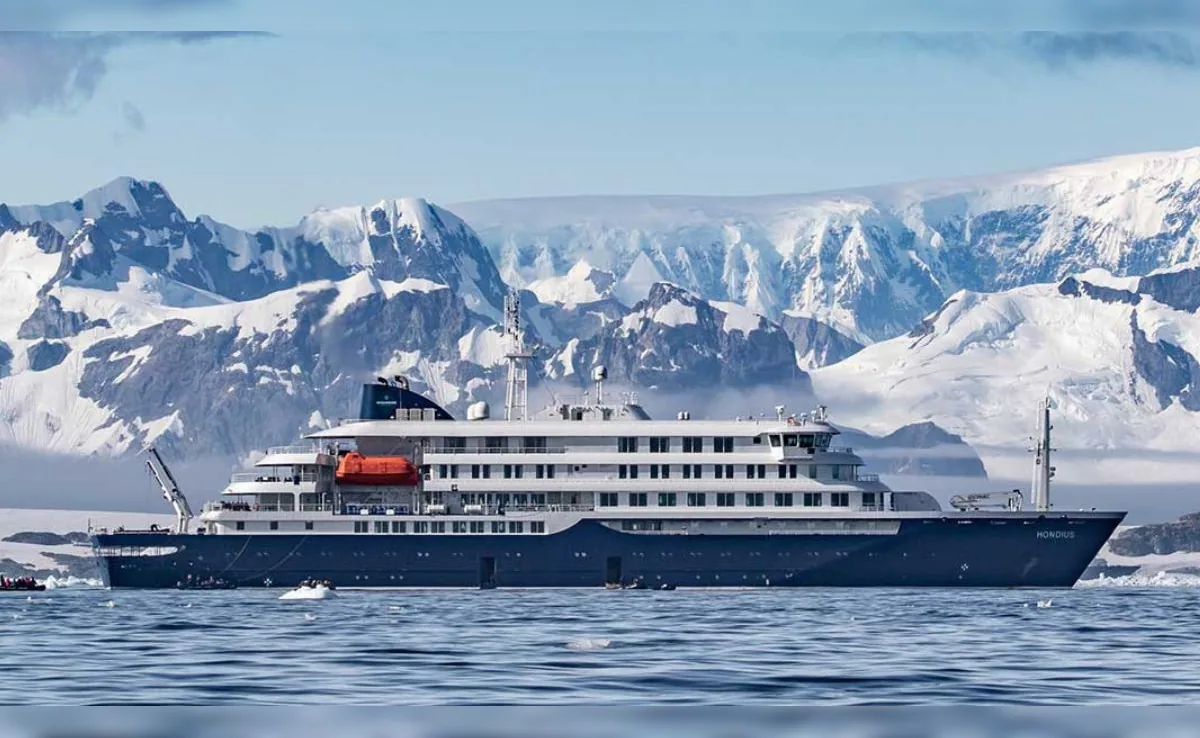

But the recent outbreak aboard the expedition dutch cruise ship MV Hondius has become a grim reminder of another reality of life at sea: when a virus enters a cruise ship, it can spread frighteningly fast.
What Is Happening
The outbreak has already resulted in three deaths and several illnesses among passengers and crew aboard the MV Hondius, an expedition vessel operated by Oceanwide Expeditions.
The ship had departed from Ushuaia in Argentina around early April and travelled through Antarctica, the Falklands and other remote islands before ending up off Cape Verde.
Three suspected #hantavirus case patients have just been evacuated from the ship and are on their way to receive medical care in the Netherlands in coordination with @WHOthe ship’s operator and national authorities from Cabo Verde, the United Kingdom, Spain and the Netherlands.… pic.twitter.com/olQBk6tdGk
— Tedros Adhanom Ghebreyesus (@DrTedros) May 6, 2026
Health authorities believe the outbreak is linked to hantavirus, a rare but dangerous virus commonly spread through exposure to infected rodents or their droppings. Two cases have been laboratory-confirmed, while several others remain suspected.
The situation has once again raised a larger question many experts have discussed for years: why do cruise ships become such high-risk spaces whenever an infectious disease appears? But before that..
What Exactly Is Hantavirus?
Hantavirus is a rare but potentially fatal virus usually spread through contact with infected rodent urine, saliva or droppings. Humans can inhale contaminated particles from dust or surfaces.
Symptoms often begin like the flu, with fever, fatigue, muscle pain and headaches. In severe cases, it can progress into hantavirus pulmonary syndrome (HPS), a condition that affects the lungs and breathing.
There is currently no specific antiviral treatment or vaccine for hantavirus. Doctors mainly rely on supportive care, oxygen support and intensive monitoring.
Hantavirus is a rare but potentially fatal virus usually spread through contact with infected rodents. Photo: X
Authorities suspect the exposure may have occurred when the MV Hondius visited rodent-prone islands during its expedition route. Investigators are also examining whether limited human-to-human transmission may have occurred among close cabin contacts, though this remains uncommon for hantavirus.
A Cruise Ship Is Basically A Floating City
Cruise ships combine hundreds, sometimes thousands, of people into a tightly enclosed environment.
Passengers share cabins, dining halls, corridors, theatres, elevators, pools, lounges and buffet areas for days or even weeks at a time.
That level of close contact creates ideal conditions for viruses to spread rapidly.
Unlike hotels or cities, where people can disperse, cruise passengers remain confined to the same moving environment. Once someone falls sick, avoiding contact becomes extremely difficult.
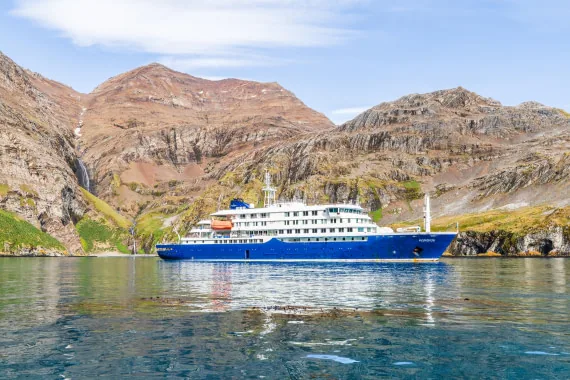
Close contact creates ideal conditions for viruses to spread rapidly. Photo: MV Hondius
On the MV Hondius, there were 149 people onboard during the outbreak, including passengers and crew from 23 nationalities. The ship itself is designed for long polar expeditions, with shared observation lounges, lectures and group excursions that naturally encourage interaction.
Health experts have long warned that ships are uniquely vulnerable because illnesses can travel not just through people, but also through frequently touched surfaces, shared air circulation systems and common food areas.
Remote Voyages Make Outbreaks Even Harder To Control
One of the biggest problems during the MV Hondius outbreak was location.
The ship was travelling through isolated Antarctic and Atlantic regions, far away from major hospitals or emergency medical infrastructure. When passengers began developing symptoms, immediate advanced care was difficult.
A critically ill British passenger had to be airlifted to intensive care in South Africa. Three suspected cases were later evacuated to the Netherlands through Cape Verde with coordination from the World Health Organization and multiple governments.
Unlike cities where patients can quickly access hospitals, cruise ships usually only have limited onboard medical facilities. Serious viral infections requiring ICU care or respiratory support can become dangerous very quickly when help is days away.
That delay can worsen survival chances, especially with diseases like hantavirus pulmonary syndrome, which can rapidly progress from flu-like symptoms to severe respiratory failure.
A Long History Of Outbreaks
The cruise industry has repeatedly faced outbreaks over the years, long before Covid-19.
Norovirus outbreaks have frequently hit cruise liners because stomach viruses spread easily in shared dining and bathroom facilities. But the pandemic turned cruise ships into global symbols of how quickly diseases can spiral out of control onboard.
One of the most infamous examples was the outbreak aboard the Diamond Princess in early 2020.
- The ship was quarantined off Yokohama, Japan, after a passenger tested positive for Covid-19. Eventually, 712 out of 3,711 passengers and crew were infected, while 13 people died. The quarantine itself later came under criticism because infections continued spreading onboard despite isolation attempts.
- Another major outbreak occurred on the Ruby Princess in Australia, where more than 900 cases were linked to the voyage. The ship was blamed for helping seed wider community transmission after infected passengers disembarked.
- Even river cruises were affected. During the pandemic, several Nile cruises travelling between Aswan and Luxor became linked to clusters of Covid cases among tourists and crew. In some cases, infections spread across multiple short voyages within days.
These outbreaks repeatedly showed the same problem: once a virus gets onto a ship, containing it becomes extremely difficult.
Shared Air, Surfaces, And Risk
Cruise ships are heavily dependent on shared infrastructure.
Ventilation systems recirculate air across enclosed spaces. Dining halls and buffets involve repeated contact with utensils and surfaces. Elevators, railings, door handles and lounges become constant touchpoints for hundreds of people daily.
Cleaning a cruise ship during an active outbreak is also far more complicated than it sounds. Some viruses can survive on surfaces for extended periods, while constant passenger movement makes complete disinfection difficult.
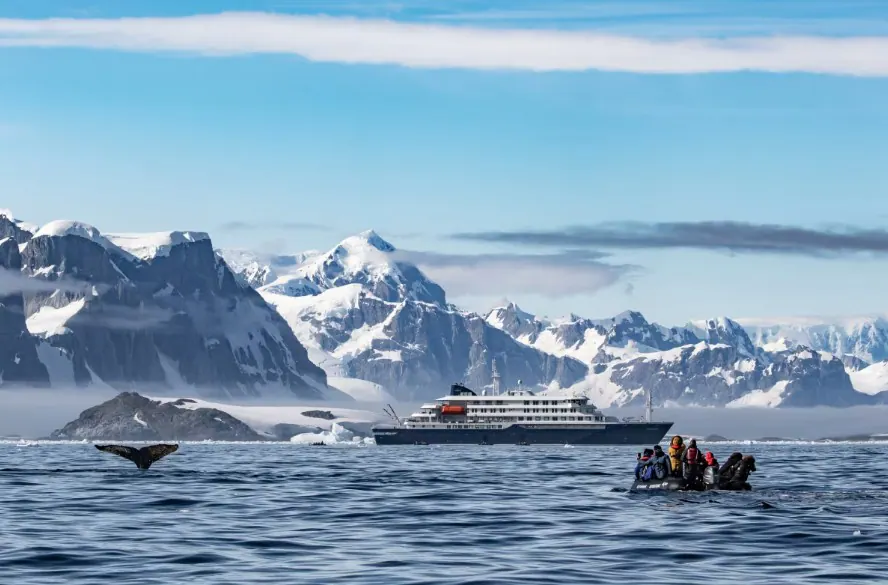
Cruise ships are heavily dependent on shared infrastructure. Photo: MV Hondius
During the MV Hondius outbreak, passengers were reportedly confined to cabins as authorities worked on distancing, monitoring and onboard sanitation. Cape Verde sent medical teams wearing protective equipment to assist.
The ship is now heading towards Spain’s Canary Islands for further disinfection and assessment.
WHO Says Global Risk Remains Low
The World Health Organisation has coordinated response efforts involving Cabo Verde, the Netherlands, South Africa, Spain, the UK and Argentina.
Current guidance includes symptom monitoring for 45 days, isolation of ill individuals, enhanced sanitation and rapid medical transfer for severe cases.
WHO currently considers the broader public risk to be low and has not advised travel restrictions. As of the latest updates, no major new symptoms had been reported onboard following evacuations. Also,Two patients have landed in the Netherlands, where they are receiving medical treatment, according to a statement on Wednesday from Oceanwide Expeditions, the Dutch company operating the cruise.
Still, the outbreak has once again exposed how vulnerable even luxury expedition cruises can become when infectious diseases emerge.
Comments are closed.