
Cry Harder, Pakistan! Islamabad Rues Chenab Water Flow Variation But India Unlikely To Oblige – Here’s Why | India News

Since the suspension of the Indus Water Treaty, Pakistan has been attempting to persuade India to rejoin the pact. However, India has made it clear – terror and talks cannot go together. Pakistan’s major share of agricultural produce depends on the Indus River system and with India suspending the treaty, Pakistan has been left reeling with uneven water flow.
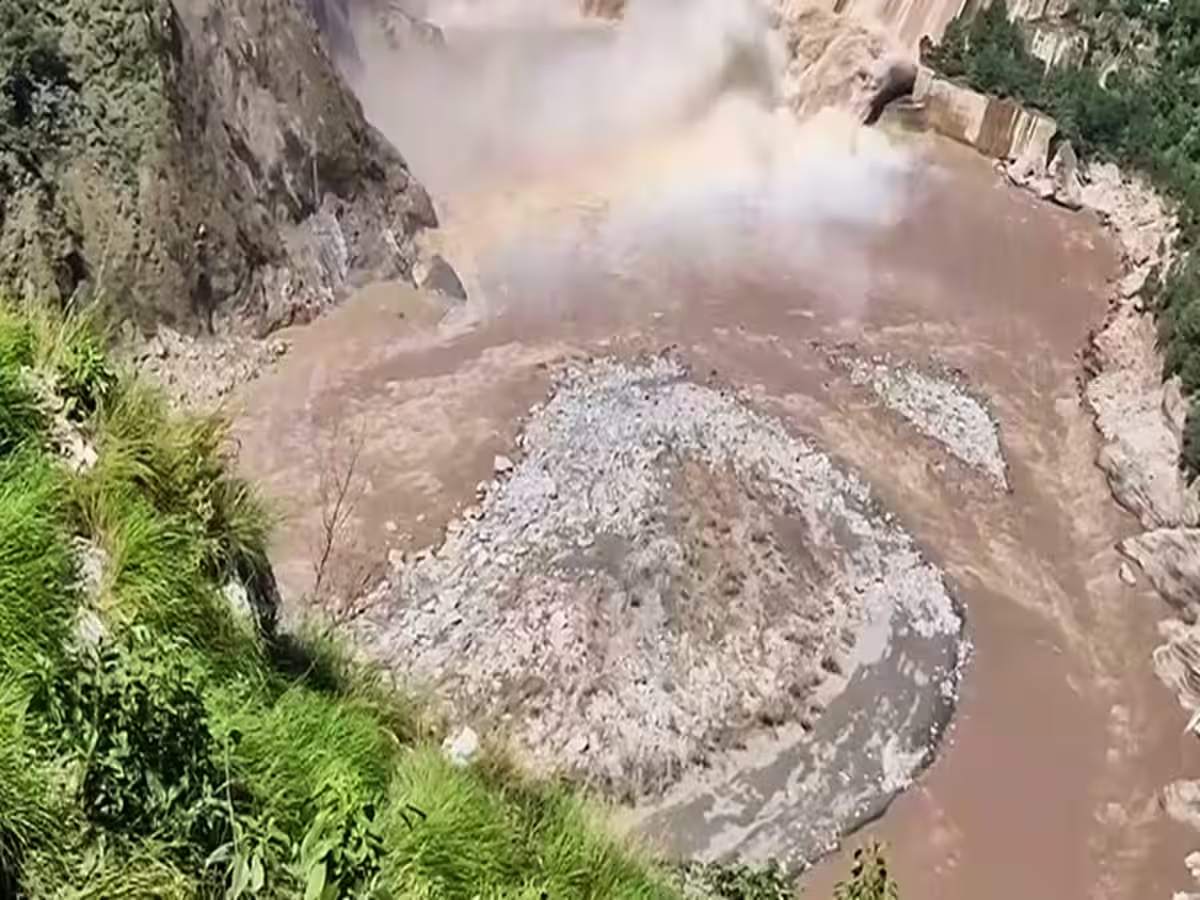
Pakistan on Thursday expressed concern about the variation in the flow of the Chenab River, stating that a letter had been sent to India seeking clarification on the matter. Pakistan Foreign Office (FO) spokesperson Tahir Hussain Andrabi noted the “abrupt variation” in the flow of the Chenab River.
“Our Indus water commissioner has written a letter to his Indian counterpart seeking clarification on the matters in accordance with the procedures enshrined in the Indus Waters Treaty…Any manipulation of river flow by India, especially at a critical time of our agricultural cycle, directly threatens the life and livelihood as well as food and economic security of our citizens…We call upon India to respond to the queries raised by the Pakistani Indus water commissioner, refrain from any unilateral manipulation of river flow, and fulfill its obligations in letter and spirit under the Indus Water Treaty provisions,” he said.
Add Zee News as a Preferred Source
However, Pakistan can keep crying harder over the Indus Water Treaty suspension. Meanwhile, India is looking for better utilization of the river system. In October, an expert panel of the Ministry of Environment has given its approval for granting environmental clearance to the Sawalkot hydroelectric project proposed on the Chenab River in Jammu and Kashmir’s Ramban district. With a planned capacity of 1,856 MW, the Sawalkot project is a significant hydropower development on the Chenab, one of the western rivers, along with the Indus and Jhelum. Although these rivers flow unchecked into Pakistan, India is entitled to utilize their waters for non-consumptive activities such as generating hydroelectric power.
Under the 1960 Indus Waters Treaty, Pakistan was given undue advantage and rights over the waters of Indus, Chenab and Jhelum rivers. Now, India wants to correct the past mistakes. India suspended the IWT soon after the April 22, 2025 Pahalgam terror attack in which 26 tourists lost their lives as Pakistan-backed terrorists shot them from close range.
The re-routing of the fare share of water will help boost agriculture in Jammu and Kashmir. Equipped with water storage facilities, the project will enable India to make better use of its allotted share of river waters. At present, the country lacks the infrastructure to store even 3.6 million acre-feet (MAF) of water on the western rivers, which is the volume permitted under the Indus Waters Treaty. Likewise, India has so far developed only about 3,482 MW of hydropower capacity on these rivers, despite an estimated generation potential of nearly 20,000 MW.
The suspension of the Indus Water Treaty is yet another moment of self-introspection for Pakistan to shut its terror factory, hand over the wanted terrorists to India and then initiate talks to establish peace in the region.
India’s stand underlines a decisive strategic shift in India’s approach to the Indus basin—one that prioritizes sovereign rights, regional development, and long-term water security over one-sided concessions. By accelerating hydropower projects like Sawalkot and optimizing its legally permitted share of western river waters, India is signaling that treaties cannot exist in isolation from ground realities, especially persistent cross-border terrorism.
For Pakistan, the message is unambiguous: meaningful engagement on shared resources will remain untenable unless it addresses India’s core security concerns. Until then, New Delhi appears determined to correct historical imbalances, strengthen Jammu and Kashmir’s economic prospects, and leverage water diplomacy as both a developmental and strategic instrument.

Comments are closed.