
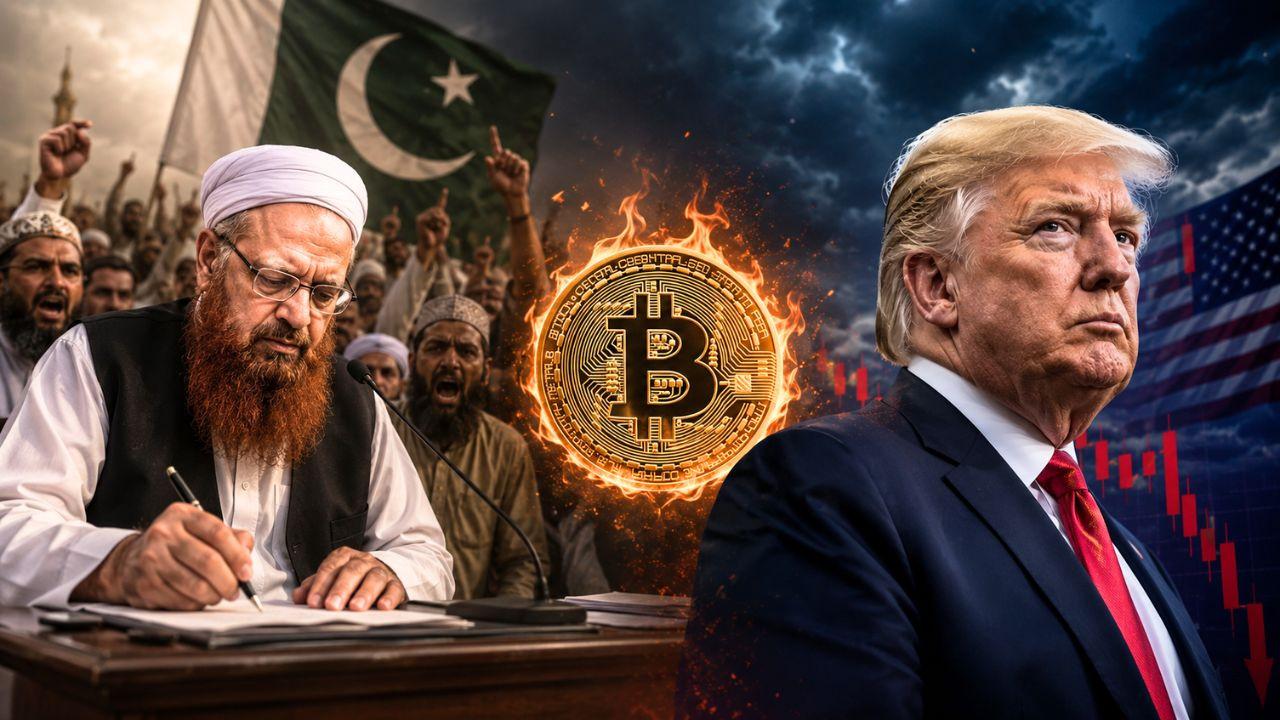
‘Crypto is haram’ fatwa creates uproar in Pakistan, Trump’s crypto plan also affected!

New Delhi: The government’s efforts to promote the crypto industry in Pakistan have suffered a major setback. Karachi’s Darul Uloom chief Mufti Mohammad Taqi Usmani has declared cryptocurrency as ‘haram’. Due to this fatwa, the Pakistan deal of Trump family company WLF also seems to be stuck.
What did the Mufti say in the fatwa?
Mufti Taqi Usmani, a prominent Islamic scholar of Darul Uloom Karachi, described all stablecoins and blockchain tokens including Bitcoin, Ethereum, USDT i.e. Tether as illegitimate according to Shariat. The madrassa says that these digital assets do not meet the definition of ‘wealth or property’ in the eyes of Islam. Therefore their buying and selling is not justified.
It is clearly written in the fatwa that changing the name – cryptocurrency, virtual currency or stablecoin – will not change the order. This fatwa has also been supported by many other Ulemas. Darul Uloom Karachi is considered the most respected Sunni institution in Pakistan and its fatwas are followed by a large population.
Trump-WLF deal will be affected
This fatwa has come at a time when the Pakistan government was trying to create a digital asset sector in collaboration with the Trump family’s crypto company World Liberty Financial. In January 2026, WLF’s subsidiary SC Financial Technologies had signed an MoU with Pakistan.
Under this, WLF’s dollar-pegged stablecoin USD1 was to be used in cross-border payments. The deal was signed by WLF CEO Jack Witkoff in Islamabad in the presence of PM Shehbaz Sharif, Army Chief Asim Munir and the Finance Minister.
The Trump family company had earned more than $500 million in 2025 from token sales alone. WLF wanted to increase its legitimacy and market by making Pakistan a government partner. Now if USD1 also comes in the list of ‘Haram’, then local use will become difficult.
Government’s planning and Ulema’s opposition
Last year, the government had announced the creation of PVARA i.e. Pakistan Virtual Assets Regulatory Authority to license crypto exchanges and integrate blockchain into the financial system.
Electricity was also allocated for Bitcoin mining. The government’s argument was that this would bring foreign investment, strengthen the rupee and provide employment to the youth. But the religious lobby has "against islam" She was telling.
Not legal, but big social impact
Fatwas are not legally binding, but the impact of religious fatwas in Pakistan is profound. Millions of people can now consider crypto trading as haram and stay away from it.
For the Trump administration, this deal was not just business but also diplomacy. Pakistan had nominated Trump for the Nobel Peace Prize. If crypto adoption stops now, then both the growth of WLF and the ‘Pakistan card’ of Trump’s earnings may weaken.

Comments are closed.