
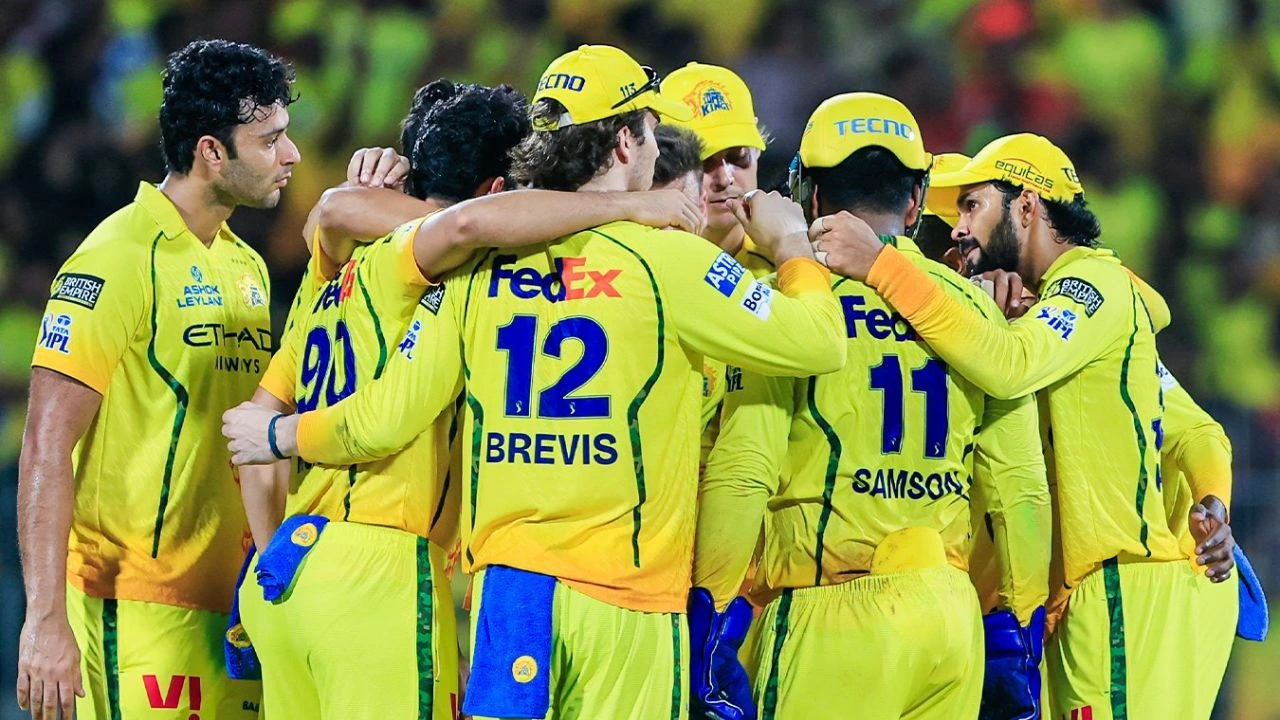

Chennai Super Kings finished seventh in IPL 2026 with six wins and eight losses, eliminated by an 89-run hammering at the hands of Gujarat Titans in Ahmedabad on May 21, the kind of defeat that does not just end a season but demands an honest conversation about what went wrong, what was always going to go wrong, and what needs to change before any of this gets better.
For a franchise that has qualified for the playoffs twelve times in sixteen seasons and played in ten finalsfinishing seventh is not just a bad result. It is a statement about where this team currently is and how much work lies ahead.
The frustrating part is that this was not a hopeless campaign from ball one. After three straight losses to open the season, CSK won six of their next eight matches and were genuinely in the playoff conversation until the final week.
But six of those wins came against weaker opposition, none of the top teams were beaten when it mattered, and when the quality stepped up in the final stretch, the structural problems that had been papered over by individual brilliance became impossible to ignore. Three straight losses to close the season. Seventh place. Another offseason full of hard questions.
What actually went wrong for CSK in IPL 2026 under Ruturaj Gaikwad
Powerplay was the primary tactical problem and it was visible from the first game. While RCB, PBKS, SRH, and GT were posting historic six-over totals built on openers striking above 180, CSK were regularly starting slowly, putting pressure on a middle order that was not built to rescue innings from difficult positions.
Ruturaj Gaikwad opened all season despite returning figures of 6, 28, 7, 15, 7, 19 in his first six innings. Against SRH he made 15 off 21 balls without a boundary. The decision to keep him at the top when the evidence was clearly pointing elsewhere, toward Urvil Patel, toward Sanju Samson, toward literally anyone who could provide the powerplay aggression the team so desperately needed, was the most damaging piece of tactical stubbornness in a season that had several.
Death bowling was the second major problem. Without a reliable closer in the final three overs, close games kept slipping. The spinners, Noor Ahmad especially, bowled beautifully in patches through the middle but had no adequate fast bowling partner at the death. Jamie Overton, when he was available and fit, was the one genuine match-winner with ball in hand. His injury at a crucial point in the season when CSK were finally building momentum was genuinely damaging.
The injury list was savage and largely unavoidable
MS Dhoni did not play a single game due to his calf injury a storyline that dominated the season without ever resolving. Nathan Ellis was ruled out before the tournament began. Ayush Mhatre, who showed more powerplay intent than any other CSK opener and was producing numbers that suggested he could have been the solution to the top-order problem, was ruled out for the season with a hamstring injury.
Khaleel Ahmed. Ramakrishna Ghosh. Jamie Overton. Five players who were expected to feature in the starting XI spent significant portions of the season on the sidelines. You cannot fully plan for that. You can build a squad deep enough to absorb it, and this one was not.
Tactical inflexibility was Stephen Fleming’s most damaging contribution. CSK have always operated on role clarity everyone knows their job, everyone does their job, the system works. This season, the system became predictable in ways that better-prepared opposition could exploit.
Shivam Dube was being asked to bat in the thirteenth over when his skills are most useful at the death. Akeal Hosein, who turned out to be one of the genuine finds of the season for CSK was dropped for matches without obvious justification.
Kamboj was restricted purely to bowling when his batting showed glimpses of genuine lower-order value. The rigidity that used to be a strength became a weakness in a season where the team needed someone willing to tear up the plan and try something different.
Chennai Super Kings Player ratings
Jamie Overton – 10/10. The best CSK player of IPL 2026 without serious debate. Fourteen wickets, a hundred and thirty-six runs, match-winning performances when the team needed them most, and the kind of all-round impact that every other franchise will have watched with envy. His injury was the moment the season changed. If you are building CSK’s next chapter, you start here.
Sanju Samson – 9/10. The biggest success story of CSK’s 2026 campaign. Four hundred and seventy-seven runs including 115 not out against DC, 101 against MI, and 87 not out against DC in another game. He became the batting backbone of the team in a way nobody quite predicted when the trade from Rajasthan Royals was announced. Inconsistency remains a question mark on his career record but this season he was the most valuable batter on the roster by a considerable distance.
Ayush Mhatre – 9/10. Two hundred and one runs from the matches he played before the hamstring ended his season, and every one of those runs came at the kind of strike rate that made the powerplay look different for CSK. The talent is obvious. The injury was devastating for both him and the team. If he comes back fit for 2027, the opening question essentially answers itself.
Akeal Hosein – 8/10. Eight wickets from the games he was actually given, consistently threatening in the middle overs, dropped without adequate explanation on multiple occasions. The most underutilized asset in the CSK squad this season. Someone in the coaching staff needs to explain what Akeal did wrong to deserve the treatment he received.
Karthik Sharma – 8/10. One of the genuine positives from an otherwise difficult season. The 71 against LSG showed big-match temperament. He adapted to different situations better than many of his more experienced teammates and looks like someone CSK should be building around rather than questioning.
Spencer Johnson – 6/10. Did his job when given the opportunity.
Gurjapneet Singh – 5.5/10. Four wickets, useful pace variety, showed he belongs at this level.
Mukesh Choudhary – 7/10. Eight wickets, improved as the season progressed, showed enough to suggest he deserves another year.
Noor Ahmad – 6-8/10 depending on which phase you watched. Started slowly but became CSK’s most reliable spinning option as the season developed. Thirteen wickets and genuine middle-overs control. Long-term CSK asset if managed correctly.
Sarfaraz Khan – 6/10. A hundred and sixty-one runs and some useful contributions in the middle order, but moved around the batting order so frequently that finding any rhythm was difficult. The inconsistency of his positioning was as much a coaching problem as a player one.
Khaleel Ahmed – 4/10. Good spells, but ruled out for a significant stretch. Difficult to rate fairly when availability was the primary issue.
Ramakrishna Ghosh – 6/10. One wicket and limited opportunities. Injury limited his season before it properly started.
Anshul Kamboj – 5/10. Twenty-one wickets and the Purple Cap was briefly in his possession, he was genuinely impressive early in the season. The second half showed inconsistency under pressure and his economy rate climbed as opponents worked him out. Promising but not yet the match-winner CSK needs him to become.
Dewald Brevis – 5/10. A hundred and fifty-one runs and flashes of the talent that makes him exciting to watch. The problem is that he was consistently asked to bat after the top order had already collapsed, which is not a situation that flatters junior middle-order batters. Give him a season where the openers do their job and the Brevis question might answer itself differently.
Shivam Dube – 4/10. Two hundred and seventy runs but the impact that made him a T20 World Cup hero was almost entirely absent. Batting in the wrong position, arriving too early to play his natural game, and seemingly struggling with confidence against quality bowling. Not a player to give up on, his ceiling is too high, but the role needs to change.
Ruturaj Gaikwad – 4/10. Three hundred and thirty-seven runs but at a strike rate that created problems for every innings he opened. The captaincy pressure looked real and it affected his batting in ways that were visible from outside the dressing room.
This is not a call to sack him, the man has performed substantially for CSK across multiple seasons and one difficult year does not erase that history. But carrying the captaincy and the opening role simultaneously while both are struggling is too much for anyone. One of those needs to change.
Urvil Patel – 2/10. A hundred and twenty-nine runs and the fastest fifty of the season, which sounds fine until you consider how rarely he was given the powerplay opportunity his game is specifically designed for.
Prashant Veer – 1/10. Ninety runs and limited bowling opportunities. Asked to fill too many roles without being given the runway to do any of them properly.
Matthew Short – 0/10. Sixty runs. Replacement-level contribution at best.
MS Dhoni – unrated. He did not play a single match. He remained the biggest storyline of the season. Both of those things are true simultaneously, which is very Dhoni.
CSK: What needs to change for IPL 2027
Captaincy conversation starts with Ruturaj. Not because he is a bad captain, he showed genuine improvement as the season progressed and some of the criticism directed at him has been wildly disproportionate to what he actually did wrong.
But the numbers are clear that the opening role and the captaincy are not currently compatible for him in the same season. Moving Sanju Samson to the captaincy, freeing Ruturaj to focus purely on his batting and rebuild the strike rate that made him dangerous in previous seasons, is the change that makes the most tactical sense right now.
Stephen Fleming’s future at the club is the question nobody inside CSK is going to answer publicly but everyone outside is asking. The defensive mindset, the tactical rigidity, the consistent underutilization of assets like Akeal Hosein, these are coaching problems as much as player problems. Whether that changes depends on conversations that will happen in boardrooms rather than in the press.
The squad needs a proper death bowler, a genuine match-winning pace option who can close out games in overs eighteen to twenty against batting lineups striking above 200. The auction is where that search begins.
And Kamboj deserves the opportunity to develop his batting. He showed enough against GT at the end of the season to suggest that with proper coaching and encouragement, he could become the all-round option CSK have been missing. Restricting him to bowling only is leaving potential on the table.
CSK are not a bad team. They are a team in transition that has not fully committed to transitioning, one foot in the era of experience and one in the era of youth, without the tactical boldness to make either foot land properly. The foundation is there. The talent is there. What is needed next is someone willing to make decisions that feel uncomfortable in April and look correct by May.
Also READ: Ruturaj Gaikwad opens up on CSK transition after playoff exit
Comments are closed.