
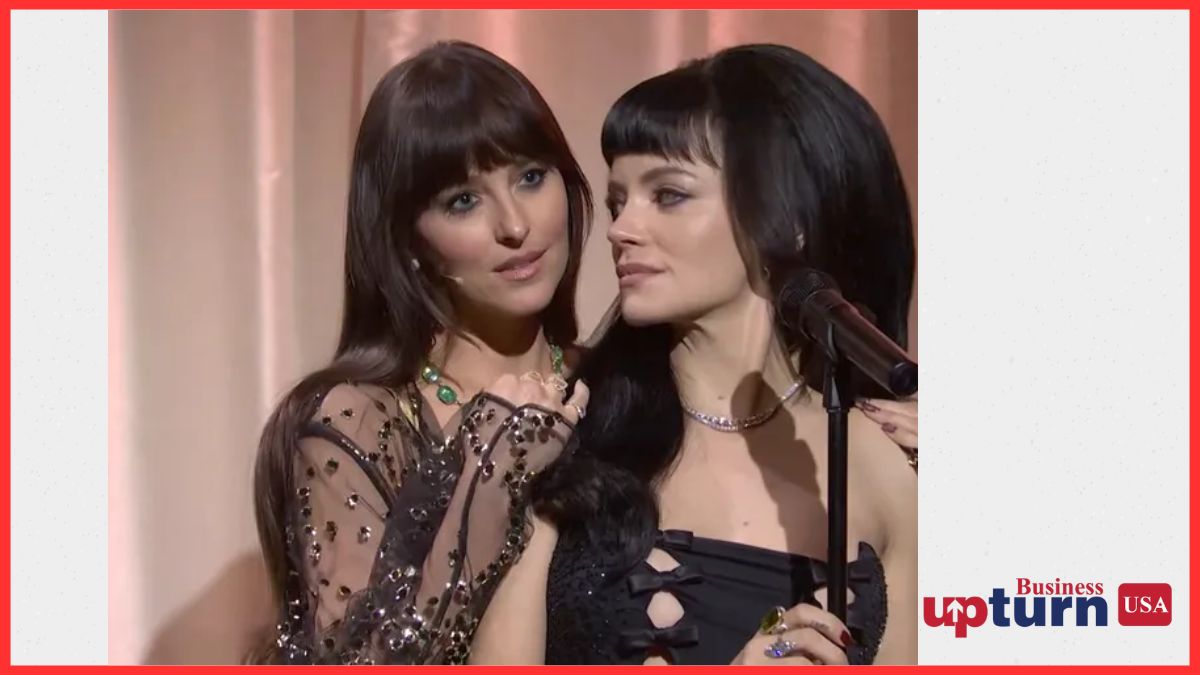
Dakota Johnson’s Secret SNL Return: How Her Dramatic Cameo During Lily Allen’s Performance Became the Night’s Most Talked-About Moment

Saturday Night Live thrives on surprises, but few moments in recent memory landed with the quiet shock and emotional punch of Dakota Johnson’s unexpected return to Studio 8H. During the Dec. 13 episode of SNL season 51, hosted by Josh O’Connor with Lily Allen as the musical guest, viewers were treated to a cameo that felt less like a celebrity appearance and more like a carefully staged piece of performance art.
The reveal was subtle, intimate, and instantly viral among U.S. audiences who were not expecting Johnson to step back onto the iconic NBC stage—especially not in such a narratively charged role.
Dakota Johnson’s Surprise SNL Cameo During Lily Allen’s “Madeline” Performance
Lily Allen performed “Madeline,” a track from her October-released album West End Girlwith a theatrical staging that immediately signaled something unusual. Allen sang off to the side as the camera lingered on a sheer curtain at center stage, behind which a seated figure remained deliberately obscured. The moment built tension rather than spectacle, drawing viewers into the song’s confrontation-driven narrative.
Midway through the performance, the mystery figure revealed herself as Dakota Johnson, seated calmly and preparing to deliver spoken lines as “Madeline,” the woman addressed in the song. For American viewers familiar with Johnson’s understated acting style, the choice felt deliberate: restrained, emotionally loaded, and strikingly effective.
Johnson, 36, delivered her lines in indirect confrontation, explaining that the husband involved had told her his wife knew about the relationship and had consented to it. She went on to add that dishonesty was something she did not want to be entangled in, emphasizing her own discomfort if the truth had been misrepresented. The moment landed not as melodrama, but as moral unease—an angle that resonated strongly with the live audience.
Before the song ended, Johnson stepped fully out from behind the curtain and joined Allen center stage. The two shared a brief embrace, followed by Johnson kissing Allen on the cheek, closing the performance on a note of solidarity rather than scandal.
Why Dakota Johnson’s Performance Worked So Well on SNL
This cameo carried extra weight because Johnson is no stranger to Saturday Night Live. She has hosted the show twice before, and her familiarity with its rhythms allowed her to blend seamlessly into Allen’s musical storytelling rather than distract from it. From a U.S. viewer’s perspective, the cameo felt earned rather than gimmicky—an actor stepping into a role that served the song, not the spotlight.
The staging also reflected SNL’s growing comfort with hybrid performances that blur music, theater, and narrative monologue. Instead of applause breaks or comedic beats, the segment relied on silence, tension, and carefully paced delivery, a risk that paid off.
Lily Allen’s “Sleepwalking” and the Album Behind the Performance
Allen later returned to the stage to perform “Sleepwalking,” another track from West End Girlshifting the tone from confrontation to reflection. The song addresses emotional distance, misplaced trust, and the slow unraveling of a relationship. American audiences familiar with Allen’s past work noticed a more restrained, self-aware voice—less biting satire, more emotional clarity.
The performance drew attention because West End Girl is widely understood to be inspired by Allen’s recent life changes, including the end of her marriage to actor David Harbour. PEOPLE confirmed earlier this year that the couple had separated after four years of marriage, with a source noting that the relationship had been deteriorating for some time.
Allen and Harbour began dating in 2019 and married in Las Vegas in 2020, with Allen’s daughters, Marnie Rose and Ethel Mary, present at the ceremony. While the album references experiences that mirror these events, Allen has been careful to describe the project as a blend of truth and fiction.
Fact, Fiction, and “Autofiction” in West End Girl
In earlier interviews, Allen explained that some of the album’s songs are written “in character,” describing the project as autofiction—a mix of autobiography and invention. In a statement accompanying the album’s release, she noted that while the record documents her life in a new city, it also draws on shared human experiences to explore why people behave the way they do.
That context matters for U.S. viewers interpreting the SNL performances. Rather than a public airing of grievances, the songs function as emotional case studies, using personal material to explore broader themes like trust, consent, and self-deception.

Comments are closed.