

Summary
- By the grace of God, it makes me happy,” he says. “When I wake people, it brings joy to my heart.”
Each night, he leaves home around 3:00 a.m. - Despite the long hours, Chand sees his task as devotion and service. “Whatever people give happily, that is good,” he says. “On Eid, when they give Eidi, it makes us very happy.” His earnings mostly come at the end of the month.
- For Chand, the drumbeat is about more than waking people.
AI Generated Summary
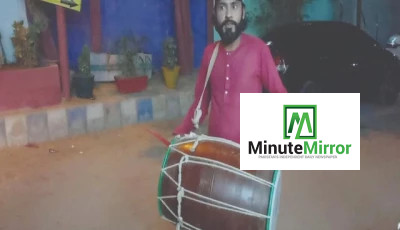
KARACHI: As darkness blankets Karachi during Ramazan, a steady drumbeat resonates through the streets. The familiar sound signals the start of suhoor, the pre-fast meal, and comes from one man: Muhammad Chand.
For over a decade, Chand has walked Karachi’s lanes before dawn, waking families with his rhythmic drum. “I have been doing this for the last 10 to 12 years. By the grace of God, it makes me happy,” he says. “When I wake people, it brings joy to my heart.”
Each night, he leaves home around 3:00 a.m. and spends nearly an hour moving from Nipa to Gulshan, drumming through streets without knocking on doors. “I just play the drum,” he says.
This work is more than a seasonal job. It is a family tradition. “I am continuing this from my father’s side,” he shares. “It is not just a source of income. It is an inheritance.”
Outside Ramazan, Chand works at a factory in Sohrab Goth. Sleep is scarce. “I work at night and then go to the factory in the morning. I only sleep two or three hours. Thank God, everything is going well,” he explains.
Despite the long hours, Chand sees his task as devotion and service. “Whatever people give happily, that is good,” he says. “On Eid, when they give Eidi, it makes us very happy.” His earnings mostly come at the end of the month. Residents collectively reward him for his efforts, usually between 30,000 and 35,000 rupees, sometimes up to 40,000.
Drummers follow an unwritten code: each sticks to their area. “No one enters someone else’s territory,” he notes.
The tradition of waking people for suhoor predates alarm clocks and mobile phones. Similar customs exist globally. In Egypt, the Mesaharaty beats a drum and calls out residents by name. In Turkey, the Ramazan Davulcusu has patrolled streets since the Ottoman era. Parts of Syria and Jordan also maintain the practice, though in evolving forms.
For Chand, the drumbeat is about more than waking people. It represents connection, continuity, and shared blessings. From the first night of Ramazan to the last pre-dawn meal, he steps out with the same resolve. “No one has ever told me, ‘Why are you making noise?’ Everyone knows me in my area,” he says.
In a city that moves fast and forgets quickly, Chand’s drumbeat reminds Karachiites that some traditions are timeless. They are not just about necessity—they are about joy, culture, and unity.
We welcome your contributions! Submit your blogs, opinion pieces, press releases, news story pitches, and news features to opinion@minutemirror.com.pk and minutemirrormail@gmail.com

Comments are closed.