
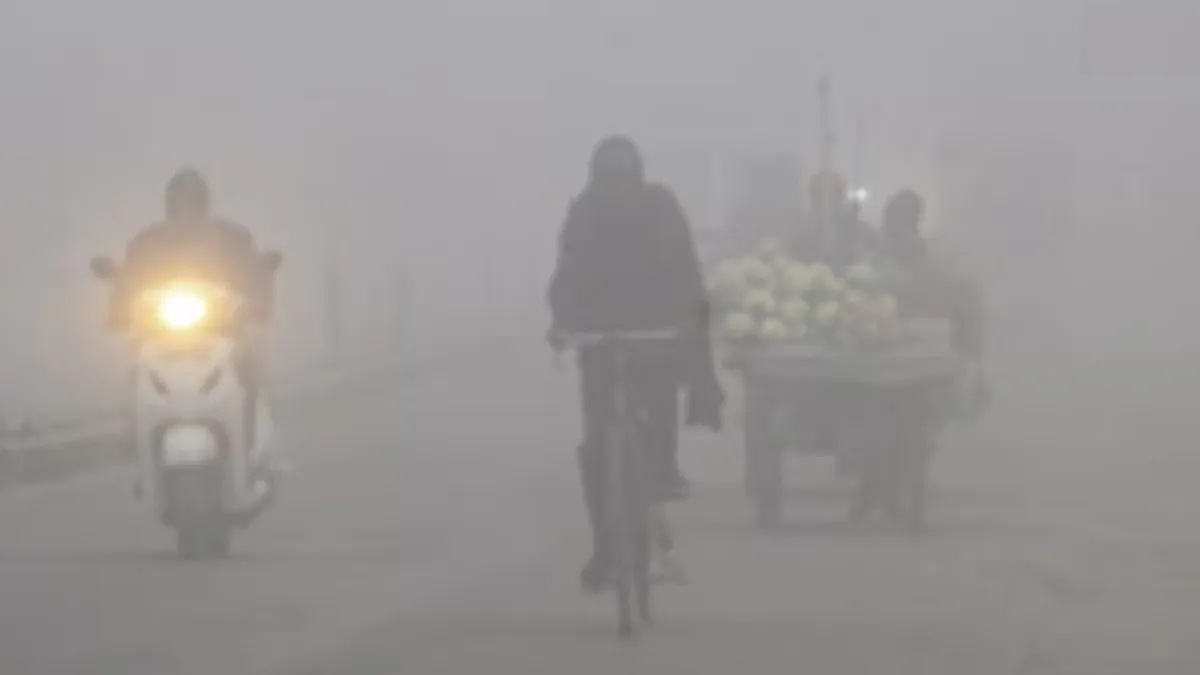

The air of Dehradun, known for its natural beauty and clean climate, is in serious trouble at present. The air quality index (AQI) of the capital has reached its worst level in a year. According to the Central Pollution Control Board (CPCB), Dehradun’s AQI was recorded at 294 on Tuesday, which is very close to the ‘very poor’ category. Earlier on Monday, Uttarakhand Pollution Control Board (UKPCB) had recorded AQI 299. The situation has become such that the air of Doon is now being compared with Delhi-NCR.
The effect of increasing air pollution across the country is clearly visible even in the hilly cities. While the increasing pollution in Delhi-NCR is creating an outcry among the people, it is also affecting a relatively clean city like Dehradun. Barring a few days in the month of December, the air in the capital continues to remain in poor category. As the evening approaches, a layer of smog starts appearing in the city, due to which visibility is also being affected.
Even after Diwali, the air of Doon did not improve. The maximum AQI of 254 was recorded around Diwali on October 20. After this, due to dry weather and low wind speed in November and December, pollutant particles started accumulating in the atmosphere. If we look at the December figures, AQI reached 201 on 6 December, 199 on 11 December, 189 on 15 December and 299 on 16 December. On December 17 also, AQI was recorded at 294, which indicates a continuously worsening situation.
According to the Pollution Control Board, the main reason for pollution in Dehradun is the increased levels of PM 2.5 and PM 10. On Monday, PM 2.5 level was recorded at 119.83 and PM 10 level at 134.11. Experts say that the presence of these fine particles in the air for a long time is extremely dangerous for health. Due to its microscopic size, PM 2.5 can reach deep into the lungs and get into the blood, increasing the risk of respiratory, heart and other serious diseases.
There is little hope of immediate improvement in air quality even in the coming few days. According to weather experts, AQI can fall only when there is rain or strong winds. Rain causes dust and pollutant particles present in the air to fall to the ground, while strong winds spread them. This natural process is called ‘rain washout’ or ‘wet deposition’, but at present there is little possibility of such a situation occurring for the next one or two days.
Increasing pollution has especially increased the concern of respiratory patients, the elderly and children. According to doctors, when the AQI crosses 200, the risk increases manifold for people suffering from asthma, bronchitis and other respiratory diseases. In such a situation, people are being advised to avoid going out unnecessarily, use masks and stay indoors.
Along with Dehradun, the effect of pollution is also visible on the air of Rishikesh. Rishikesh’s AQI was recorded at 105 on Tuesday. This may not fall in the ‘bad’ category, but it is being considered a sign of concern for a city with relatively clean air throughout the year.
Meanwhile, the Meteorological Department has issued a yellow alert of dense fog in the plain districts of Uttarakhand, especially Haridwar and Udham Singh Nagar. The weather is expected to remain dry in other districts. Dehradun is expected to remain partly cloudy, but there is little hope of immediate relief from pollution. The continuously worsening air quality has raised the question that if concrete steps are not taken in time, the identity of Doon may also be seriously affected in the coming days.

Comments are closed.