
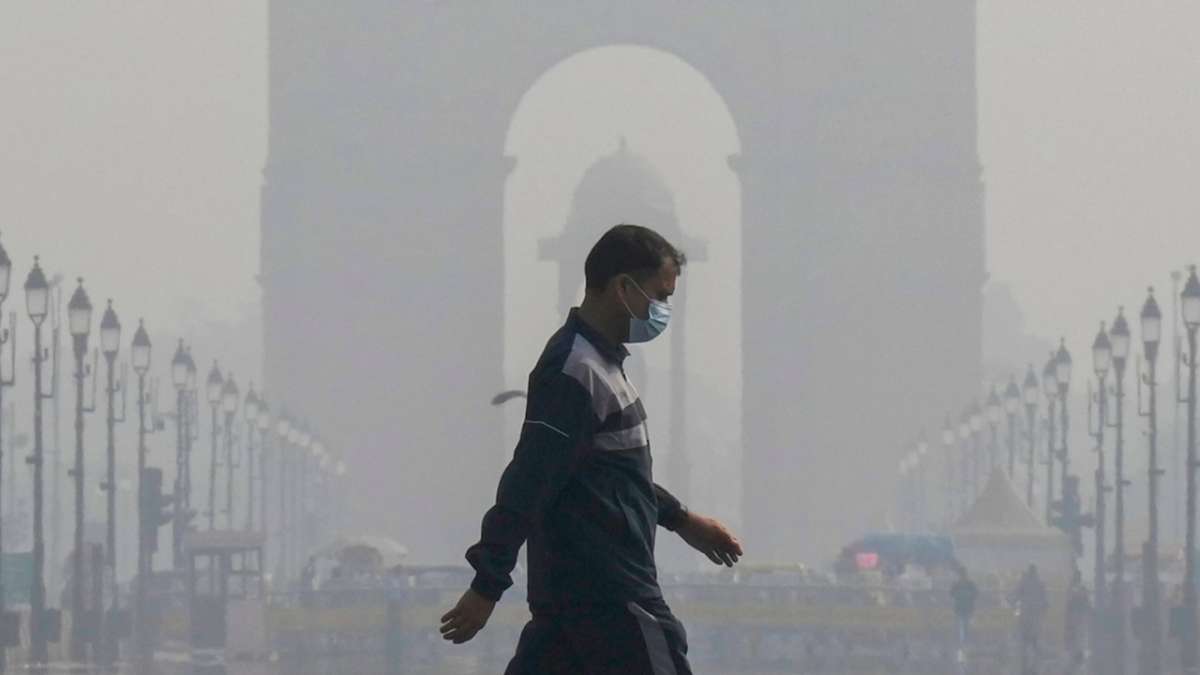

Delhi woke up to a smog-filled morning on Saturday, with air quality deteriorating sharply across the city. While the overall Air Quality Index (AQI) remained in the ‘very poor’ category, more than 10 locations recorded ‘severe’ pollution levels, raising health concerns for residents.
According to data from the Central Pollution Control Board (CPCB), Delhi’s AQI stood at 397 at 9 am, inching close to the ‘severe’ threshold. Visibility was low in several parts of the capital due to a thick layer of smog.
Areas Recording ‘Severe’ AQI in Delhi
Several monitoring stations reported AQI levels well above 400 early Saturday morning:
| Location | AQI | Category |
|---|---|---|
| Wazirpur | 445 | Severe |
| Jahangirpuri | 442 | Severe |
| Vivek Vihar | 442 | Severe |
| Rohini | 436 | Severe |
| Anand Vihar | 436 | Severe |
| Narela | 431 | Severe |
| Bawana | 428 | Severe |
| Mouth | 426 | Severe |
| THIS | 425 | Severe |
| Chandni Chowk | 419 | Severe |
The 24-hour average AQI recorded at 4 pm on Friday stood at 349, also in the ‘very poor’ category.
Pollution Levels Remain High Across NCR
Air quality across the National Capital Region (NCR) also remained alarming. Key readings include:
According to reports, pollution levels are expected to remain in the ‘very poor to severe’ range over the next few days.
Major Contributors to Air Pollution
Data from the Decision Support System (DSS) for Delhi’s Air Quality Management identified transport emissions as the largest contributor to pollution on Friday, accounting for 16.5% of total emissions. Other contributors included:
On Friday morning, Delhi’s AQI was recorded at 332, with 30 monitoring stations reporting ‘very poor’ air quality.
Expert Panel to Tackle Vehicular Pollution
Amid worsening air conditions, the Commission for Air Quality Management (CAQM) announced the formation of an expert panel to develop targeted strategies to curb pollution, especially from vehicles.
The panel will be led by Professor Ashok Jhunjhunwala of IIT Madras and will include health experts and academicians. CAQM stated that the initiative reflects the urgent need to address vehicular emissions in Delhi-NCR.
The expert group is expected to consult stakeholders and submit its recommendations within two months.

Comments are closed.