
Delhi-Dehradun Expressway: Breakfast In Delhi, Brunch In The Hills As New Highway Ready For Launch | India News

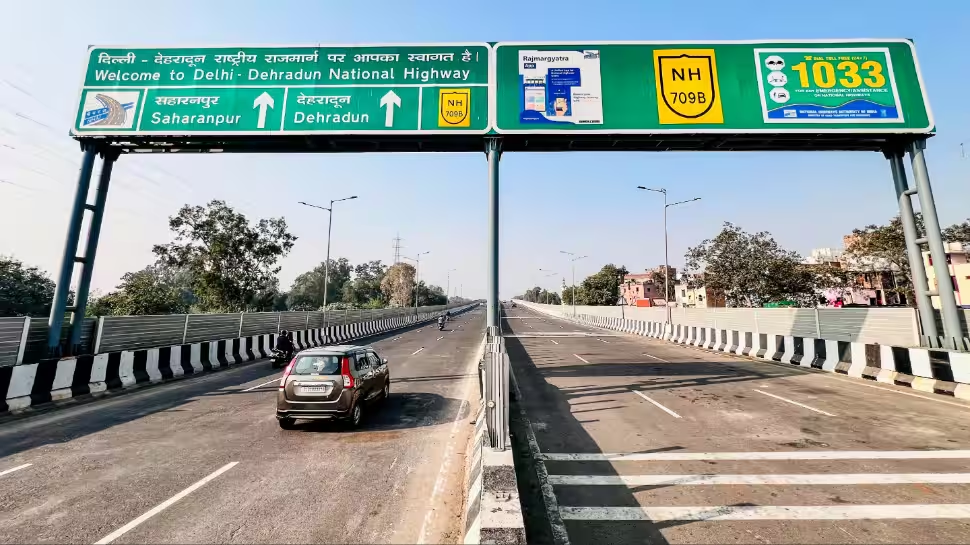
The six-hour journey from Delhi to Dehradun is going to become a thing of the past as the 210 km-long Greenfield Expressway is now in its final stages of completion with only some finishing touches left. After its completion, the travel time of 6-7 hours will come down to just 2.5 hours.
Built with an investment of around Rs 11,970 crore, this technologically advanced corridor is expected to ensure a faster and more seamless journey between the national capital and Western Uttar Pradesh as well as Uttarakhand.
A Transformation From Akshardham To UP: The Elevated Experience
Add Zee News as a Preferred Source
The beginning of the stretch is from Delhi’s Akshardham and has a massive elevated portion starting from Geeta Colony. It has been built as a six-lane wide road with all parameters of comfort and fast-moving traffic in mind. According to Balram of the NHAI, the construction has been divided into packages for quick completion.
The toll tax booths start from the area named Loni. For the initial 17 kilometers, the road has special ambulances, as well as the patrol service. If there is any emergency, commuters can dial 1033 for immediate assistance.
Connectivity And The Greenfield Stretch
It traverses through Baghpat, Shamli, Muzaffarnagar, and Saharanpur, and this expressway effectively connects large nodes of Western UP with the Himalayas of Uttarakhand.
Strategic Links: The corridor is connected with Eastern Peripheral Expressway at Near Baghpat (31 km mark).
The Scenic Route: Beyond Baghpat, the route becomes “Greenfield,” an expressway passing through green fields to give drivers a pleasant experience.
Tech-Enabled Safety And Electric Vehicle Infrastructure
Engineers at NHAI have been focusing on passenger safety and sustainability.
Wayside Facilities: Every 30 kilometers, commuters can avail themselves of dedicated areas that provide food courts as well as Electric Vehicle Charging Stations.
Safety Technology: To avoid any untoward incident in case of thick fog, advanced safety technology has been implemented.
Green Initiative: Loops and Exits are characterized by dense vegetation planted through the Miyawaki Method to enhance biodiversity.
The ‘Wildlife First’ Corridor: Rajaji National Park Protection
As the expressway crosses the Shivalik range near Saharanpur, it becomes an engineering wonder. To preserve the flora and fauna in the Rajaji National Park, an enormous elevated structure has also been created.
“We have taken special care of wildlife safety,” said Engineer Rohit Pawar.
Sound Barriers: Plastic sound barrier sheets have been installed to minimize the disturbance in the jungle caused by the sound of vehicles.
Animal Underpasses: Elevated pathways have been installed to allow the easy movement of animals like elephants below the roadway without posing any accidents to them.
Smart Lighting:The lighting system was designed in collaboration with the Wildlife Institute of India. The lighting has a particular spectrum that does not affect the nocturnal behavior of wildlife.
Tunnels: One Of The Most Important Factors
Before entering Dehradun, there is a tunnel that is 300 meters long. This is not just an intersection point, as the walls of this tunnel contain artwork and images of the rich cultural heritage of Uttarakhand. As soon as they pass through this tunnel, they are inside Dehradun city. According to official sources, this pending work will soon be completed, and then this corridor will finally be opened for its use, which will herald a new era for tourism and trade in Northern India.
ALSO READ | North India Grapples With Cold Wave: IMD Issues ‘Dense Fog’ Alert For Delhi, Flights Affected Amid ‘Severe’ AQI | weather report

Comments are closed.