
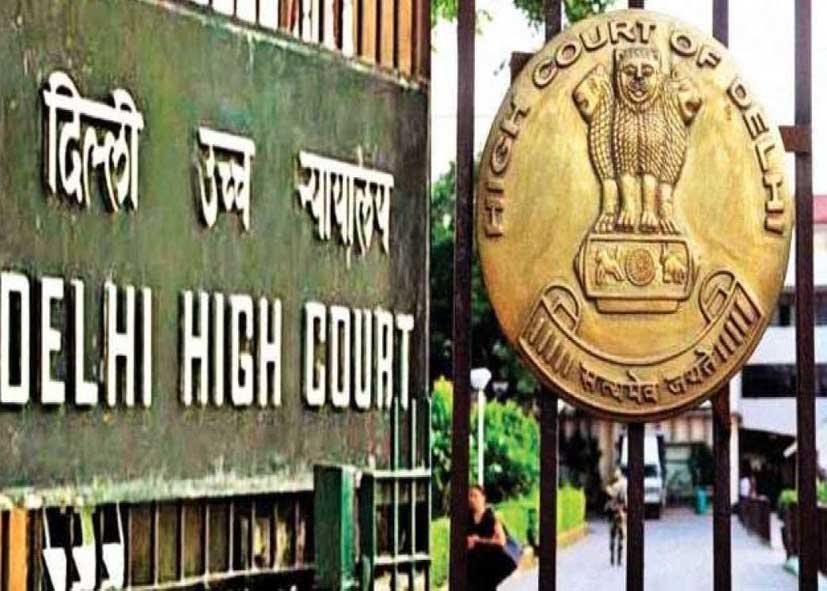
Delhi High Court strict regarding Yamuna flood area, instructions to ban parking and worship events

Delhi High Court has issued important instructions, taking a strict stance on the increasing activities in the flood area of Yamuna river. The court has clearly said that no parking, commercial activity or big religious event should be allowed in this sensitive area. During the hearing, the court directed the DDA to ensure strict surveillance in these areas in view of the environmental sensitivity of the Yamuna floodplain and prevent any encroachment or temporary commercial activities. The court said that the flood zone is very important for the natural water flow and ecosystem, hence any kind of activity here which harms the environment will be taken seriously.
During the hearing, the court of Justice Jasmeet Singh said that the flood area of Yamuna is extremely sensitive from environmental point of view and it is necessary to limit any kind of commercial or religious activities here. The court made it clear that environmental protection should be given top priority and the natural flow of the river and its surrounding ecosystem should not be harmed under any circumstances. The Court also indicated that if uncontrolled activities continue in this area, the agencies concerned will have to take strict measures to ensure the safety of the Yamuna flood plain.
The court said that if there is a huge crowd of devotees on any special religious occasion and parking is required, then the DDA will have to make arrangements for alternative parking outside the flood plain area. The court clearly said that the environmentally sensitive area on the banks of Yamuna cannot be used under any circumstances in the name of convenience for the devotees. During the hearing, the court reiterated that the Yamuna flood plain is an ecologically sensitive zone and uncontrolled human activities here can damage the natural balance of the river.
what is the matter
A case has come to light regarding the allotment of parking space in Sur Ghat area of Yamuna. The dispute arose when petitioner Suresh Kumar challenged the parking tender process. According to the petition, MCD had issued tenders in September 2022 for various parking sites, including the parking site at Sur Ghat on Yamuna. The petitioner claims that he was the highest bidder in this tender. After the bid was accepted, it deposited security money and advance license fee and also started parking operations there from January 2023. However, later a dispute arose regarding this parking operation and the use of Yamuna flood plain area, due to which the matter reached the court.
Commercial activities not allowed
According to the information, DDA had transferred only 2508 square meter land to MCD, while MCD allotted about 3780 square meter area for parking. The DDA objected to this, saying that the area in question falls in the “zero zone” of the Yamuna flood plain, where no commercial activity can be allowed. Subsequently the DDA withdrew its permission, and in January 2025 the MCD canceled the parking allotment. Petitioner Suresh Kumar approached the High Court against this decision and demanded restoration of the parking space.
During the hearing, the DDA told the High Court that the Yamuna flood plain is an extremely sensitive environmental area, where any kind of commercial activity can pose a threat to the environmental balance. The DDA also argued that in order to smoothly proceed with development and conservation work, it is necessary to free the area from encroachment and commercial use, so as to ensure the protection of the natural flow of the river and the ecosystem.
The High Court has accepted the arguments of DDA in the parking dispute related to Yamuna flood plain and has rejected the demand of the petitioner. The court said that the petitioner had not directly challenged the MCD’s parking cancellation order, which was an important legal aspect in the case. The court also clarified that the disputes related to compensation or cancellation of allotment are of factual nature, which cannot be decided under a writ petition. However, the court gave the liberty to the petitioner to approach the civil court and take separate legal action for compensation or other relief.
Follow the LALLURAM.COM MP channel on WhatsApp

Comments are closed.