
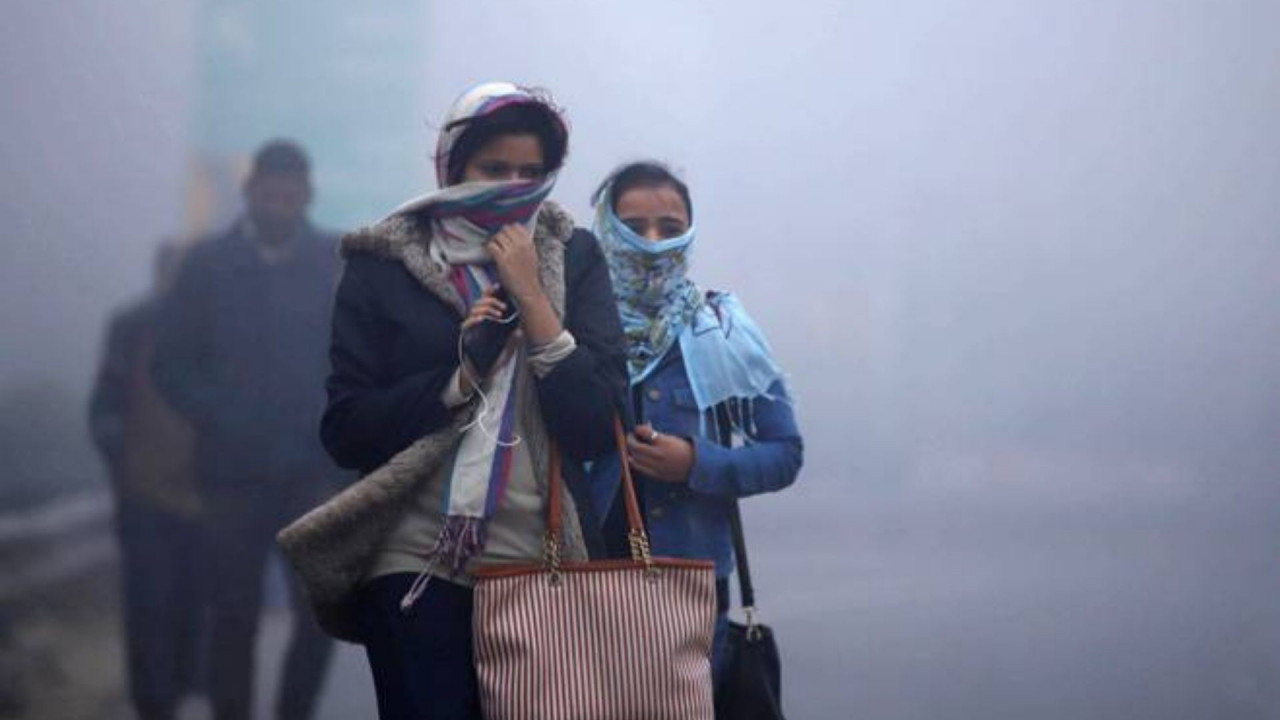
Delhi is freezing, pollution is also hurting…people’s health is deteriorating due to double attack of weather in the capital.

New Delhi: The cold wave continued in the national capital Delhi for the fifth consecutive day. According to the India Meteorological Department (IMD), a sharp drop in temperature was recorded in the city on Thursday and cold wave conditions are likely to persist till at least Friday. Due to cold, people had to face a lot of trouble in the morning and night.
The coldest morning of this season
The minimum temperature recorded at Delhi’s main weather station Safdarjung was 2.9 degrees Celsius, which was the coldest morning of this season so far. It was about five degrees less than normal. At the same time, the maximum temperature was 19.5 degrees Celsius, which was recorded slightly below the average. According to the Meteorological Department, this is the lowest minimum temperature recorded in January after 2023.
Effect of cold in different areas of the city
Day temperature also remained below normal in various parts of Delhi. The maximum temperature recorded in Palam was 16.2 degrees Celsius, which was 3.5 degrees below normal. In areas like Lodhi Road, Ridge and Ayanagar, the maximum temperature remained around 19 degrees. Talking about the minimum temperature, the mercury in Palam fell to 2.3 degrees, which is considered to be the lowest level since 2010.
Yellow alert regarding cold wave
The Meteorological Department said that cold wave conditions have prevailed in Delhi for the last four days and there is no hope of getting relief from it on Friday also. In view of this, yellow alert has been issued. On Friday, the maximum temperature is expected to be around 21 degrees and the minimum temperature is expected to be around 4 degrees.
Air quality becomes serious concern
Along with cold, Delhi’s air quality also remains a matter of concern. According to the Central Pollution Control Board (CPCB), the 24-hour average air quality index (AQI) was recorded at 349 on Thursday, which falls in the ‘very poor’ category. Pollution levels remained very poor at most of the monitoring centers in the city. AQI 386 was recorded in Pusa area, which was the worst situation.
Major causes of pollution
According to Delhi Decision Support System, the biggest cause of pollution in the city is transportation, which contributes about 14 percent. After this, pollution increased due to industries, residential emissions, construction work and burning of garbage. NCR districts like Jhajjar, Rohtak and Sonipat also contributed significantly to pollution.
What does the weather forecast say next?
According to Skymet Weather, the minimum temperature may gradually increase from January 17 and there is a possibility of light rain in some areas. However, there is a possibility of another cold wave between 23 and 26 January, due to which the cold may increase again.

Comments are closed.