
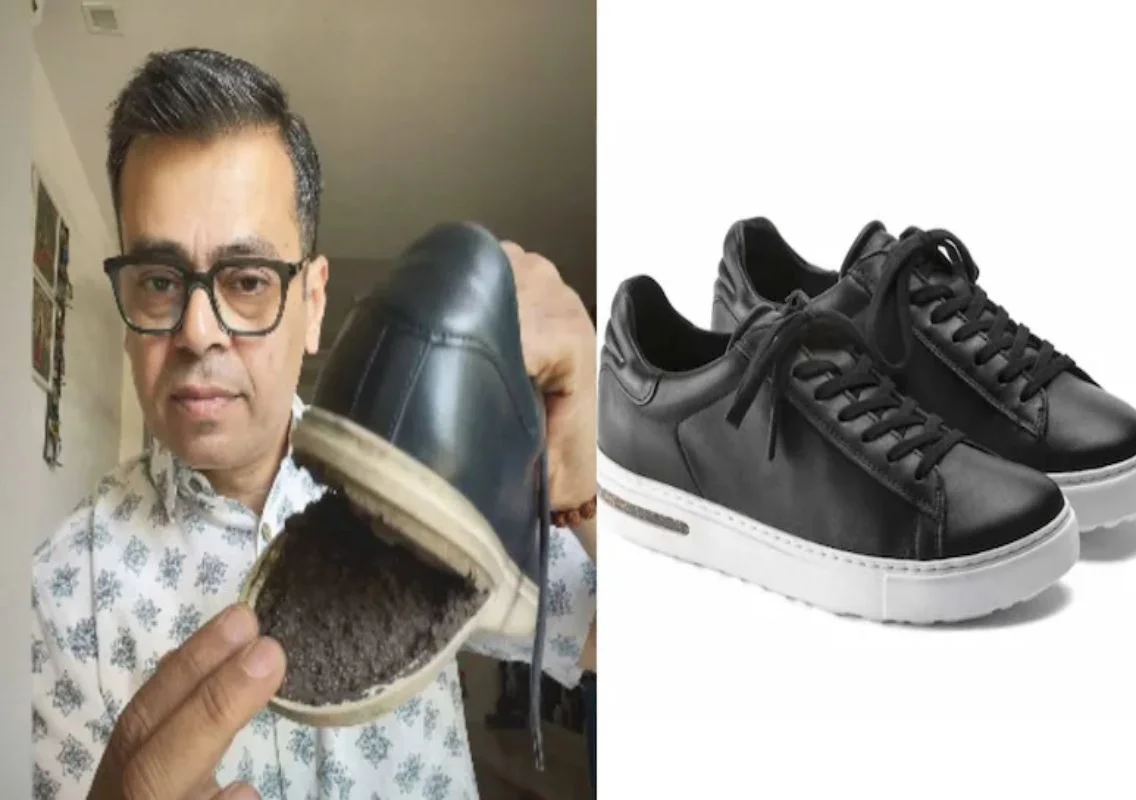

New Delhi: A Delhi-based entrepreneur has alleged that a pair of premium sandals from Birkenstock, priced at around Rs 14,000, deteriorated within just 10 months of use, raising questions about durability and after-sales service.
The incident, shared widely on social media, has sparked debate among consumers about product quality, warranty policies, and the expectations associated with luxury brands.
Customer shares experience online
The entrepreneur, identified as Rakesh Dayani, took to Instagram to detail his experience with the footwear. He said he purchased the sandals from an outlet at DLF Promenade after repeatedly seeing advertisements for the brand online.
According to his post, the sandals were originally priced at Rs 13,990 but were bought at a discounted price of around Rs 10,000. The pair featured a PU and cork sole, commonly marketed for comfort and shock absorption.
Issues began within months
Rakesh claimed that within six months of use, the stitching on the sandals started to come apart. When he approached the store for assistance, he was reportedly informed that the product carried a warranty of only three months.
He alleged that the staff declined to offer any repair, replacement, or compensation, stating they were “unable to help” beyond the warranty period. He further claimed that no apology or reassurance was provided during the interaction.
Left without support, he turned to a local cobbler, who repaired the damaged stitching within minutes, allowing him to continue using the footwear.
Footbed ‘turned to dust’
However, the issue did not end there. Approximately four months after the initial repair, Rakesh noticed a powder-like residue forming around the sandals.
Upon closer inspection, he claimed that the footbed — a core component of the footwear — had begun to disintegrate into dust. The development, he said, rendered the sandals unusable.
The incident has drawn attention due to the relatively high cost of the product and the expectation of long-term durability typically associated with premium brands.
Brand responds to complaint
Responding to the viral post, Birkenstock issued a brief reply in the comments section, stating: “We’re really sorry to see this. Kindly check your inbox and share the requested details so we can look into this on priority.”
While the response indicates that the company is willing to investigate the matter, it remains unclear whether the customer has received any resolution so far.
Mixed reactions from users
The post has triggered a range of reactions from social media users. Some echoed concerns about product quality and alleged inconsistencies in items sold in different markets.
Others, however, defended the brand, suggesting that the issue could be an isolated case. A few users shared their own positive experiences, claiming to have used Birkenstock footwear for several years without any problems.
The contrasting responses highlight the subjective nature of consumer experiences and the role of usage patterns, maintenance, and environmental factors in product longevity.
Questions over premium pricing and service
The incident has also reignited discussions around whether high pricing guarantees quality. Consumers often associate premium brands with superior craftsmanship, durability, and reliable customer support.
In this case, the alleged short warranty period and lack of immediate assistance have raised concerns about after-sales service standards.
Experts note that warranty terms vary across brands and regions, and customers are advised to review policies carefully before making high-value purchases.
Conclusion
While it remains to be seen how Birkenstock resolves this specific complaint, the episode underscores the growing influence of social media in holding brands accountable. It also serves as a reminder for consumers to balance brand perception with practical considerations such as warranty coverage and product care.
As more customers share their experiences online, companies may face increasing pressure to ensure consistency in quality and responsiveness in after-sales service.

Comments are closed.