


A routine investigation into two violent incidents in West Delhi’s Khyala area has snowballed into a larger legal controversy involving quick-commerce platform Blinkit. According to police officials, a murder case involving a minor boy and a separate stabbing incident earlier this month led investigators to trace the weapon used in the crimes — a button knife — back to an online purchase.
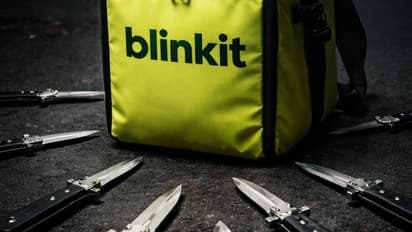
During questioning, the accused allegedly told investigators that the knives used in the attacks were ordered through Blinkit’s app. The claim raised immediate concerns about the ease of access to potentially dangerous weapons through online delivery platforms, especially those known for ultra-fast doorstep services.
Credits: The Times of India
Decoy Operation Confirms Online Availability
To verify the accused’s statement, Delhi Police carried out a decoy operation. Officers posed as customers and attempted to order button knives through the Blinkit platform. Officials said the knives were successfully delivered, lending credibility to the accused’s claims.
This verification became the turning point in the investigation. The fact that such items could be ordered and delivered without significant restrictions prompted authorities to escalate the matter. Soon after confirming the availability of the knives, Delhi Police registered a First Information Report (FIR) against the company.
The move signals that investigators are examining not just the individuals involved in the crime but also the supply chain that enabled access to the weapons.
Raids at Dark Stores
Following the FIR, police teams conducted raids at multiple Blinkit dark stores across Delhi. Dark stores are small, hyperlocal warehouses that quick-commerce companies use to fulfil rapid delivery orders, often within 10–20 minutes.
During these searches, officials reportedly recovered more than a dozen button knives. The recovery has intensified scrutiny over the inventory being stocked and sold through such platforms.
Authorities are now assessing whether the sale of these knives violated any existing legal provisions, including those related to the Arms Act or local regulations governing the sale of sharp-edged weapons. Button knives, depending on their specifications and mechanism, can fall under restricted categories.
Questions Over Platform Responsibility
The case has sparked a broader debate around the responsibilities of e-commerce and quick-commerce companies when it comes to selling potentially dangerous items. Platforms like Blinkit primarily market themselves as grocery and essentials delivery services. However, their expanding catalogues often include hardware tools, kitchen equipment, and other sharp objects.
The key question is whether adequate checks and safeguards were in place before listing and delivering such products. Were age verifications conducted? Were there restrictions based on item classification? And were sellers vetted appropriately?
Legal experts suggest that platforms may face scrutiny under intermediary liability rules, especially if it is established that they facilitated the sale of restricted items without due diligence.
Growing Scrutiny on Quick-Commerce Sector
The development also puts the rapidly expanding quick-commerce sector under the spotlight. With ultra-fast delivery models and extensive product listings, companies compete to offer convenience across categories. But this convenience can sometimes outpace regulatory oversight.
Industry observers note that while kitchen knives and tools are common household items, button knives — particularly spring-assisted variants — have often been associated with stricter regulations. The distinction between legitimate utility and potential misuse becomes critical in such cases.
If authorities determine regulatory lapses, the case could lead to tighter guidelines for online marketplaces and delivery apps, especially regarding the sale of sharp or controlled items.
Credits: Asianet Newsable
What Happens Next?
With the FIR registered, investigations are likely to examine procurement records, vendor partnerships, and internal compliance processes at Blinkit. Statements from company officials and documentation related to inventory sourcing could play a crucial role in determining accountability.
For now, the focus remains on the criminal cases in Khyala and ensuring justice in the stabbing incidents. However, the ripple effects of this case may extend beyond one neighbourhood — potentially reshaping how quick-commerce platforms manage sensitive product categories.
As digital convenience becomes deeply embedded in urban life, the balance between accessibility and accountability is once again under sharp focus.

Comments are closed.