
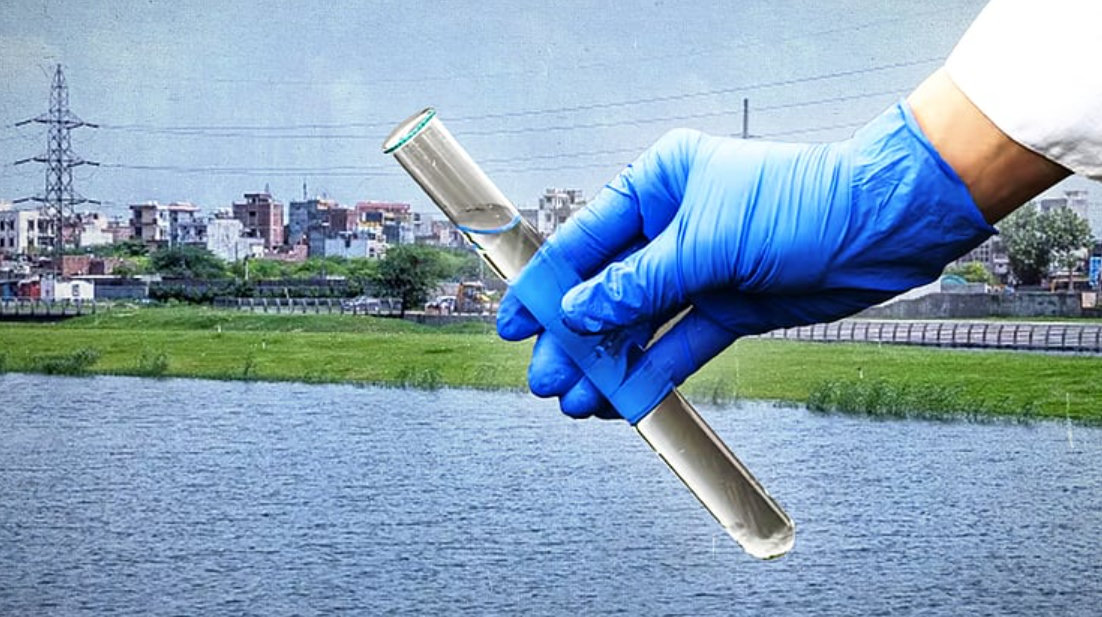

Delhi’s groundwater faces serious contamination, with unsafe levels of uranium, lead, nitrate, fluoride, and salts becoming a major environmental concern.
A Central Ground Water Board report shows that Delhi has one of the highest levels of lead contamination in the country.
Severe Heavy Metal and Chemical Contamination in Delhi’s Groundwater
Lead exposure in groundwater is linked to harmful effects such as reduced cognitive development, increased blood pressure, kidney damage, and higher cancer risk.
About 9.3% of groundwater samples in Delhi exceed permissible lead limitswhich is significantly higher than Assam (3.23%) and Rajasthan (2.04%).
Uranium contamination is also widespread, with roughly 13–15% of groundwater samples in Delhi crossing safe limits.
Elevated nitrate levels are present, mainly due to agricultural runoff and improper waste disposal, adding further health risks.
Fluoride contamination is largely geogenic, meaning it originates from natural water–rock interactions in certain aquifers.
Electrical Conductivity, used as a measure of salinity, is a serious issue, with 23.3% of samples exceeding acceptable limits.
Seasonal and Chemical Factors Limiting the Agricultural and Industrial Use of Delhi’s Groundwater
High uranium levels, high Electrical Conductivity, and elevated Sodium Adsorption Ratio reduce the suitability of groundwater for farming and industrial use.
Contamination levels are especially high in samples collected during and after the monsoon season.
The groundwater shows NaCl-type salinity and CaCl₂-type hardness, both of which limit its safe and practical use.
Environmental organizations are urging authorities to publicly release groundwater quality data and clearly defined action plans.
The Central Pollution Control Board recommends protecting water sources and improving fertilizer management practices.
Additional CPCB recommendations include using targeted water treatment technologies and enforcing stricter controls on industrial effluents.
Monitoring contamination hotspots and conducting detailed hydrogeochemical mapping are also advised to manage the problem effectively.
Earth Warrior has called on the Delhi Jal Board to be transparent about water quality and the methods used to treat contaminated water.
There are strong demands for strict adherence to Bureau of Indian Standards to ensure safe drinking water for the public.
Image Source

Comments are closed.