
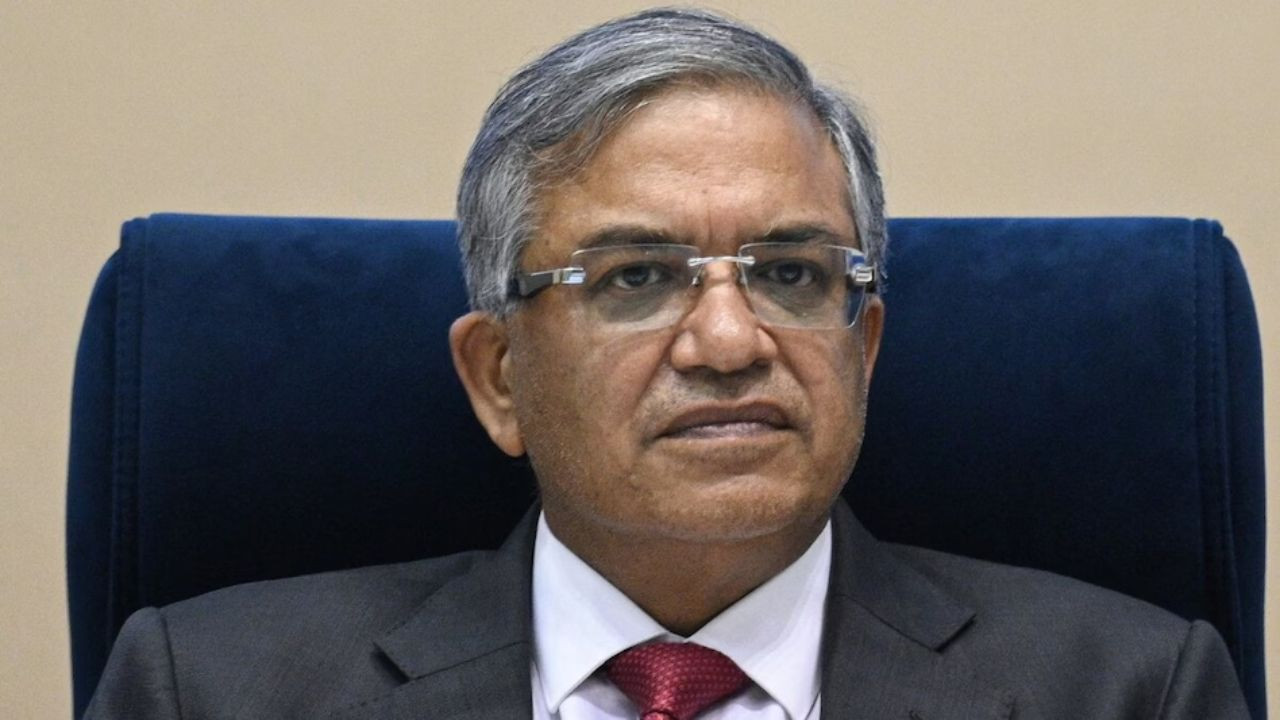
Demand for removal of Chief Election Commissioner… 193 opposition MPs gave notice in Parliament

An unusual step has come to light and has become a topic of discussion in Indian politics. Opposition parties have given a formal notice in the Parliament demanding the removal of the country’s Chief Election Commissioner Gyanesh Kumar from the post. This move has created a stir in the political circles, because for the first time in Indian parliamentary history, an attempt has been made to initiate the process of removing a Chief Election Commissioner. The opposition says that this is a serious matter related to the impartiality of democratic institutions.
According to media reports, a total of 193 opposition MPs have submitted separate notices in both the houses of Parliament in this matter. These include 130 MPs of Lok Sabha and 63 MPs of Rajya Sabha. It is being told that this initiative has been led by Trinamool Congress. Widespread support from opposition parties has been seen on this issue. Along with many parties associated with the India Alliance, the Aam Aadmi Party and some independent MPs have also supported this notice. The opposition says that this step has been taken to maintain transparency and fairness of the electoral process.
Seven allegations leveled against Chief Election Commissioner
In the notice, seven major allegations have been made against the Chief Election Commissioner. The opposition alleges that bias is visible in the functioning of the Election Commission. It has also been said that in some cases the investigation into election irregularities was deliberately hampered. Apart from this, the opposition has also raised the issue of deletion of names of voters on a large scale. They claim that due to this process many eligible voters may be deprived of their right to vote. The opposition has also alleged that these steps are affecting the independence of the Election Commission.
Controversy arose in West Bengal and other states
West Bengal remains the biggest center of this dispute. The opposition claims that during the Special Revision Process (SIR), the names of lakhs of valid voters were removed from the voter list. Opposition parties allege that this was an attempt to give advantage to the ruling party in the elections.
West Bengal Chief Minister Mamata Banerjee also strongly criticized this process. He said that this step has been taken to target opposition supporters. Similarly, in Bihar and some other states also, controversy had arisen regarding the revision of voter list. The opposition has raised serious questions linking these incidents to election irregularities.
Questions raised on the impartiality of the Election Commission
This entire matter has sparked a debate about the impartiality of the Election Commission. Opposition parties allege that the Commission is no longer working completely independently. He says that the Commission’s decisions are raising the possibility of political bias. Article 324(5) of the Constitution has also been mentioned in the notice. Under this provision, the process of removing the Chief Election Commissioner is almost the same as the removal of a Supreme Court judge.
For this, two-thirds majority is required in both the houses of the Parliament. However, in the current situation the opposition does not have that much majority. Political analysts believe that this step may mainly be an attempt to raise this issue at the national level and create political pressure.
Official response has not come yet
At present, no official response has come from the government or the Election Commission on this entire controversy. However, earlier Chief Election Commissioner Gyanesh Kumar had described voter list revision as a normal process. According to him, its objective is to include eligible voters in the list and remove ineligible names. This matter can now become a topic of discussion both inside and outside the Parliament. The opposition is calling it an issue related to the independence of democratic institutions, while the ruling party may see it as a political strategy.

Comments are closed.