
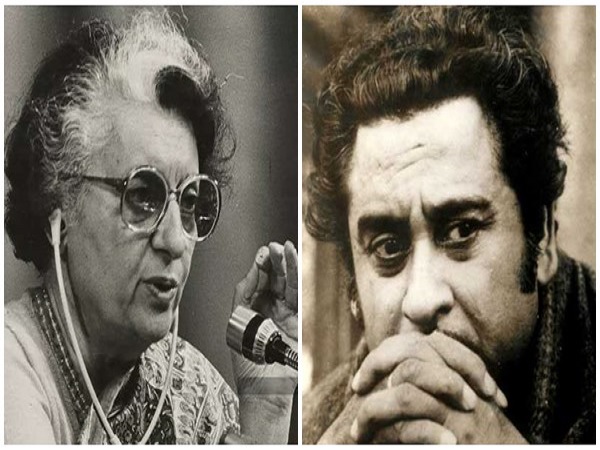
Dev Anand’s rebellion during the Emergency: Superstar clashed with Indira Gandhi government, political impact on films

New Delhi. Dev Anand, the evergreen superstar of Indian cinema, was known not only for his films and romantic persona, but also for his outspoken views and courageous decisions. In the 1970s, when there was a period of Emergency in the country, Dev Anand was among the few film personalities who refused to bow down to power and stuck to their principles.
During the Emergency that lasted from 1975 to 1977, many restrictions were imposed at the political and social level in the country. During this time, Dev Anand refused to participate in programs related to government publicity, due to which he came into discussion at that time. According to reports, he believed that artists should have the right to express their independent opinion.
After the Emergency, Dev Anand tried to form a political platform with some film personalities. He also took the initiative to form a political party named “National Party of India”, but this plan could not proceed due to lack of organizational preparation and electoral strategy.
Although there is no concrete evidence that the government had officially banned their films, but at that time it was definitely discussed that some artists and their films had to face difficulties indirectly. Many films had to face problems like censor process and release delays.
In many interviews and statements, Dev Anand had described Emergency as a difficult time for democracy. He called it a period in which pressure was felt on the freedom of common people and artists.
Dev Anand’s contribution to the film world has been immense. He gave many memorable films like ‘Guide’, ‘CID’, ‘Jewel Thief’, ‘Taxi Driver’, ‘Jaal’, ‘Black Bazaar’ and ‘Hare Ram Hare Krishna’. He himself directed ‘Hare Ram Hare Krishna’ released in 1971, which had a deep impact on the youth.
Many people, including filmmaker Shekhar Kapur, have remembered Dev Anand as an artist who was not just a star, but a person who stood up for his ideas.
Dev Anand’s life was not limited to cinema only, but he was also a part of the social and political thinking of that period. Even after his death in 2011, his films and his personality remain an inspiration in Indian cinema.

Comments are closed.